Outer Walkways
Yangon, Myanmar
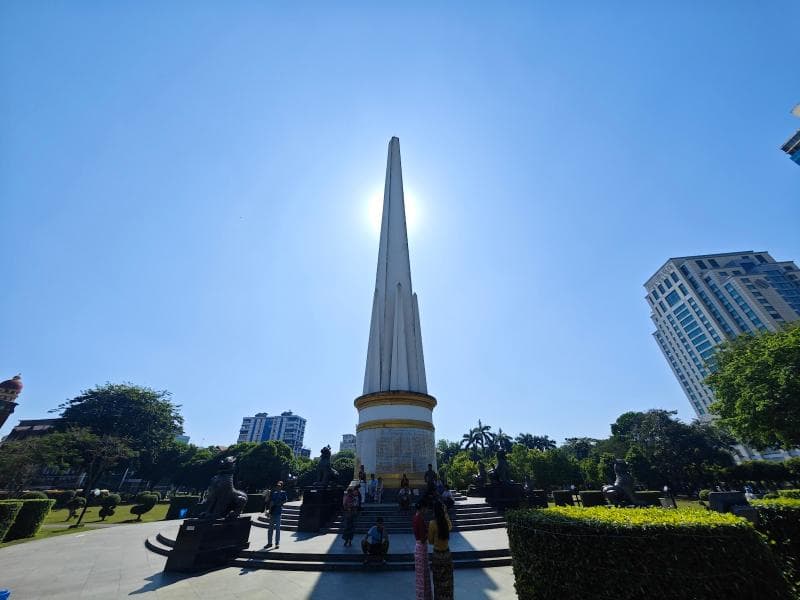
Explore the sacred Outer Walkways of Sule Pagoda in Yangon, Myanmar. Discover ancient history, cultural traditions, and daily devotions at this iconic spiritual heart of the city.
Overview
At the bustling intersection of downtown Yangon, Myanmar, stands the venerable Sule Pagoda, a golden beacon and an ancient Buddhist stupa that is both a spiritual center and a historical landmark. While the magnificent octagonal stupa dominates the landscape, it is the surrounding ‘Outer Walkways’ that truly immerse a curious traveler in the daily rhythm of devotion and local life. These pathways form a circular promenade around the central pagoda, serving as a dynamic space for worshippers and visitors alike. Here, the serene practice of Buddhism intertwines with the vibrant energy of the city, offering a profound glimpse into Myanmar's rich cultural tapestry.
The Outer Walkways are not merely a route but an integral part of the pagoda's spiritual experience, lined with an array of smaller shrines, Buddha images, and bronze bells, each holding a unique significance for devotees. This area pulsates with the quiet intensity of prayer, the gentle chime of bells, and the soft murmurs of offerings, providing a sensory journey through faith and tradition.
History & Cultural Background
The Sule Pagoda boasts a history spanning over 2,500 years, predating even the renowned Shwedagon Pagoda, according to local legends. Its Mon name, 'Kyaik Athok Ceti,' translates to 'stupa where a sacred hair is enshrined,' reflecting the belief that it houses a strand of the Buddha's hair, given to two Burmese merchant brothers.
The pagoda's origins are deeply rooted in Burmese folklore, particularly the legend of the Sule Nat, Sularata, an ancient spirit who guided King Okkalapa in locating the site for the Shwedagon Pagoda. Architecturally, the Sule Pagoda is a prime example of Mon design, characterized by its distinctive octagonal shape that tapers from its base to the gilded spire.
Beyond its religious importance, Sule Pagoda has played a pivotal role in Myanmar's socio-political narrative. During the British colonial era in the mid-19th century, Lieutenant Alexander Fraser strategically positioned the pagoda as the central point for Yangon's modern grid-patterned city plan, making it an undeniable focal point. More recently, its central location has made it a rallying point for significant pro-democracy movements, including the 1988 uprisings and the 2007 Saffron Revolution, marking it as a witness to critical moments in the nation's history.
What Makes It Special
The Outer Walkways of Sule Pagoda offer a unique and immersive experience that transcends mere observation. As visitors and devotees circumambulate the main stupa, they encounter a series of shrines, each dedicated to a specific deity and associated with a day of the week and an astrological animal. This tradition is a deeply personal and meaningful aspect of Burmese Buddhist practice.
Devotees engage in rituals such as pouring water over their ‘birthday Buddha’ statue, an act symbolizing purification and making merit. The pathways are also adorned with numerous bronze bells of varying sizes, often bearing inscriptions of donors, which are rung by visitors after performing good deeds, filling the air with resonant tones. The intricate artistry of the carvings and the delicate decorations within these peripheral shrines contribute to an ambiance that bridges the earthly with the divine, inviting quiet contemplation amidst the surrounding urban dynamism.
Stories, Fun Facts & Local Details
A charming local detail found along the Outer Walkways is the Burmese Zodiac. Each day of the week corresponds to a specific astrological animal and a particular Buddha image. Travelers often seek out the shrine representing their birth day to offer prayers and make small offerings, a practice that connects them directly to local customs and beliefs. For instance, Mondays are associated with the tiger, and Friday with the guinea pig.
The very name 'Sule' is thought to be a corruption of the Myanmar word 'Su-wei,' meaning 'meeting,' signifying its ancient role as a gathering place and its modern position as a nexus where all roads in Yangon converge. Around the pagoda's perimeter, a vibrant mini-economy thrives, with astrologers and palmists offering insights into visitors' futures, adding another layer of cultural intrigue to the spiritual environment. This fusion of the sacred and the mundane creates a truly authentic Burmese experience.
Visitor Perspective
For visitors, navigating the Outer Walkways of Sule Pagoda is a journey of sensory discovery. The requirement to remove shoes before entering the pagoda complex encourages a grounded connection to the sacred space. The atmosphere is a captivating blend of devout silence and gentle activity, with the soft chanting of monks, the ringing of bells, and the quiet movements of worshippers performing their rituals.
Despite its location at the heart of a busy urban roundabout, once inside the courtyard and on the walkways, the city's hustle often fades, allowing for moments of profound introspection. It’s a place where one can witness the enduring faith of the Burmese people firsthand, observe their daily devotions, and appreciate the intricate balance between spiritual tradition and contemporary life. The Outer Walkways thus provide a unique vantage point for understanding the soul of Yangon.
Coordinates: 96.158741, 16.774427
View on Google Maps💬 How Travelers Describe This Place
Based on community votes
Interesting
958Unique
794Beautiful
571Must See
546Photogenic
157
Traveler Stories
Discover memorable experiences shared by travelers who have visited this place.
No traveler stories yet.
Be the first traveler to share what made this place memorable.

Tour
By
Spot
Discover amazing places around the world. Your journey starts here.
Explore
© 2026 TourBySpot. All rights reserved.