Planetary Posts
Yangon, Myanmar
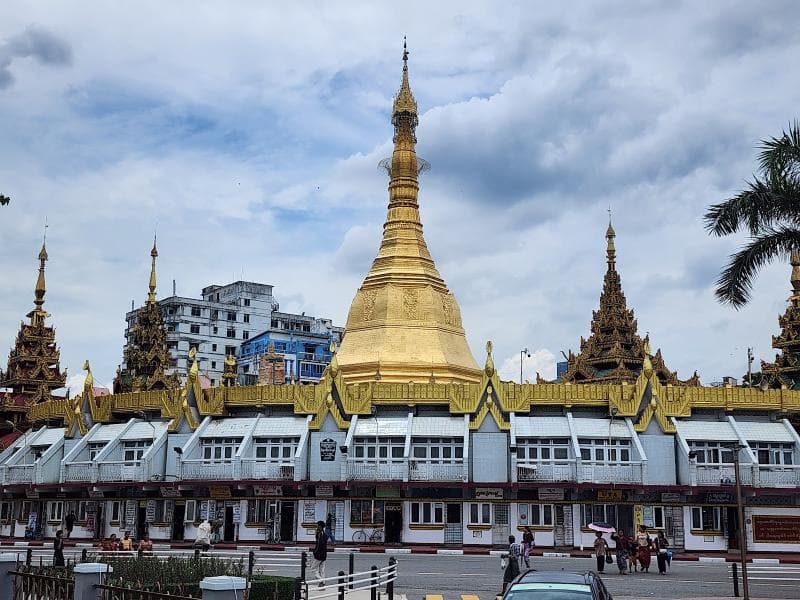
Explore the Planetary Posts at Sule Pagoda in Yangon, Myanmar. Discover the unique Burmese astrological traditions, guardian animals, and daily rituals.
Overview
Deep in the bustling heart of Yangon, Myanmar, stands the ancient Sule Pagoda, a golden testament to over two millennia of history and spirituality. Within its sacred perimeter lies a less conspicuous, yet profoundly significant sub-spot known as the Planetary Posts. This central landmark, an octagonal Buddhist stupa rising approximately 46 meters skyward, is more than just a place of worship; it is the historic geometric center around which colonial Yangon was planned. The Planetary Posts themselves are a unique expression of Burmese astrological beliefs, integrated seamlessly into the pagoda's ancient design, inviting both devotion and curiosity from all who visit.
History & Cultural Background
The Sule Pagoda's origins are steeped in legend, with tales suggesting it predates even the magnificent Shwedagon Pagoda, enshrining a sacred hair relic of the Buddha himself. Its name is said to derive from Sularata, an ancient nat (spirit) who, according to lore, helped King Okkalapa locate the site for the Shwedagon Pagoda. Architecturally, the pagoda's distinctive octagonal base is no mere design choice; it is a direct reflection of Burmese traditional astrology, known as Mahabote. This ancient system divides the week into eight days—with Wednesday uniquely split into morning and afternoon—each associated with a specific compass direction, a ruling planet, and a guardian animal. The eight faces of the Sule Pagoda symbolically align with these astrological divisions, making the entire structure a cosmic diagram.
What Makes It Special
The Planetary Posts are the physical embodiment of Myanmar's distinct astrological system. Arranged around the base of the main stupa, these eight individual shrines correspond to each day of the Burmese week. Each post features a Buddha image and is dedicated to a specific day, a planetary deity, and a unique animal symbol. For instance, Sunday is represented by the Garuda, Monday by the Tiger, and Wednesday is divided into a tusked elephant for the morning and a tuskless elephant for the afternoon. Devotees visit the post corresponding to their birth day, performing rituals such as pouring water over the Buddha statue and offering flowers or incense. This act is a deeply personal connection to their destiny, seeking blessings and good fortune aligned with their celestial influences. It is a profound expression of the intertwining of Theravada Buddhism with ancient Hindu astrological traditions, offering a fascinating glimpse into Myanmar's spiritual landscape.
Stories, Fun Facts & Local Details
The very name 'Sule' is thought by some to be derived from the Burmese word 'Su-way,' meaning 'meeting,' aptly describing its location at a major crossroads in Yangon. Burmese astrology, or 'Bedin,' plays a significant role in daily life, influencing everything from the naming of children—where syllables auspicious for their birth day are chosen—to considerations for marriage compatibility. Observing locals at the Planetary Posts provides a captivating insight into these traditions. You might see individuals carefully pouring a specific number of cups of water over their birth-day Buddha, a ritual often tied to their age or other significant numbers. This personal interaction with the deities and symbols makes the Planetary Posts a vibrant center of ongoing cultural practice.
Visitor Perspective
For the curious traveler, visiting the Planetary Posts offers a unique opportunity for cultural immersion. It is a place where one can respectfully observe the earnest devotions of the local people. While you may not share the same beliefs, understanding which day of the week you were born can add a layer of personal connection to the experience, allowing you to identify with a specific post. Visitors are welcome to walk around the circular platform, take in the intricate details of each shrine, and witness the deeply personal rituals performed. Remember to remove your footwear before entering the pagoda complex, a sign of respect in this sacred space. The central location of Sule Pagoda also makes it an excellent starting point for exploring the vibrant colonial architecture and bustling streets of downtown Yangon.
Coordinates: 96.1587, 16.7744
View on Google Maps💬 How Travelers Describe This Place
Based on community votes
Photogenic
934Beautiful
705Interesting
449Must See
396Unique
256
Traveler Stories
Discover memorable experiences shared by travelers who have visited this place.
No traveler stories yet.
Be the first traveler to share what made this place memorable.

Tour
By
Spot
Discover amazing places around the world. Your journey starts here.
Explore
© 2026 TourBySpot. All rights reserved.