Stavropoleos Monastery
Bucharest, Romania
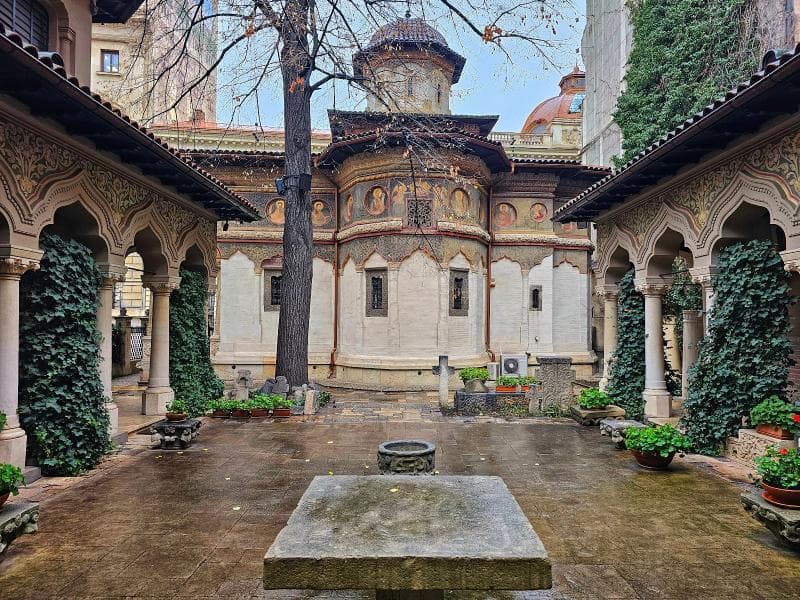
Explore Stavropoleos Monastery, a stunning 18th-century Brâncovenesc masterpiece and peaceful sanctuary in Bucharest, Romania. Discover its rich history, unique architecture, and spiritual heritage.
Overview
Nestled in the bustling heart of Bucharest's Old Town, the Stavropoleos Monastery stands as a serene and exquisite testament to Romania's rich religious and artistic heritage. This Eastern Orthodox monastery, though small in size, is celebrated for its intricate beauty and profound sense of tranquility, offering a peaceful retreat from the city's vibrant energy. Built in the early 18th century, it is a magnificent example of the distinctive Brâncovenesc architectural style, blending diverse cultural influences into a uniquely Romanian aesthetic. Today, it functions as an active monastery for nuns, who continue its long-standing traditions of worship, scholarship, and artistic preservation.
History & Cultural Background
The Stavropoleos Monastery was founded in 1724 by Archimandrite Ioannikios Stratonikeas, a Greek monk from Pogoniani. Ioannikios established the monastery within the grounds of an inn he owned, a common practice at the time where income from the inn supported the religious community. The name 'Stavropoleos' itself holds deep meaning, derived from the Greek word 'Stavropolis', which translates to 'City of the Cross'.
In 1726, Ioannikios was elected Metropolitan of Stavropolis, and the monastery subsequently adopted this name. Over centuries, the monastery played a significant role as a center for the study and preservation of the Greek language and Orthodox traditions. Unfortunately, the original inn and several monastic annexes were demolished in the late 19th century. The church itself endured damage from earthquakes, leading to the collapse of its dome. A pivotal period of restoration occurred in the early 20th century, notably under the guidance of architect Ion Mincu, who designed new buildings in the Neo-Romanian style and whose influence can be seen in the monastery's courtyard.
What Makes It Special
The Stavropoleos Monastery is renowned for its captivating Brâncovenesc architecture, a style that masterfully combines local Romanian traditions with Byzantine, Ottoman, and Western European (including Baroque and late Renaissance) elements. The church's exterior is adorned with astonishingly intricate stone carvings, featuring delicate floral motifs, vine patterns, rosettes, and religious symbols that wind around its arched entrance porch.
Inside, the church, though intimate, is rich with murals and icons, with meticulously restored frescoes depicting biblical scenes and saints, which create an atmosphere of profound spiritual reverence. One of the monastery's most distinctive features is its commitment to Byzantine music; the resident choir maintains the largest collection of Byzantine music books in Romania and performs regularly, offering a rare aural experience. The serene courtyard, framed by carved wooden galleries and housing ancient stone crosses and fragments salvaged from other demolished churches, provides a quiet oasis in the bustling city.
Stories, Fun Facts & Local Details
Beyond its tangible history, the Stavropoleos Monastery is also interwoven with local stories and intriguing details. The name 'Stavropoleos' is not just a historical reference but also tied to a legend suggesting its meaning 'City of the Cross', underscoring its spiritual foundation. Another enchanting detail speaks of a secret garden, said to have been cultivated by an Abbess Elena within the monastery courtyard, filled with rare flowers and medicinal plants, serving as a private space for prayer and contemplation.
The monastery houses a remarkable library with over 8,000 books, including valuable theological works, Byzantine music manuscripts, and texts on art and history from the 18th century. Adding to its unique character, the community of nuns at Stavropoleos is highly educated, with some speaking multiple foreign languages and even holding doctorates, actively engaging in book restoration work for institutions like the Vatican. The church also safeguards particles from the relics of several Eastern Church saints, including Saint Andrew the Apostle and Saint Peter the Apostle, which have attracted pilgrims for centuries.
Visitor Perspective
Visiting Stavropoleos Monastery is an experience that offers a tranquil escape from the urban landscape of Bucharest. Situated conveniently within the Old Town, it's easily accessible and provides a momentary step back in time. Entry to the monastery is free, making it an accessible cultural gem for all. Visitors are encouraged to observe a respectful atmosphere, dressing modestly and maintaining quiet, especially during services, to preserve the monastery's sacred character. The small scale of the church often means visits are under an hour, yet the deep spiritual energy and historical richness leave a lasting impression. Whether you seek architectural beauty, historical insight, or a moment of peaceful contemplation, Stavropoleos offers a deeply enriching experience.
Coordinates: 26.0987944, 44.4318222
View on Google Maps💬 How Travelers Describe This Place
Based on community votes
Unique
953Must See
695Interesting
658Photogenic
69Beautiful
22
Traveler Stories
Discover memorable experiences shared by travelers who have visited this place.
No traveler stories yet.
Be the first traveler to share what made this place memorable.
Things to see at Stavropoleos Monastery



Tour
By
Spot
Discover amazing places around the world. Your journey starts here.
Explore
© 2026 TourBySpot. All rights reserved.