Carved Wooden Doors
Bucharest, Romania
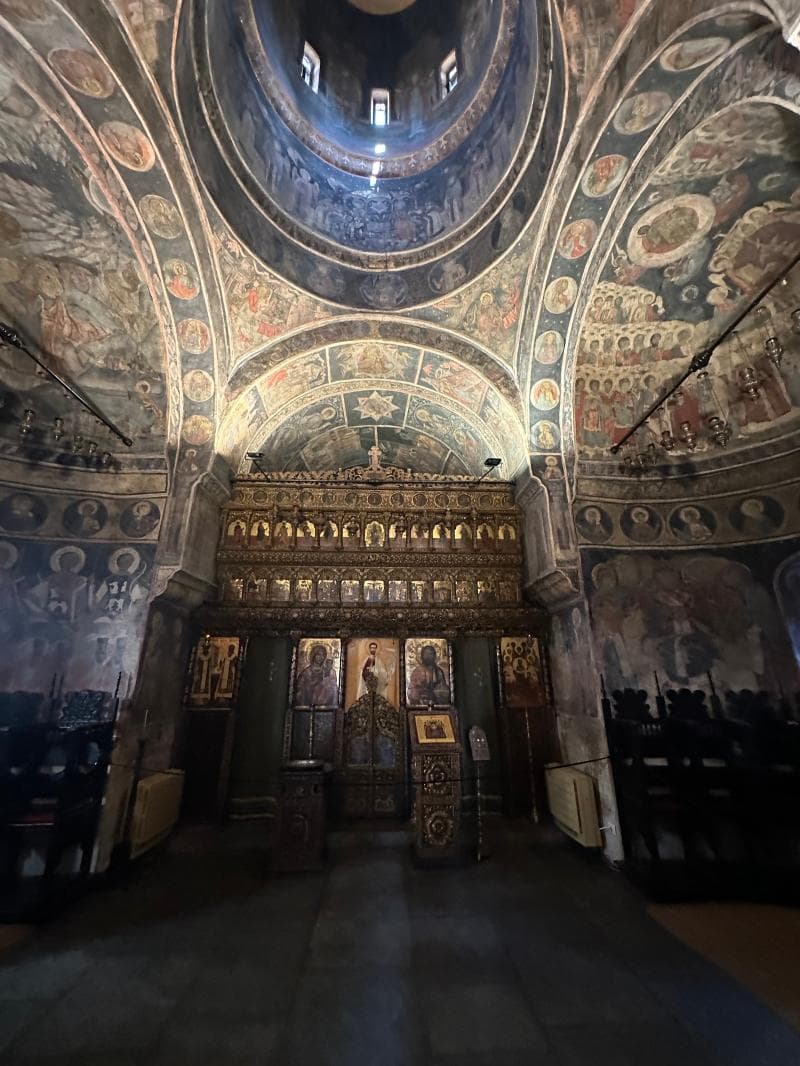
Discover the exquisite Carved Wooden Doors of Stavropoleos Monastery in Bucharest, Romania. Explore 18th-century Brâncovenesc artistry and spiritual heritage.
Overview
Nestled in the bustling heart of Bucharest, Romania, the Stavropoleos Monastery stands as a serene testament to rich spiritual and artistic heritage. Among its many architectural marvels, the Carved Wooden Doors offer a captivating glimpse into the past, embodying the unique Brâncovenesc style for which the monastery is renowned. These intricate wooden elements are not merely functional entryways or partitions; they are works of art that tell stories of faith, history, and exceptional craftsmanship. Visitors stepping into this Eastern Orthodox sanctuary are immediately drawn to the detailed artistry that adorns these wooden masterpieces, from the imposing entrance doors to the resplendent iconostasis. Each carving contributes to the monastery's tranquil atmosphere, inviting a moment of reflection amidst the vibrant city life.
History & Cultural Background
The Stavropoleos Monastery, also known as Stavropoleos Church, was founded in 1724 by the Greek archimandrite Ioanichie Stratonikeas during the reign of Nicholas Mavrocordatos, Prince of Wallachia. Initially, the monastery's upkeep was financially supported by an adjacent inn, a common practice of the era. The church is a celebrated example of the Brâncovenesc architectural style, an exquisite blend that flourished in Wallachia during the late 17th and early 18th centuries. This unique Romanian Renaissance style harmoniously combines local traditions with Byzantine, Ottoman, and Western European (Baroque and late Italian Renaissance) influences. The emphasis on decorative elements, including intricate stone and wood carvings, is a hallmark of this period, aiming to create a distinct and opulent aesthetic that reflects both spiritual devotion and cultural richness. The monastery's name itself, derived from the Greek 'Stavropolis', means 'City of the Cross', underscoring its profound religious significance.
What Makes It Special
The Carved Wooden Doors at Stavropoleos Monastery are extraordinary examples of 18th-century artistry, distinguished by their intricate detailing and symbolic representations. The main entrance doors themselves are considered a masterpiece of wood and stone craftsmanship. These panels are hand-carved with high-relief figures, notably depicting the patron saints of the church, the Holy Archangels Michael and Gabriel, in their central sections. This portrayal adds a layer of spiritual guardianship to the entrance, welcoming believers into sacred space. Surrounding these wooden doors, the stone frame, or portal, is deeply carved with delicate floral motifs such as acanthus leaves and flowers, a signature of the Brâncovenesc era, symbolizing the Garden of Eden. Beyond the entrance, the monastery's interior boasts an equally stunning carved wooden iconostasis. This ornate screen, dating from the 18th century, separates the altar from the nave and is a breathtaking example of Byzantine artistry. It features gilded icons and detailed carvings that are central to Orthodox Christian tradition, guiding the eye and soul towards the divine. The craftsmanship evident in every detail, from the flowing lines of the floral patterns to the expressive faces of the saints, showcases the skill of the artisans who brought these spiritual narratives to life in wood.
Stories, Fun Facts & Local Details
The Carved Wooden Doors and other wooden elements of Stavropoleos are more than just historical artifacts; they are imbued with stories and cultural resonance. The dedication inscription, known as a 'Pisania', can be found above the main door's stone lintel, written in Old Church Slavonic/Romanian Cyrillic. It lists the founders and the completion date of the church, serving as a permanent historical record. The inclusion of the Archangels Michael and Gabriel on the main doors signifies their role as protectors and messengers, providing a spiritual welcome to all who enter. The continuous preservation of these wooden treasures, despite centuries of earthquakes and historical changes, speaks volumes about their enduring value and the care dedicated to the monastery. The blend of Byzantine, Ottoman, and Western influences visible in the wood carvings, particularly the ornate floral patterns, represents the cultural crossroads that defined Romania's history. These elements collectively contribute to the monastery's designation as a hidden gem, often surprising visitors with its profound beauty tucked away amidst the modernity of Bucharest.
Visitor Perspective
Approaching the Stavropoleos Monastery, one might not immediately anticipate the artistic richness held within. Passing through the Carved Wooden Doors offers an immediate immersion into a different era. The tactility of the aged wood, the intricate patterns, and the serene depictions of saints evoke a sense of reverence and wonder. These doors set the tone for the entire visit, preparing the traveler for the spiritual and aesthetic journey ahead. Stepping further inside, the wooden iconostasis commands attention, its detailed carvings and gilded icons creating a focal point for contemplation. It is a moment where the architectural beauty and spiritual significance converge, allowing visitors to feel connected to centuries of faith and artistic endeavor. The experience is one of quiet awe, a feeling of stepping back in time to appreciate the meticulous artistry and devotion embedded in every carved detail. The doors are open during visiting hours, typically from 9 AM to 5 PM, offering ample opportunity for curious travelers to admire this unique aspect of Bucharest's heritage.
Coordinates: 26.0987944, 44.4318222
View on Google Maps💬 How Travelers Describe This Place
Based on community votes
Interesting
886Photogenic
564Beautiful
443Must See
310Unique
233
Traveler Stories
Discover memorable experiences shared by travelers who have visited this place.
No traveler stories yet.
Be the first traveler to share what made this place memorable.

Tour
By
Spot
Discover amazing places around the world. Your journey starts here.
Explore
© 2026 TourBySpot. All rights reserved.