Library Area
Bucharest, Romania
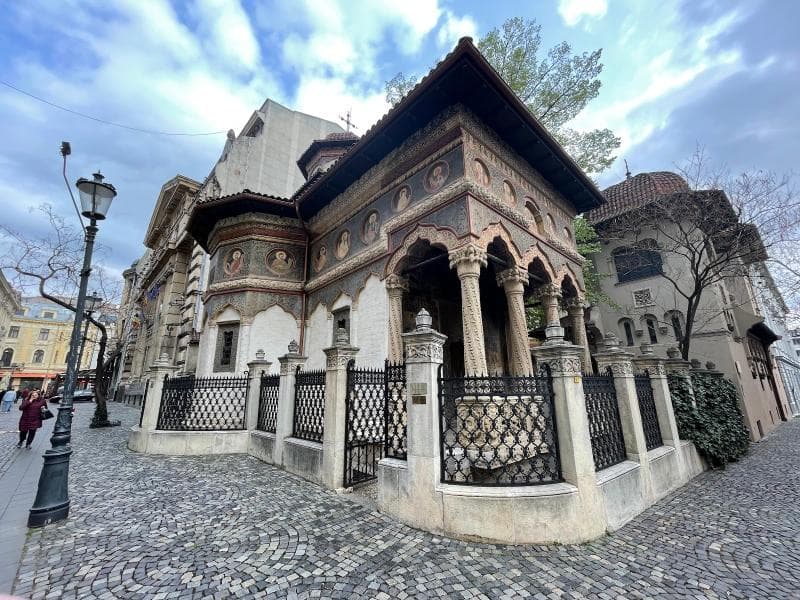
Explore the serene Library Area of Stavropoleos Monastery in Bucharest, Romania. Discover ancient texts, Byzantine music, and historical artifacts.
Overview
Tucked away within the tranquil confines of the Stavropoleos Monastery in Bucharest, Romania, lies a hidden gem: the Library Area. More than just a repository for books, this dedicated space serves as a vibrant center for spiritual and intellectual life, offering a profound glimpse into Romania's rich cultural and religious heritage. It is a place where time seems to slow, inviting quiet reflection amidst its treasured collections. The Library Area, while part of the larger monastery complex, occupies a distinct building constructed in the early 20th century, designed by the renowned architect Ion Mincu. Here, visitors can explore a vast collection of ancient texts, manuscripts, and artistic artifacts, showcasing centuries of devotion and scholarship.
The monastery itself, a masterpiece of the Brâncovenesc architectural style, is a small oasis of peace in the bustling heart of Bucharest's Old Town. The library complements this serenity, providing an intellectual anchor to the spiritual endeavors of the monastic community.
History & Cultural Background
The Stavropoleos Monastery, founded in 1724 by Archimandrite Ioanichie Stratonikeas, has a history deeply intertwined with the cultural fabric of Wallachia. While the original monastery complex included an inn to provide financial support, only the church remained from the initial 18th-century structures after various demolitions and earthquake damage. The current Library Area is housed in a later addition, a building erected at the beginning of the 20th century. This construction was part of a broader restoration effort led by architect Ion Mincu, who aimed to preserve the monastery's historical and artistic value.
This early 20th-century building also serves as a sanctuary for pieces of history beyond its book collection. It notably preserves fragments of wall paintings and ecclesiastical objects salvaged from churches that were tragically demolished during Romania's communist regime. This act of preservation underscores the monastery's enduring role as a guardian of cultural memory, transforming the library not just into an archive of texts, but a living museum of architectural and artistic heritage.
What Makes It Special
The Stavropoleos Monastery Library Area is distinguished by several unique features that captivate scholars and curious travelers alike. At its core is an impressive collection comprising over 10,000 volumes, including more than 80 manuscripts and 400 prints. These aren't just any books; they cover diverse subjects such as theology, Byzantine music, art, and history, offering a panoramic view of Orthodox intellectual tradition. A significant portion of this collection originated from the personal library of the esteemed art historian Vasile Drăguț, further enriching its academic value.
Perhaps its most celebrated distinction is housing the largest collection of Byzantine music books in Romania. This specialized archive supports the monastery's renowned choir, which actively preserves and performs this ancient musical tradition. The library also features a digital collection, allowing for broader access to its invaluable resources. Beyond its textual treasures, the Library Area is arranged to evoke a sense of scholarly reverence, complete with period furniture and displays that tell stories of past custodians and scholars who shaped the monastery's intellectual life.
Stories, Fun Facts & Local Details
One fascinating aspect of the Stavropoleos Library is its reflection of historical monastic practices. Monasteries traditionally served as centers of learning, and this library continues that legacy, emphasizing scholarship as integral to spiritual life. The very act of visiting the library connects you to centuries of monks and nuns who dedicated their lives to studying and preserving sacred texts. Moreover, the current monastic community, composed of nuns, actively participates in the intellectual life of the monastery, including engaging in book restoration, a meticulous craft that breathes new life into fragile historical documents.
The library's physical setting, within a 20th-century building, also tells a story of resilience and renewal. It stands as a testament to the continuous effort to rebuild and maintain the monastery's cultural assets, even after periods of hardship and destruction. The salvaged frescoes and artifacts housed alongside the books offer a poignant narrative of survival, showcasing beauty rescued from oblivion. The quiet ambiance of the Library Area provides a contemplative counterpoint to the monastery's lively courtyard, which often hosts cultural events and showcases traditional Romanian stonework.
Visitor Perspective
For the curious traveler, the Library Area at Stavropoleos Monastery is an experience of quiet discovery. It's a space that encourages slow observation and appreciation. While typically not a place for browsing as one might in a public library, its carefully curated displays of ancient tomes, musical manuscripts, and historical artifacts provide a window into a deeply spiritual and scholarly world. Visitors are encouraged to observe the rich details of the collections, understanding their significance within the broader context of Orthodox Christianity and Romanian history. The sheer volume of works, particularly the unique Byzantine music collection, speaks to the dedication of generations. To truly appreciate the Library Area, consider it as an extension of the monastery's artistic and historical narrative, a place where knowledge and faith are meticulously preserved for future generations. It offers a unique opportunity to connect with the intellectual heart of this historic Bucharest landmark, away from the city's ceaseless rhythm.
Coordinates: 26.0987944, 44.4318222
View on Google Maps💬 How Travelers Describe This Place
Based on community votes
Interesting
953Beautiful
695Photogenic
658Must See
396Unique
22
Traveler Stories
Discover memorable experiences shared by travelers who have visited this place.
No traveler stories yet.
Be the first traveler to share what made this place memorable.

Tour
By
Spot
Discover amazing places around the world. Your journey starts here.
Explore
© 2026 TourBySpot. All rights reserved.