Church Interior
Bucharest, Romania
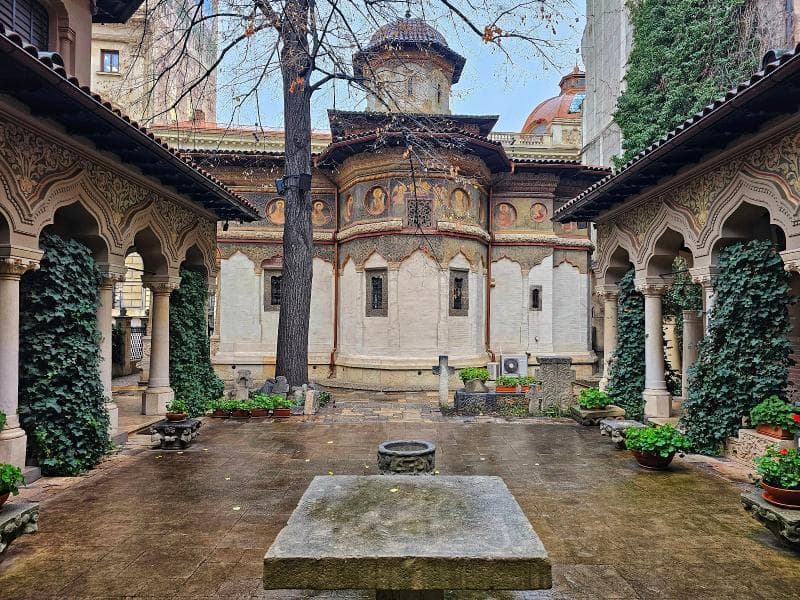
Discover the spiritual heart of Bucharest: the Stavropoleos Monastery Church interior. Explore its Brâncovenesc architecture, ancient frescoes, and rich history in Romania.
Overview
Nestled in the vibrant heart of Bucharest's Old Town, the Stavropoleos Monastery, often referred to as the Stavropoleos Church, stands as a profound testament to Romania's rich spiritual and artistic heritage. This active Eastern Orthodox monastery for nuns is renowned for its exceptional Brâncovenesc architectural style, a distinctive blend of local Romanian traditions with Byzantine, Ottoman, and Western European influences. Built in 1724, it offers visitors a serene sanctuary, celebrated for its intricate interior frescoes, the ornate iconostasis, and its deep connection to Byzantine music. [3, 8, 11, 12, 18, 19]
History & Cultural Background
The monastery's story begins in 1724 with its founder, the Greek monk Ioannikios Stratonikeas. Ioannikios, who also owned an inn, strategically built the church and monastic cells within his inn's precinct. The income generated from the inn was intended to support the religious community, a customary practice of the era. [3, 5, 8, 15, 19] Later, Ioannikios was elected Metropolitan of Stavropolis, which gave the monastery its meaningful name, 'Stavropoleos', derived from the Greek words 'Stavros' (cross) and 'Polis' (city), signifying 'The City of the Cross'. [3, 5, 8, 10, 12, 15, 19] The church is dedicated to the Holy Archangels Michael and Gabriel. [5, 8, 19]
Throughout its history, the monastery faced significant challenges. The original inn and other annexes were demolished in the late 19th century, and the church itself endured damage from earthquakes, which caused its dome to fall. [5, 8, 9] A major restoration effort in the early 20th century, led by architect Ion Mincu, saw the dome's paintings carefully restored and the addition of the distinctive inner courtyard, which houses ancient stone crosses and architectural fragments rescued from other Bucharest churches demolished during the communist era. [8, 9, 24] After a period of functioning as a museum and then a parish church, the monastery was revitalized and reopened for nuns in 1991, and subsequently in 2008, once again becoming a vibrant spiritual center. [4, 5, 8, 9]
What Makes It Special
The interior of Stavropoleos Church is a captivating display of the Brâncovenesc style, harmoniously merging Romanian Orthodox design with influences from the Ottoman Empire and European Baroque. [3, 4, 11, 12, 19] Upon stepping inside, visitors are immediately struck by the rich decoration. The walls are adorned with intricate, hand-painted frescoes depicting biblical scenes and a multitude of saints. While some of these ancient murals are dark with age, the gold leaf detailing still shimmers, especially under the soft glow of candlelight, creating a profound visual experience. [3, 5, 10, 11, 12, 13, 14, 16, 19, 22]
A central feature is the magnificent iconostasis, an elaborately carved wooden screen separating the nave from the altar. This stunning example of Byzantine artistry is adorned with gilded icons and detailed carvings, representing a cornerstone of Orthodox Christian tradition. [13, 19] The monastery also houses a precious collection of old icons and ecclesiastical objects, some of which were salvaged from other churches that were destroyed during Romania's communist regime. [5, 8, 9, 15, 19]
Beyond its visual splendor, Stavropoleos is renowned for its dedication to Byzantine music. The monastery maintains a distinguished choir and boasts the largest collection of Byzantine music books in Romania. Services held here feature the distinct, soulful sounds of neo-Byzantine music, offering a truly immersive cultural and spiritual encounter. [3, 5, 8, 10, 14]
Stories, Fun Facts & Local Details
The very name 'Stavropoleos', meaning 'City of the Cross', is more than just a label; it embodies the profound spiritual significance of the site, serving as a constant reminder of its sacred purpose. [5, 7, 8, 10, 12, 15, 19] One fascinating legend speaks of a secret garden, said to have been cultivated by an Abbess Elena behind the church, a peaceful space for prayer and contemplation filled with rare flowers and medicinal plants. [7]
The church also safeguards significant holy relics, including particles from the remains of revered saints such as Saint Andrew the Apostle and Saint Peter the Apostle, among others, drawing pilgrims and believers alike. [6, 7] Adding to its cultural richness, the monastery's library is a treasure trove, housing over 8,000 books covering theology, Byzantine music, arts, and history. This includes rare manuscripts and ancient printed books in Romanian, Greek, and Church Slavonic, making it an invaluable resource for scholars and enthusiasts. [5, 8, 12, 18, 24] The community of nuns currently residing at Stavropoleos are noted for their high level of education, often possessing doctorates from prestigious universities, and are actively involved in the restoration of old books and icons. [8, 15, 24]
Visitor Perspective
Visiting Stavropoleos Monastery offers a uniquely peaceful experience amidst the bustling energy of Bucharest's Old Town. Entry to the monastery is free, making it an accessible cultural gem for all. [3, 6, 11, 18] The monastery is open daily, typically from early morning to evening, though it is always advisable to check the most current operating hours. [3, 6, 18]
Many visitors recommend attending a service to fully appreciate the hauntingly beautiful Byzantine chants performed by the monastery's choir, which can be a deeply moving experience. [6, 14] To show respect for this active place of worship, visitors are encouraged to dress modestly, ensuring shoulders are covered, and to speak in hushed tones. [14] For those seeking the quietest atmosphere, a morning or late afternoon visit is often recommended, allowing for a more intimate moment of reflection away from larger groups. [18] The compact size of the church interior and the serene courtyard combine to create a profound sense of calm, making it a perfect spot for quiet contemplation and a genuine connection with Romania's spiritual heritage. [4, 11, 14, 18]
Coordinates: 26.0988, 44.4318
View on Google Maps💬 How Travelers Describe This Place
Based on community votes
Interesting
996Must See
658Unique
585Photogenic
143Beautiful
69
Traveler Stories
Discover memorable experiences shared by travelers who have visited this place.
No traveler stories yet.
Be the first traveler to share what made this place memorable.

Tour
By
Spot
Discover amazing places around the world. Your journey starts here.
Explore
© 2026 TourBySpot. All rights reserved.