Bell Tower
Bucharest, Romania
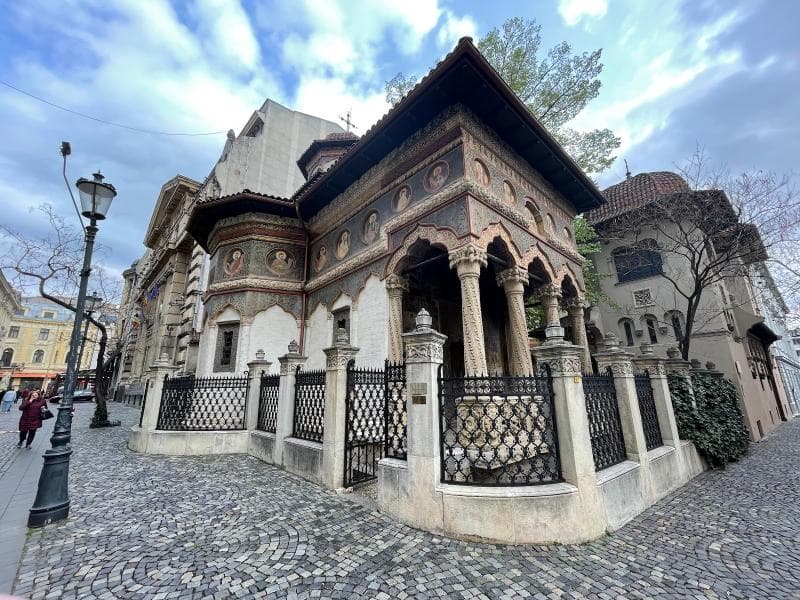
Discover the Bell Tower at Stavropoleos Monastery in Bucharest, Romania – a historical gem within a serene 18th-century complex.
Overview
Nestled within the serene courtyard of the historic Stavropoleos Monastery in Bucharest, Romania, stands a captivating Bell Tower. While the monastery itself dates back to the early 18th century, the present Bell Tower is a significant component of the early 20th-century restoration and expansion designed by the renowned architect Ion Mincu. It is not merely a functional structure but an integral part of the monastery's architectural ensemble, blending harmoniously with the distinctive Brâncovenesc style of the main church. This tower contributes to the peaceful ambiance of the monastery, a true oasis of calm amidst the bustling heart of Bucharest's Old Town.
The Bell Tower, alongside the new buildings erected by Mincu, houses crucial elements of the monastic complex, including the library and museum. Its presence underscores the enduring spiritual and cultural legacy of Stavropoleos, making it a focal point for visitors seeking both historical insight and a moment of tranquility.
History & Cultural Background
The story of the Stavropoleos Bell Tower is deeply intertwined with the broader history of its parent monastery. The original Stavropoleos Monastery was founded in 1724 by Archimandrite Ioanichie Stratonikeas, a Greek monk, during the reign of Prince Nicholas Mavrocordatos. The monastery's church was built in the unique Brâncovenesc style, an architectural synthesis of Byzantine, Ottoman, and Western European influences.
Over the centuries, the monastery suffered significant damage from earthquakes, and by the late 19th century, parts of the original complex, including the inn that financially supported it, had been demolished or fallen into disrepair. A pivotal moment for the monastery's revival came in the early 20th century when architect Ion Mincu was commissioned for a comprehensive restoration. It was during this period, specifically between 1908 and 1912, that Mincu designed and constructed the new complex surrounding the church, which incorporated the Bell Tower.
Mincu's vision was to create a harmonious new structure that complemented the original 18th-century church while also providing modern facilities for the monastic community and its growing collection of artifacts. The Bell Tower, therefore, stands as a testament to this period of architectural renewal, reflecting a national effort to preserve and reinterpret Romania's cultural heritage.
What Makes It Special
The Bell Tower's unique character stems from its seamless integration into Ion Mincu's early 20th-century additions. While the main church showcases the exquisite Brâncovenesc style of the 18th century with its intricate stone carvings and floral motifs, the Bell Tower is part of a construction that echoes these elements on a grander scale.
It forms part of a two-storey building that defines the monastery's inner courtyard, creating a cloister-like ambiance. This design choice, incorporating arcades and trefoil arches reminiscent of the church's porch, subtly references the architectural traditions of Catholic monasteries while remaining distinctly Romanian. The tower's presence helps to frame the courtyard, enhancing the sense of enclosure and peaceful contemplation for visitors.
Beyond its aesthetic appeal, the Bell Tower's significance lies in its symbolic role. It signifies continuity and renewal, standing tall as a guardian of the monastery's spiritual life and its rich collection of Byzantine music books and historical artifacts housed in the adjacent buildings.
Stories, Fun Facts & Local Details
The Stavropoleos Bell Tower, while not as ancient as the church it accompanies, is steeped in the history of its significant restoration. Architect Ion Mincu, a leading figure in Romanian architecture, undertook this ambitious project when the monastery was in a very poor state, even facing potential demolition. Mincu's work, which included building the Bell Tower, the parish house, and the museum in a cloister shape around the church, saved and re-envisioned the complex.
It's interesting to note that Mincu did not aim for absolute historical accuracy in his restoration but rather sought to highlight the aesthetic and artistic quality of the heritage. This approach resulted in a unique blend where the new constructions, including the Bell Tower, harmoniously interpret the Brâncovenesc style for a new era. The serene courtyard, framed by Mincu's structures, offers a stark contrast to the lively streets of Bucharest's Old Town, providing a sanctuary where the past feels palpably present. Visitors often find themselves drawn to the quiet sound of the bells, which punctuate the day, serving as a timeless reminder of the monastery's ongoing spiritual life.
Visitor Perspective
Visiting the Bell Tower at Stavropoleos Monastery offers a moment of profound connection to Bucharest's spiritual and architectural heritage. As you step through the monastery's gates, the modern city fades, replaced by the tranquil atmosphere of the courtyard, where the Bell Tower stands as a silent sentinel. The intricate details of its architecture, along with the surrounding monastic buildings, invite close inspection and appreciation.
While the tower itself may not be directly accessible for climbing, its presence is fundamental to the monastery's overall experience. It contributes to the visual harmony and the palpable sense of history that pervades this small but significant Orthodox monastery. Take time to admire the craftsmanship and imagine the sounds of the bells echoing through the centuries, calling the faithful to prayer. This quiet corner provides an ideal spot for reflection, making it a highlight for any traveler exploring the cultural depths of Bucharest.
Coordinates: 26.0988, 44.4318
View on Google Maps💬 How Travelers Describe This Place
Based on community votes
Must See
836Beautiful
797Photogenic
695Interesting
396Unique
286
Traveler Stories
Discover memorable experiences shared by travelers who have visited this place.
No traveler stories yet.
Be the first traveler to share what made this place memorable.

Tour
By
Spot
Discover amazing places around the world. Your journey starts here.
Explore
© 2026 TourBySpot. All rights reserved.