Stone Courtyard
Bucharest, Romania
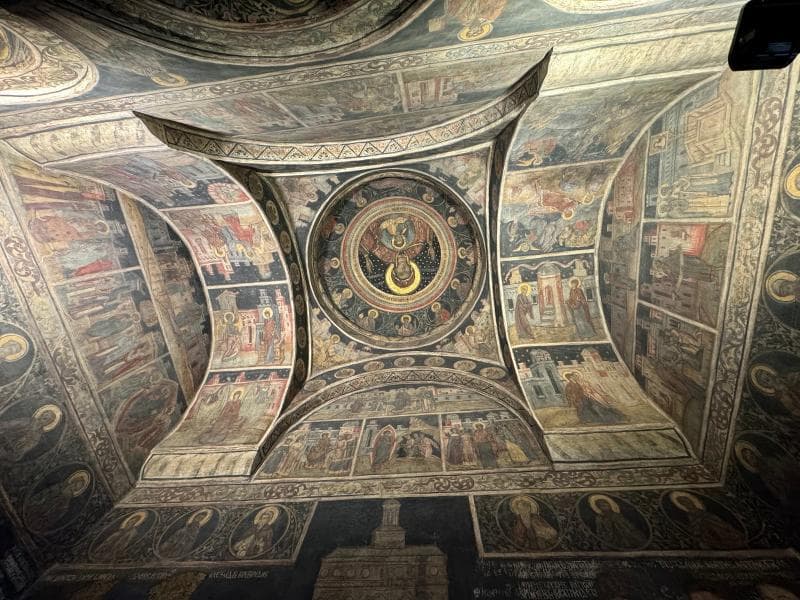
Discover the tranquil Stone Courtyard of Stavropoleos Monastery in Bucharest, Romania. Explore its unique Brâncovenesc architecture and salvaged historical stones.
Overview
Nestled within the vibrant heart of Bucharest's Old Town, the Stone Courtyard of Stavropoleos Monastery offers a tranquil escape, a quiet sanctuary from the city's ceaseless energy. This unassuming yet profoundly beautiful space serves as the monastery's inner sanctum, embodying centuries of history and spiritual devotion. It is an integral part of the larger Stavropoleos Monastery complex, a celebrated masterpiece of Brâncovenesc architecture, which harmoniously blends Byzantine, Ottoman, and Western European influences. The courtyard itself, characterized by its stone elements, intricate carvings, and an palpable sense of peace, invites visitors to step back in time and reflect amidst a unique collection of salvaged historical artifacts.
History & Cultural Background
The Stavropoleos Monastery, including its distinctive courtyard, traces its origins back to 1724. It was founded by Archimandrite Ioannikios Stratonikeas, a Greek monk, during the reign of Wallachian Prince Nicholas Mavrocordatos. Initially, the monastery was established within the precinct of an inn, a common practice of the era, where the inn's income served to economically sustain the religious community.
Over the centuries, the monastery faced numerous challenges, including damage from earthquakes that led to the collapse of its dome and the eventual demolition of the original inn and monastic buildings in the 19th century, leaving only the church standing for a period. A significant restoration project was undertaken between 1904 and 1940 under the guidance of the esteemed Romanian architect Ion Mincu. He was instrumental in designing new ancillary buildings and restoring the church, contributing significantly to the current appearance of the courtyard. The inner courtyard, with its arcade of trefoil arches, was reimagined to evoke the cloisters found in Catholic monasteries, showcasing a blend of artistic influences. Today, the monastery stands as an active nunnery, meticulously preserving its spiritual and cultural heritage.
What Makes It Special
The Stone Courtyard of Stavropoleos Monastery is truly exceptional, primarily due to its function as an open-air lapidarium. This means it houses a unique and poignant collection of 18th-century tombstones and architectural fragments. Many of these stone pieces were salvaged from churches that were tragically demolished during the communist regime, making the courtyard a silent guardian of Bucharest's lost heritage.
The intricate stone carvings are not confined to the salvaged pieces. The church's exterior, a prime example of the Brâncovenesc style, is adorned with delicate stone carvings featuring vine motifs, rosettes, and religious symbols that wind around the arched entrance porch and adorn columns and pedestals. These details transform the courtyard into a living museum, where every stone tells a story of artistic mastery and historical resilience. The blend of these ancient stones with carefully tended greenery creates an atmosphere of profound serenity, offering a visual and spiritual feast.
Stories, Fun Facts & Local Details
Beyond its visual appeal, the Stone Courtyard holds numerous layers of local significance. The very presence of the salvaged stone fragments is a powerful narrative of survival and remembrance. These fragments are not merely decorative; they are tangible links to a past that was nearly erased, serving as a constant reminder of the city's rich, yet sometimes turbulent, history.
The monastery itself is a living cultural hub, known for its dedication to Byzantine music. Its resident choir maintains Romania's largest collection of Byzantine music books and regularly performs, adding an ethereal sonic layer to the monastery's spiritual ambiance. The nuns residing at Stavropoleos are highly educated, with some even engaged in book restoration for the Vatican, showcasing a blend of spiritual devotion and intellectual pursuit. This commitment extends to meticulously restoring ancient manuscripts and books within the monastery's impressive library, which boasts over 8,000 volumes on theology, Byzantine music, art, and history.
Visitor Perspective
For the curious traveler, stepping into the Stone Courtyard is like entering a secret garden, a world away from the urban bustle that lies just beyond its walls. The tranquil atmosphere is almost immediate, a calming embrace of quietude and historical weight. Visitors often describe a sense of peaceful reflection as they wander among the carved tombstones and architectural remnants, feeling as though they are touching the past.
The play of light and shadow on the ancient stones, particularly in the late afternoon, makes it a favored spot for photography, capturing the delicate lace-like floral carvings and the ivy-clad walls. It is a place for 'slow travel,' encouraging visitors to pause, observe, and connect with the spiritual energy and resilience imbued in its every stone. The courtyard offers a tangible link to Romania's Orthodox traditions and artistic heritage, leaving a lasting impression of beauty, history, and quiet strength.
Coordinates: 26.0987944, 44.4318222
View on Google Maps💬 How Travelers Describe This Place
Based on community votes
Photogenic
836Must See
287Interesting
255Beautiful
231Unique
86
Traveler Stories
Discover memorable experiences shared by travelers who have visited this place.
No traveler stories yet.
Be the first traveler to share what made this place memorable.

Tour
By
Spot
Discover amazing places around the world. Your journey starts here.
Explore
© 2026 TourBySpot. All rights reserved.