Byzantine Frescoes
Bucharest, Romania
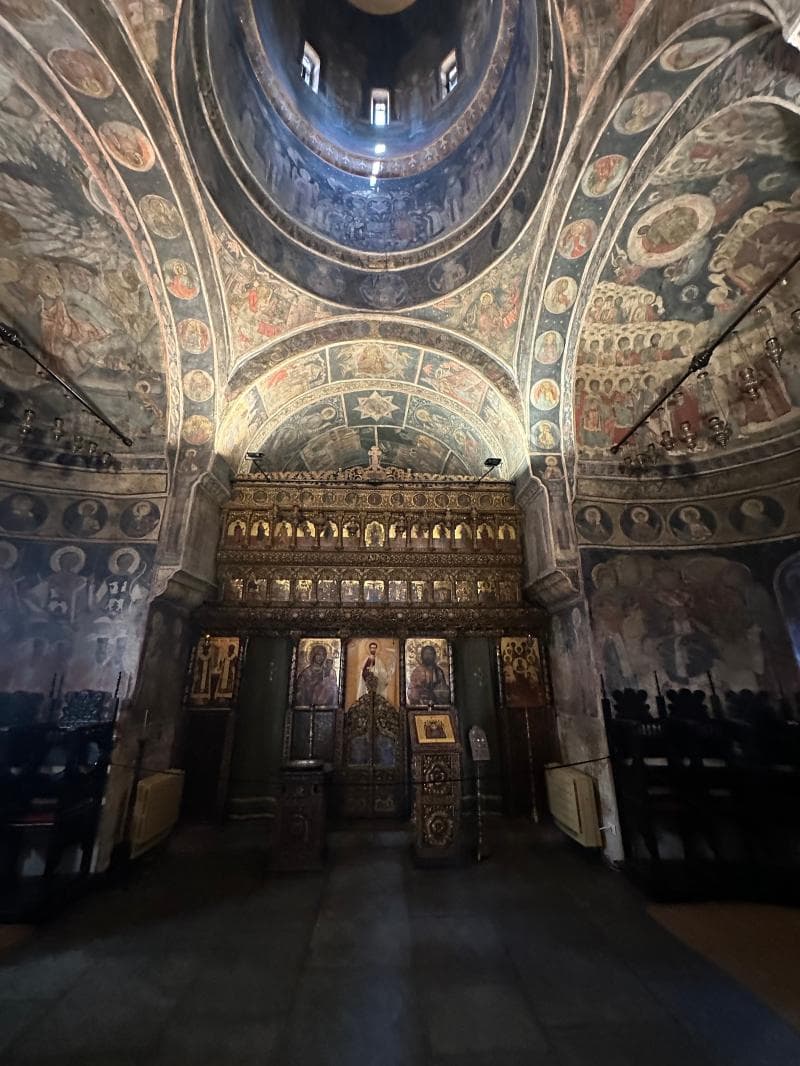
Discover the stunning Byzantine frescoes at Stavropoleos Monastery in Bucharest, Romania. Explore 18th-century art, history, and unique Brâncovenesc architecture.
Overview
Tucked away in the bustling heart of Bucharest's Old Town, the Stavropoleos Monastery is a captivating Eastern Orthodox sanctuary renowned for its exquisite architecture and, most notably, its vibrant Byzantine frescoes. Established in 1724, this small yet profoundly significant monastery offers a serene escape, inviting visitors to step back in time and immerse themselves in a rich tapestry of spiritual artistry. The frescoes, adorning the interior walls and ceilings, represent a cornerstone of the monastery's cultural and historical value, serving as a testament to the enduring legacy of Byzantine art in Romania.
More than just a place of worship, Stavropoleos Monastery functions as an active convent for nuns and a vital cultural center. Its architectural style, known as Brâncovenesc, is a unique Romanian blend that harmoniously incorporates Byzantine, Ottoman, and Western European influences, making it a masterpiece of its kind. The frescoes within are not merely decorative; they are narratives, depicting sacred stories and figures that have inspired devotion for centuries.
History & Cultural Background
The story of Stavropoleos Monastery begins in 1724 with its founder, Archimandrite Ioannikios Stratonikeas, a Greek monk from Pogoniani. He established the monastery within the grounds of an inn he owned, a common practice at the time, ensuring economic sustenance for the religious community. In 1726, Ioannikios was elected Metropolitan of Stavropolis, a title that lent its name to the monastery, with 'Stavropoleos' meaning 'City of the Cross' in Greek.
The monastery's church was built in the distinctive Brâncovenesc style, which flourished in Wallachia during the late 17th and early 18th centuries under Prince Constantin Brâncoveanu. This style is a remarkable synthesis of local traditions with Oriental, Byzantine, and late Italian Renaissance elements, resulting in a uniquely Romanian architectural expression. Unfortunately, the original monastic complex, apart from the church, suffered severe damage from 19th-century earthquakes and fires. A major restoration project, led by architect Ion Mincu between 1904 and 1940, played a crucial role in preserving the church and its precious artistic heritage, including the restoration of its dome and frescoes.
What Makes It Special
The Byzantine frescoes at Stavropoleos Monastery are its most enchanting feature, offering a profound visual experience. These intricate murals cover the interior walls and ceiling, rich with religious iconography and vibrant details. They exemplify the Brâncovenesc style's artistic expression, blending the solemnity of Byzantine tradition with delicate floral and vegetal motifs, and sometimes even Baroque elements. Visitors are often struck by the 'colorful frescoes' and the 'intricately painted ceiling,' which depict saints, narratives, and symbolic elements.
Beyond their aesthetic appeal, the frescoes serve as a direct link to the spiritual and artistic currents of the 18th century, showcasing the mastery of the artisans who painstakingly brought these sacred images to life. The church's small size amplifies the immersive quality of these murals, drawing the viewer into their narrative. Additionally, the monastery is celebrated for its deep connection to Byzantine music, housing Romania's largest collection of Byzantine music books, and its resident choir performs neo-Byzantine chants. The tranquil courtyard also serves as an open-air lapidarium, displaying stone crosses and architectural fragments salvaged from other Bucharest churches demolished over time.
Stories, Fun Facts & Local Details
The monastery's dual origin as both a religious institution and an inn highlights a fascinating aspect of its early financial independence and community integration. The Greek monk Ioannikios's vision created a self-sustaining spiritual haven. A testament to resilience, the church stood for approximately a century as the sole surviving structure after the original monastic buildings were demolished following recurrent damage. The subsequent early 20th-century restoration by Ion Mincu not only rebuilt the ancillary structures in a Neo-Romanian style but also meticulously brought the dome's original paintings and frescoes back to life.
Today, the nuns of Stavropoleos Monastery continue a tradition of dedication and scholarship. Many are highly educated, possessing doctorates and speaking multiple languages. Their commitment extends to the preservation of religious heritage, undertaking specialized restoration work on old books, icons, and vestments, even performing book restoration for the Vatican. The monastery's library, boasting over 8,000 books, including its vast collection of Byzantine music, is a treasure trove of knowledge, with ongoing projects to digitize these ancient texts.
Visitor Perspective
Visiting the Byzantine frescoes at Stavropoleos Monastery offers a profoundly peaceful and inspiring experience. As you step into the church, the vibrant, detailed murals immediately captivate your gaze, transforming the modest space into an awe-inspiring spectacle. The phrase 'the interior is where it wows' perfectly encapsulates the feeling of being surrounded by centuries of devotional art.
The frescoes, though aged, retain their power, and with the right light, the 'gold leaf still glimmers in the candlelight,' adding a mystical quality to the spiritual imagery. It's a place that feels like a 'secret garden that time forgot,' providing a stark and beautiful contrast to the bustling city outside. Entry to the monastery is free, and it is open daily, typically from 8:30 AM to 6:00 PM, offering ample opportunity to explore its artistic and spiritual depths. Observing the active monastic life, visitors are reminded of the monastery's ongoing role as a living spiritual and cultural hub in Bucharest.
Coordinates: 26.0987944, 44.4318222
View on Google Maps💬 How Travelers Describe This Place
Based on community votes
Must See
886Beautiful
564Unique
201Interesting
121Photogenic
87
Traveler Stories
Discover memorable experiences shared by travelers who have visited this place.
No traveler stories yet.
Be the first traveler to share what made this place memorable.

Tour
By
Spot
Discover amazing places around the world. Your journey starts here.
Explore
© 2026 TourBySpot. All rights reserved.