State History Museum
Bishkek, Kyrgyzstan
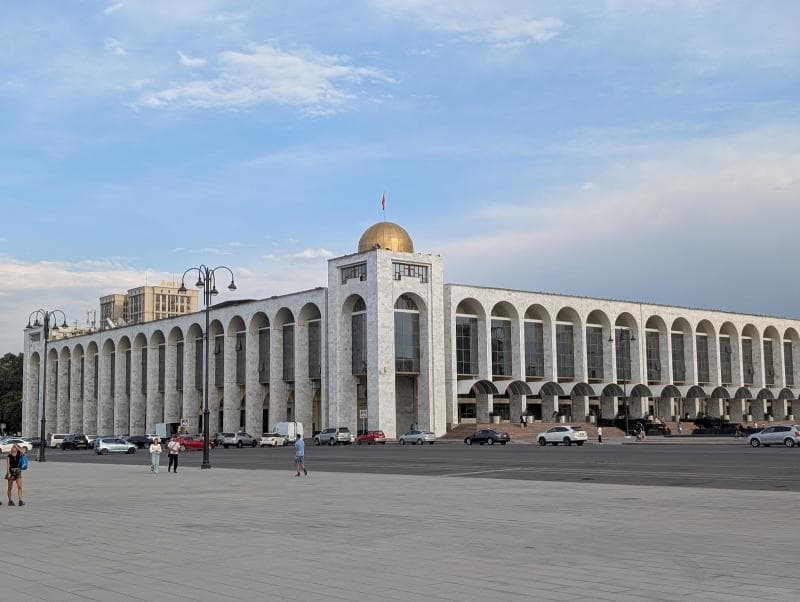
Explore the National History Museum in Bishkek, Kyrgyzstan, a central institution preserving millennia of Kyrgyz history, culture, and nomadic traditions.
Overview
Nestled in the heart of Bishkek, Kyrgyzstan's vibrant capital, the National History Museum of the Kyrgyz Republic stands as a monumental guardian of the nation's rich and complex past. Located prominently on Ala-Too Square, the city's main plaza, this museum is not just a building, but a narrative woven through centuries of nomadic life, Soviet influence, and the journey to independence. Recognized as one of Central Asia's most significant cultural institutions, it offers an immersive experience into the historical and ethnographic heritage of the Kyrgyz people, from ancient artifacts to modern-day chronicles.
The museum's impressive facade, constructed in 1984, hints at the vast collections housed within. Visitors can explore three floors of meticulously curated exhibits, beginning with the earliest evidence of human habitation and tracing the evolution of Kyrgyz society through various epochs. Whether you are captivated by archaeological discoveries, traditional crafts, or the profound story of a nation, the National History Museum provides an unparalleled window into Kyrgyzstan's soul.
History & Cultural Background
The National History Museum's journey began on December 9, 1925, when it was established as the first scientific institution in Kyrgyzstan. It first opened its doors to the public in 1927. Over the decades, the institution underwent several name changes, reflecting the shifting political and cultural landscapes of the region. Initially known as the Central Museum, it later became the Museum of Local Customs in 1933, the Museum of National Culture in 1943, and was renamed the State Historical Museum in 1954. For a period, it was informally known as the Lenin Museum due to its prominent displays related to the Soviet era.
The museum moved into its current distinctive building on Ala-Too Square in 1984. In a significant period between 2016 and 2021, the museum underwent extensive renovations, partly funded by the Turkish Cooperation and Coordination Agency and the Kyrgyz State Treasury. This modernization aimed to reframe the narrative, moving away from explicit Soviet-era propaganda and focusing more comprehensively on the entirety of Kyrgyz history, from ancient times to its contemporary independent identity.
What Makes It Special
What sets the National History Museum apart is its astounding breadth and depth, housing tens of thousands of objects that tell the story of the Kyrgyz people across millennia. Its collections are a real treasure, reflecting the history, culture, way of life, and traditions from ancient times to independent Kyrgyzstan.
- Ancient and Archaeological Riches: Explore rare rock paintings, household items from the Bronze Age, intricate jewelry crafted by nomads between the 1st and 5th centuries CE, and a remarkable collection of Turkic kurgan stelae. The museum also showcases unique stones from Talas bearing runic inscriptions, ancient coins, and ceramics, offering insights into early civilizations and the interactions of nomadic tribes.
- Ethnographic Masterpieces: The museum boasts an extensive collection of ethnographic objects from the late 19th and early 20th centuries. These include beautifully crafted items of felt, leather, wool, and wood, showcasing the artistry of Kyrgyz craftsmen. Visitors can admire traditional knitting and embroidery, national costumes, exquisite women's jewelry, and artistic horse harnesses and gear, many of which are considered part of the world's cultural heritage.
- The Nomadic Spirit: Experience the traditional nomadic lifestyle through exhibits featuring a meticulously crafted, handmade felted nomad yurt and mannequins dressed in authentic traditional clothing. These displays vividly portray the cultural traditions of Kyrgyz nomads.
Stories, Fun Facts & Local Details
Before its comprehensive renovation, the museum was notably recognized for its prominent Soviet-era displays, including murals and statues. A significant shift occurred after 2016, where many of these Soviet-specific elements were removed, making way for a broader historical perspective that celebrates Kyrgyz heritage. This transformation itself tells a story of a nation reclaiming and reinterpreting its past for a new generation. The museum's initial location in 1927 was in one of the rooms of Commander M.V. Frunze's childhood home, a figure so important in early Soviet politics that Bishkek itself was named Frunze for a period.
Today, the museum serves as a vital research and cultural center. It is a member of the International Council of Museums (ICOM) since 1976, actively contributing to the acquisition, storage, and restoration of exhibits, as well as scientific research. This dedication ensures that Kyrgyzstan's unique narrative continues to be preserved and shared with the world.
Visitor Perspective
A visit to the National History Museum is an engaging journey through time. The museum is generally open from Tuesday to Sunday, with varying hours between summer and winter seasons. It is conveniently located on Ala-Too Square, making it an accessible and essential stop for any traveler exploring Bishkek. While much of the labeling is in Russian, efforts are continually made to provide information in other languages, enhancing the experience for international visitors. The recent renovations have resulted in clean, modern displays that provide a clear and visually engaging introduction to Kyrgyz culture and history, particularly for those with limited time.
Coordinates: 74.6038, 42.8777
View on Google Maps💬 How Travelers Describe This Place
Based on community votes
Beautiful
839Photogenic
445Must See
388Unique
289Interesting
141
Traveler Stories
Discover memorable experiences shared by travelers who have visited this place.
No traveler stories yet.
Be the first traveler to share what made this place memorable.
Things to see at State History Museum



Tour
By
Spot
Discover amazing places around the world. Your journey starts here.
Explore
© 2026 TourBySpot. All rights reserved.