Cultural Displays
Bishkek, Kyrgyzstan
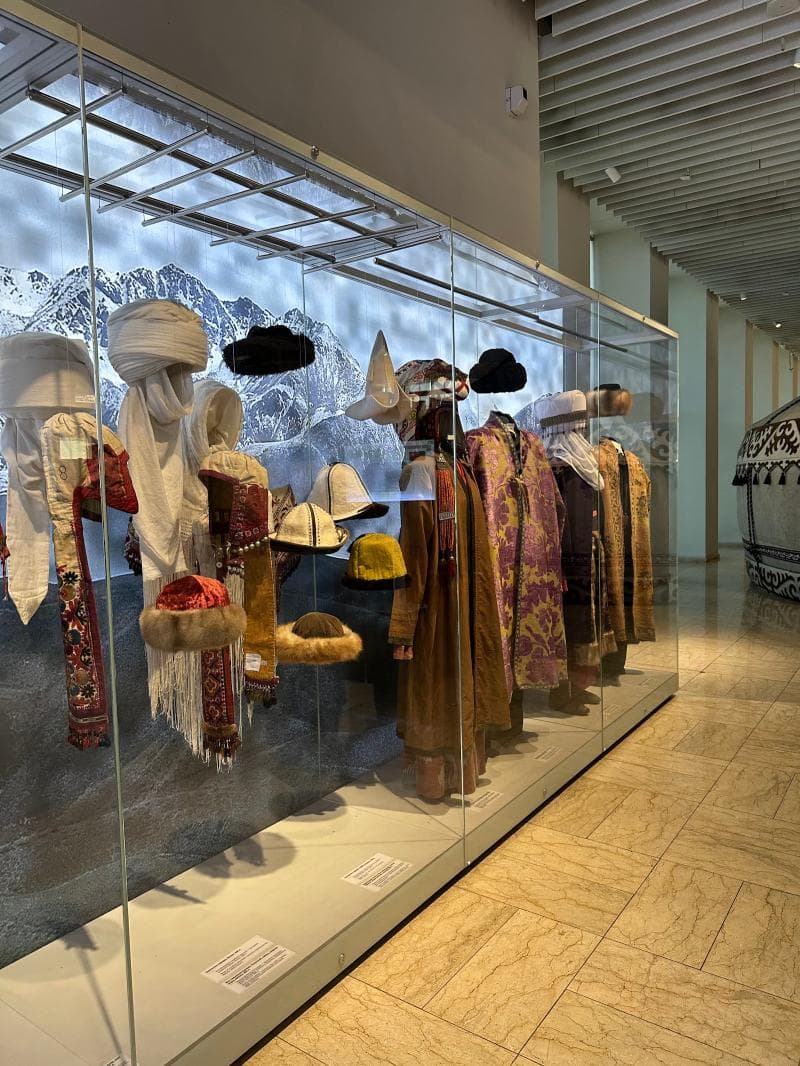
Explore the rich Cultural Displays at the State History Museum in Bishkek, Kyrgyzstan, revealing nomadic traditions, Silk Road heritage, and unique artifacts.
Overview
Stepping into the State History Museum, also known as the National History Museum of the Kyrgyz Republic, in Bishkek, is like embarking on a captivating journey through the heart of Central Asia. Regarded as one of the most important museums in the region, this prominent cultural institution stands proudly on Ala-Too Square, inviting travelers to delve into the profound heritage of the Kyrgyz people.
The museum houses an extensive collection, boasting over 90,000 exhibits that chronicle the story of Kyrgyzstan from its ancient origins to the contemporary era. It's a place where the rich tapestry of nomadic traditions, the echoes of the Silk Road, and the complexities of Soviet history converge, offering a comprehensive and deeply engaging insight into the nation's cultural evolution. Visitors will find themselves surrounded by thousands of artifacts, including intricate sculptures, historical objects, and compelling artworks that bring Kyrgyzstan's past to life.
History & Cultural Background
The foundation of the State History Museum dates back to December 9, 1925, marking its establishment as the first scientific institution in Kyrgyzstan. It officially opened its doors to the public in 1927, initially serving to collect and preserve significant historical and cultural artifacts. Over the decades, the museum underwent several name changes, reflecting the evolving political and cultural landscape of the region, before being officially renamed the State Historical Museum in 1954.
The current distinctive building, which stands near the government house, was constructed in 1984. A significant chapter in the museum's history unfolded between 2016 and 2021 when extensive renovations were undertaken, partially funded by the Turkish Cooperation and Coordination Agency. This revitalization project led to the creation of a new exposition designed to meet international museum standards, showcasing a refreshed narrative of Kyrgyz history from ancient times to the present.
What Makes It Special
The cultural displays at the State History Museum are particularly captivating due to their immense breadth and the tangible connection they provide to Kyrgyzstan's nomadic heritage. Here, you'll encounter a remarkable assortment of cave sculptures from the Bronze Age, ancient coin collections that whisper tales of Silk Road caravans, and exquisite ethnographic objects such as jewelry and traditional clothing dating from the 1st to the 5th century.
One of the most evocative highlights is the meticulously crafted nomad yurt, a portable dwelling made of felt, accompanied by mannequins adorned in vibrant traditional attire. This allows visitors to truly grasp the traditional nomadic lifestyle of the Kyrgyz people. The museum also boasts extensive ethnographic collections from the late 19th and early 20th centuries, featuring beautiful items made of felt, leather, wool, woodworks, intricate knitting, and embroidery, alongside artistic horse harnesses and gear. Reproductions of ancient rock paintings further illuminate the early beliefs and lives of nomadic peoples. The 'Golden Hall' or 'Gold Room' is another magnificent area, showcasing dazzling gold artifacts, though photography is usually prohibited here. The exhibits are thoughtfully arranged in chronological order, guiding you seamlessly through millennia of history.
Stories, Fun Facts & Local Details
The museum is not merely a repository of objects; it's a storyteller. It recounts the struggles of the Kyrgyz people for independence and their ongoing efforts to preserve and revive a unique cultural identity. Imagine Bishkek, once known as Frunze, a name that honored a local figure pivotal in early Soviet politics – a detail that highlights the intertwining of local identity with broader historical currents. The very architecture of the museum, with its distinctive design, tells a story of aspiration and national pride. During the recent renovations, Soviet-era statues and paintings were removed, signaling a contemporary focus on Kyrgyzstan's indigenous history and cultural distinctiveness.
Visitor Perspective
For any curious traveler, a visit to the cultural displays within the State History Museum offers an unparalleled opportunity to immerse oneself in the 'nomadic soul' of Kyrgyzstan. You can expect to spend approximately 3-4 hours exploring the various floors to fully appreciate the depth of its collections. The museum caters to international visitors with most artifacts labeled and described in English, in addition to Kyrgyz and Russian, and audio guides are available for rent. Photography is generally permitted in most areas, provided flash is not used, allowing you to capture memories of this remarkable journey through time. The museum actively functions as a significant research and cultural center, continually enriching its collections and engaging in scholarly cooperation to safeguard and transmit Kyrgyzstan's historical heritage to future generations. It's truly a place where history comes alive, offering a vivid and meaningful introduction to this unique and beautiful country.
Coordinates: 74.6037653, 42.87787034
View on Google Maps💬 How Travelers Describe This Place
Based on community votes
Photogenic
995Beautiful
989Must See
613Interesting
603Unique
581
Traveler Stories
Discover memorable experiences shared by travelers who have visited this place.
No traveler stories yet.
Be the first traveler to share what made this place memorable.

Tour
By
Spot
Discover amazing places around the world. Your journey starts here.
Explore
© 2026 TourBySpot. All rights reserved.