Archaeology Hall
Bishkek, Kyrgyzstan
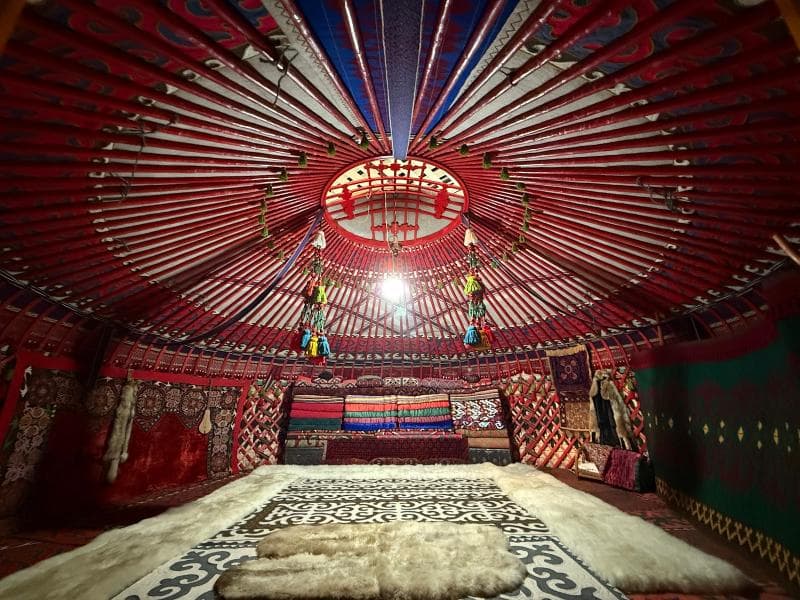
Explore the Archaeology Hall at the State History Museum in Bishkek, Kyrgyzstan, delving into ancient civilizations, Saka gold, and Silk Road treasures.
Overview
Nestled in the vibrant heart of Bishkek, the capital of Kyrgyzstan, the Archaeology Hall within the State History Museum (also known as the National Historical Museum of the Kyrgyz Republic) serves as a profound gateway to Central Asia's ancient past. As one of the largest and most significant museums in the region, its extensive collections—numbering over 90,000 exhibits—offer an unparalleled journey through millennia of human history, from the Stone Age to the modern era. It is a crucial repository of the Kyrgyz people's rich cultural heritage, showcasing their evolution and resilience across diverse historical periods.
The museum itself is an imposing and distinctively designed building located prominently on Ala-Too Square, Bishkek's central plaza. The Archaeology Hall, specifically, is dedicated to unveiling the earliest chapters of this fascinating narrative, meticulously presenting artifacts that speak volumes about ancient civilizations, nomadic tribes, and the pivotal role of the Silk Road in shaping the region.
History & Cultural Background
The roots of the State History Museum trace back to December 9, 1925, when it was established as the first scientific institution in Kyrgyzstan. Over the decades, it underwent several transformations, both in name and location, before settling into its current purpose-built structure in 1984. This architectural landmark was designed to be distinctive and house a continually growing collection of historical and cultural treasures.
A significant renovation project, initiated in 2016 and completed in 2021, dramatically reshaped the museum's focus. While earlier iterations might have leaned heavily on Soviet-era narratives, the revitalized museum, and particularly its Archaeology Hall, now prioritizes showcasing Kyrgyzstan's ancient and traditional culture. This shift has breathed new life into the exhibits, allowing the deep history of the Kyrgyz people to shine through, independent of more recent political overlays. The effort to preserve and present these foundational cultural elements makes the Archaeology Hall a particularly poignant and informative experience.
What Makes It Special
The Archaeology Hall stands out for its extraordinary breadth and depth of artifacts, painting a vivid picture of early life and interactions across Central Asia. Visitors can marvel at relics spanning from the Paleolithic period, through the Bronze and Iron Ages, up to significant finds from the ancient Silk Road. Highlights include impressive Bronze Age cave sculptures, intricate tools, ancient pottery, and captivating rock paintings (petroglyphs) discovered across the country.
Among its most prized possessions are exquisite items from the Saka period, notably 5th-century BC Saka gold jewelry crafted in a distinctive animalistic style, and a rare bronze helmet of a Saka warrior. The hall also proudly displays a remarkably preserved 4th-century BC Syrian glass bowl, a testament to ancient trade networks, unearthed from the Jalpak-Dobo burial ground. Furthermore, a stunning collection of ancient coins offers insights into the economic history of the region. These artifacts collectively underscore Kyrgyzstan's strategic position at the crossroads of ancient civilizations and its rich archaeological legacy.
Stories, Fun Facts & Local Details
One of the most enthralling tales linked to the Archaeology Hall is that of the 5th-century golden mask of Shamsi. This incredible artifact was not discovered by professional archaeologists but by a local farmer in 1958, who stumbled upon it in a gorge near Bishkek. Such a discovery underscores the rich, often serendipitous, archaeological potential hidden within Kyrgyzstan's landscapes.
The museum's post-renovation status has earned it accolades, with many considering it one of the finest museums in Central Asia, celebrated for its thoughtful and engaging displays. Interestingly, the renovation itself was a journey, taking six years to complete and not without its controversies, including charges of misappropriating funds against various government officials. However, the outcome is a modern, accessible museum that truly brings Kyrgyzstan's history to life. The presentation features English, Russian, and Kyrgyz descriptions, making it highly accessible to a global audience.
Visitor Perspective
For any curious traveler in Bishkek, a visit to the Archaeology Hall is an essential experience. It offers a clear and engaging introduction to the millennia-old history of Kyrgyzstan, making complex historical narratives accessible and fascinating. The thoughtful arrangement of artifacts, combined with multilingual descriptions, ensures that visitors from all backgrounds can appreciate the profound significance of each exhibit.
Located centrally on Ala-Too Square, the museum is easily reachable by public transport or taxi. It operates from Tuesday to Sunday, typically between 10:00 and 18:00, though winter hours may see an earlier closing at 17:00. Upon entry, visitors can expect standard security measures, including a mandatory bag check, and while phone photography is generally permitted, a camera check might be part of the protocol. Stepping into the Archaeology Hall is like stepping back in time, offering a profound appreciation for the ancient peoples who shaped this captivating Central Asian nation.
Coordinates: 74.60377, 42.87787
View on Google Maps💬 How Travelers Describe This Place
Based on community votes
Beautiful
953Unique
658Photogenic
585Interesting
69Must See
22
Traveler Stories
Discover memorable experiences shared by travelers who have visited this place.
No traveler stories yet.
Be the first traveler to share what made this place memorable.

Tour
By
Spot
Discover amazing places around the world. Your journey starts here.
Explore
© 2026 TourBySpot. All rights reserved.