St. Olaf’s Church
Tallinn, Estonia
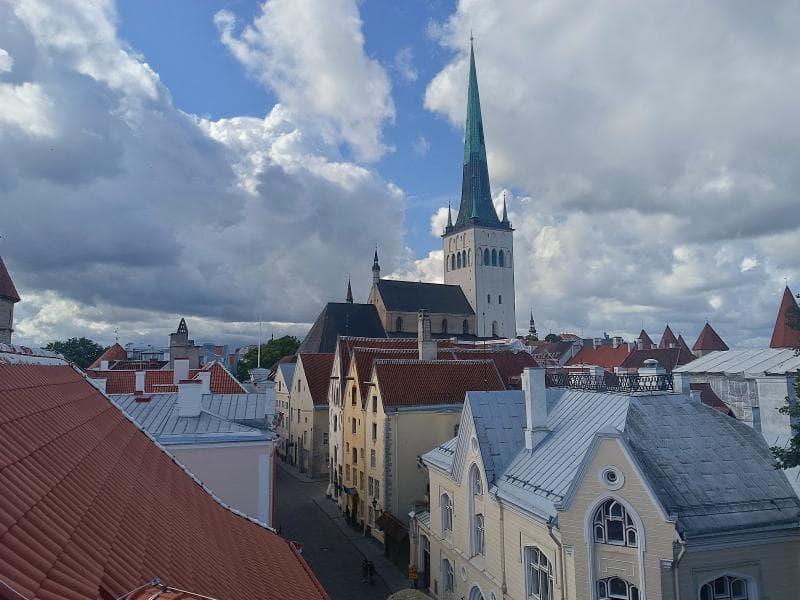
Discover St. Olaf’s Church in Tallinn, Estonia. Explore its medieval history, iconic spire, the KGB's use, and climb for panoramic city views. An unforgettable landmark.
Overview
Nestled within the captivating Old Town of Tallinn, Estonia, St. Olaf’s Church, known locally as Oleviste kirik, stands as an imposing and iconic landmark. Its towering spire is a recognizable feature of the city's skyline, beckoning visitors to discover its rich history. Originally a Catholic church, then Lutheran, it now serves a Baptist congregation, symbolizing centuries of change and resilience. For many, a visit isn't complete without ascending its historic tower for unparalleled panoramic views of the red-tiled roofs of the medieval city, the Baltic Sea, and beyond.
This Gothic masterpiece is more than just an architectural marvel; it is a repository of fascinating tales, historical shifts, and a testament to human endeavor. Its long past has seen it serve as a beacon for sailors and, more recently, as a discreet surveillance post during a turbulent era. Today, it stands as a prominent cultural and historical site, offering a unique window into Tallinn's enduring spirit.
History & Cultural Background
The origins of St. Olaf’s Church are believed to date back to the 12th century, making it one of Tallinn's oldest structures. It was first officially mentioned in historical records in 1267. The church was dedicated to the canonized Norwegian King Olav II Haraldsson, also known as Saint Olaf, who is considered a patron saint of seafarers. This dedication reflects the strong Scandinavian merchant community that was instrumental in the church's early development.
Throughout the 14th and 15th centuries, the church underwent significant expansion and rebuilding. Its most famous period was arguably between 1549 and 1625, when its spire, reaching an astonishing height of approximately 159 meters (522 feet), was considered by some to be the tallest building in the world. This immense height served a practical purpose, acting as a crucial navigational landmark for ships approaching Tallinn from the Gulf of Finland.
However, the church's impressive height also made it a magnet for lightning. Its spire has been struck by lightning at least ten to twelve times, leading to devastating fires and subsequent rebuilds. Major fires occurred in 1625, 1820, and 1931, each time reshaping the church's appearance. Originally a Roman Catholic institution, St. Olaf's transitioned to a Lutheran church during the 16th-century Reformation. Following World War II and the Soviet occupation, it became a Baptist church in 1950, a role it continues to fulfill today.
What Makes It Special
What truly sets St. Olaf's Church apart is its dramatic history of being one of the world's tallest structures and its incredible resilience in the face of repeated destruction. Its current spire, standing at about 123.7 or 124 meters, is a testament to the city's dedication to preserving its heritage. The architectural details, though rebuilt multiple times, retain the grand Gothic style that speaks of medieval craftsmanship and ambition.
Beyond its physical height, its strategic significance throughout history is remarkable. For centuries, it was a literal beacon for trade and navigation. In a more clandestine capacity, during the Soviet era from 1944 to 1991, the KGB famously utilized the church's lofty spire as a radio tower and surveillance point, making it a silent observer of Cold War espionage. This unique blend of religious devotion, architectural ambition, natural peril, and geopolitical intrigue makes St. Olaf's a truly exceptional site.
Stories, Fun Facts & Local Details
A captivating legend surrounds the church's construction. It tells of a mysterious builder named Olev (the Estonian form of Olaf) who agreed to construct the church for a large sum of gold, on the condition that the townspeople discover his name before he finished. As the spire neared completion, the anxious townsfolk sent a spy who overheard Olev's wife singing a lullaby, revealing his name. When they shouted 'Olev!' just as he placed the final cross, he lost his balance and fell to his death. Legend has it that a snake and a toad crawled out of his mouth upon impact, signifying his connection to dark forces. This dramatic tale is even depicted in a mural painting near the church.
Another fun fact is the unofficial agreement in Tallinn's city center: no modern building should surpass St. Olaf's in height, a nod to its historical dominance over the skyline. The church's persistent struggles with lightning strikes and fires have cemented its place in local lore as a building that simply refuses to be conquered, always rising from the ashes. It's a symbol of both vulnerability and unwavering spirit.
Visitor Perspective
For the modern traveler, St. Olaf's Church offers an unforgettable experience. While the interior, now a Baptist church, is relatively simple compared to some ornate European cathedrals, its sheer scale and historical aura are palpable. The real highlight for many is the climb to the observation platform. Be prepared for a vigorous ascent of 232 or 258 steps via a narrow, winding spiral staircase. There is no elevator, so comfortable shoes and a good level of fitness are recommended. However, the effort is immensely rewarded.
From the observation deck, located at a height of 60 meters, you'll be treated to breathtaking 360-degree views of Tallinn's medieval Old Town, with its charming rooftops, defensive walls, and distant views of the port and the Baltic Sea. It's a perfect spot for photography and to gain a true sense of the city's layout. The church tower is typically open to visitors seasonally, from April to October or November, so it's wise to check opening hours before planning your visit.
Coordinates: 24.747806, 59.441417
View on Google Maps💬 How Travelers Describe This Place
Based on community votes
Must See
684Beautiful
363Photogenic
302Unique
250Interesting
88
Traveler Stories
Discover memorable experiences shared by travelers who have visited this place.
No traveler stories yet.
Be the first traveler to share what made this place memorable.
Things to see at St. Olaf’s Church



Tour
By
Spot
Discover amazing places around the world. Your journey starts here.
Explore
© 2026 TourBySpot. All rights reserved.