Historic Bells
Tallinn, Estonia
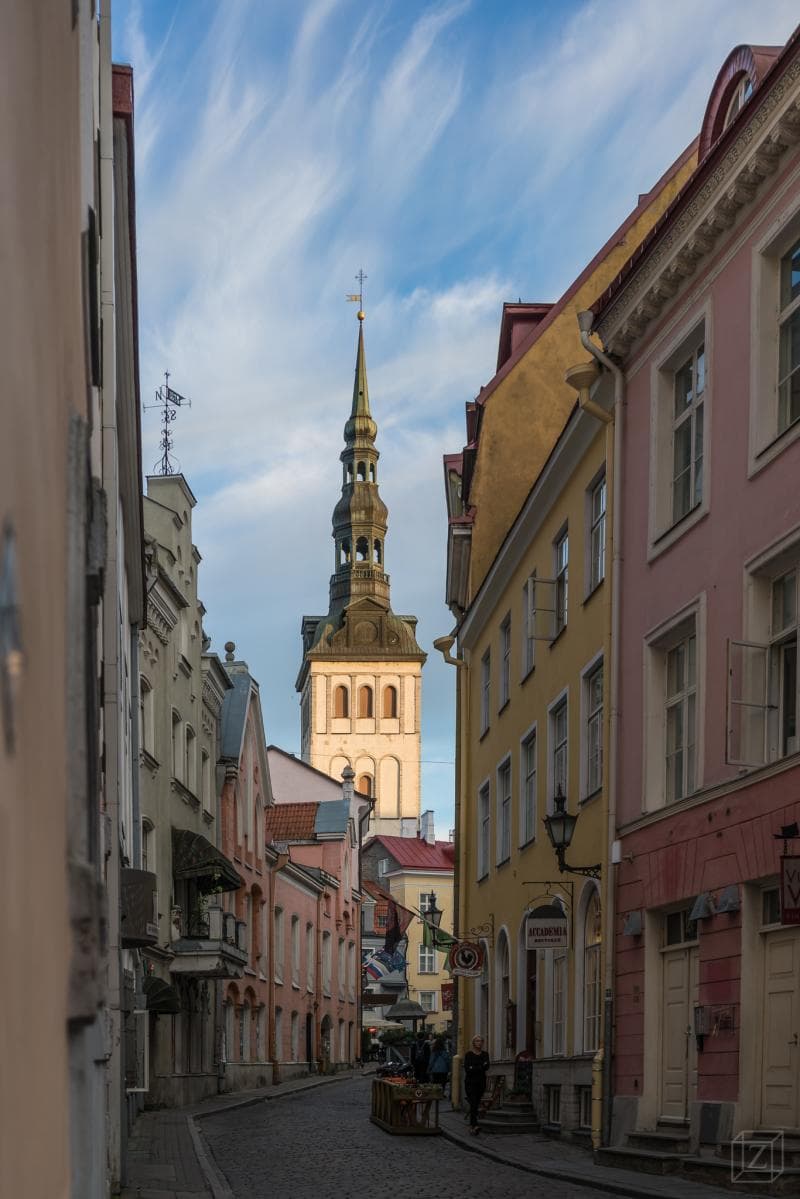
Discover the Historic Bells of St. Olaf’s Church in Tallinn, Estonia – their captivating history, cultural significance, and enduring spirit.
Overview
Deep within the historic Old Town of Tallinn, Estonia, stands St. Olaf’s Church, a magnificent Gothic edifice whose soaring spire has long defined the city's skyline. While many are drawn to its observation platform for panoramic views, the church also houses a fascinating collection of 'Historic Bells' that resonate with centuries of Tallinn’s past. These bells are not merely instruments of time-keeping but are deeply interwoven with the fabric of the city's religious life, public alerts, and cultural memory. Exploring their story offers a unique acoustic journey into the heart of this Baltic capital.
St. Olaf's Church, known locally as Oleviste kirik, is a landmark with a rich and often tumultuous history. Originally built in the 12th century, it has been a Roman Catholic, Lutheran, and now a Baptist church, adapting through the ages while always remaining a central figure in Tallinn's spiritual landscape. The bells housed within its towering belfry have witnessed these transformations, each chime echoing narratives of resilience, community, and faith.
History & Cultural Background
The history of the bells at St. Olaf’s Church is inextricably linked to the church's dramatic past. While the earliest mention of the church dates back to 1267, its medieval bells unfortunately did not survive the numerous devastating fires that plagued the structure over centuries. Records indicate that even in the Middle Ages, the church's chapels possessed their own bells, highlighting their importance in daily life.
A significant event in the early history of the bells occurred in 1525 when the bells from the church chapels had to be surrendered to the city council, not for sacred purposes, but to be melted down for casting cannons. This illustrates the complex interplay between religious and secular needs in medieval Tallinn. One notable bell was cast for St. Olaf's Church in 1437 by a local master named Leifferdes, showcasing the craftsmanship of the era.
Following a particularly destructive fire in 1820, which necessitated extensive reconstruction of the church, a new set of bells was commissioned. The three large bells currently gracing the bell chamber were cast in the workshop of the local Tallinn master Johann Alexander Feldmann. The first was installed in 1838, a donation from the Brotherhood of the Blackheads. A second followed in 1846, and the third, completed by 1850, was made possible by a donation from Emperor Nicholas I. These bells represent a period of rebuilding and renewed hope for the community.
What Makes It Special
The Historic Bells of St. Olaf's Church are special not only for their impressive size and resonant sound but also for the stories they tell of endurance and rebirth. Unlike many European churches that might retain their original medieval bells, those at St. Olaf's are a testament to the community's perseverance in the face of adversity. Each time the church was ravaged by fire – particularly in 1625, 1820, and 1931 – its bells were often melted, only to be recast or replaced.
Beyond their physical resilience, these bells served multiple vital functions in Tallinn's history. They summoned the faithful to worship, marked the passage of hours, and heralded important public events. Crucially, they also acted as an early warning system, tolling to alert citizens of fires or other dangers, a critical role given the wooden construction common in historical towns. The 'voice' of these bells was integral to the rhythm of city life, bridging the spiritual and the practical.
Stories, Fun Facts & Local Details
In Estonian folklore, church bells are sometimes attributed with a 'soul' that is transmitted through their material and sound, making their role in the community deeply spiritual. The tolling of bells could also signify social hierarchies; costly funerals, for instance, involved the ringing of all bells, a privilege not everyone could afford.
A fascinating, though perhaps less melodic, chapter in the tower's history involves the Soviet era. From 1944 to 1991, the tower of St. Olaf's Church, despite its religious significance, was used by the KGB as a radio jamming and surveillance hub. Powerful antennas were installed on the spire to block foreign broadcasts, particularly from Finland, underscoring the tower's strategic importance beyond its spiritual role. It's a striking contrast to the peaceful, guiding sound of the bells.
The frequent lightning strikes that plagued the church's tall spire – at least a dozen times, leading to three major fires – contributed to its dramatic history. This constant rebuilding, and the subsequent recasting of bells, makes them dynamic symbols of Tallinn's enduring spirit.
Visitor Perspective
Today, visitors to St. Olaf's Church can still experience the presence of these historic bells. While the bells themselves are typically not directly accessible to the public for close inspection, their resonant chimes can be heard throughout the Old Town. The journey to the church's observation platform offers not only breathtaking views but also a deeper appreciation for the tower's history, including the belfry where these historic instruments reside.
Climbing the narrow, winding staircase of 232 steps to the viewing platform provides a physical connection to the past, allowing one to imagine the bell-ringers and watchmen who once ascended these very stairs. From this vantage point, one can reflect on the centuries of sounds that have emanated from the church, a soundscape that has shaped Tallinn's identity. The bells, though unseen, remain a vibrant, audible thread connecting the city's ancient past to its vibrant present.
Coordinates: 24.7476, 59.4413
View on Google Maps💬 How Travelers Describe This Place
Based on community votes
Must See
684Beautiful
363Photogenic
302Unique
250Interesting
88
Traveler Stories
Discover memorable experiences shared by travelers who have visited this place.
No traveler stories yet.
Be the first traveler to share what made this place memorable.

Tour
By
Spot
Discover amazing places around the world. Your journey starts here.
Explore
© 2026 TourBySpot. All rights reserved.