Gothic Architecture
Tallinn, Estonia
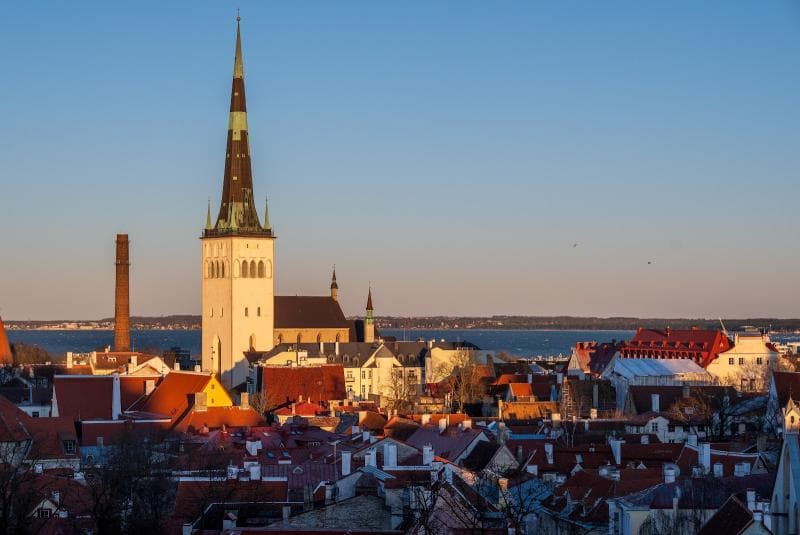
Explore the Gothic architecture of St. Olaf's Church in Tallinn, Estonia. Discover its historic spire, legendary past, and panoramic city views.
Overview
Soaring majestically above Tallinn's UNESCO-listed Old Town, St. Olaf's Church, known locally as Oleviste kirik, stands as a breathtaking testament to Gothic architecture. This historic edifice, dedicated to the Norwegian King Olav II Haraldsson, has been an integral part of Tallinn's skyline and history for centuries. Its commanding presence, characterized by its impressive spire and medieval design, makes it an unmissable landmark for any traveler exploring Estonia's capital.
Originally built as a Roman Catholic church, it later served as a Lutheran church before becoming a Baptist church, reflecting the dynamic religious and political landscape of the region. Today, it not only functions as a place of worship but also offers a unique window into the city's past through its remarkable architecture and storied history.
History & Cultural Background
The earliest records of St. Olaf's Church date back to 1267, although it is widely believed that a church stood on this site even earlier, possibly as a center for Tallinn's Scandinavian community in the 12th century.
The church began to take its distinct Gothic form through significant construction phases during the 14th and 15th centuries. By the time of its completion around 1500, St. Olaf's was a monumental achievement of late Gothic architecture. Its design was influenced by the Gothic styles prevalent in Hanseatic trading towns, utilizing local limestone, which added a unique character to its structure. During the Reformation in the 16th century, the church became a prominent center for Protestantism in Tallinn. Throughout its existence, it has witnessed and survived numerous historical shifts, including changes in denominations and periods of rebuilding after devastating fires.
What Makes It Special
What truly sets St. Olaf's Church apart is its towering Gothic spire. For a period between 1549 and 1625, its spire reached an astonishing height of approximately 159 meters, reputedly making it the tallest building in the world at that time. This immense height served as a crucial navigational beacon for sailors approaching Tallinn's bustling Hanseatic port.
The church's resilience is equally remarkable. Its tower has been struck by lightning at least ten times, leading to several major fires, notably in 1625, 1820, and 1931, which repeatedly destroyed the spire and much of the interior. Each time, the citizens of Tallinn undertook the arduous task of reconstruction, restoring their beloved landmark to its former glory, often incorporating Neo-Gothic elements in the later repairs.
Inside, the church showcases elements typical of Gothic architecture, such as high vaulted ceilings and, despite some interiors being plainer due to historical shifts, an overall sense of grandeur.
Stories, Fun Facts & Local Details
- The Legend of Olev: A captivating local legend surrounds the church's construction. It tells of a mysterious builder named Olev who agreed to build the church's impossibly tall spire for free, provided the townspeople could discover his name. When his name was eventually revealed, Olev tragically fell from the spire, and it is said a toad and a snake crawled out of his mouth upon impact. Frescoes in a nearby chapel are believed to depict this very event.
- Lightning Magnet: The church's spire has a dramatic history of attracting lightning, often resulting in destructive fires. This has earned it a reputation as a 'lightning magnet,' a testament to its imposing height and the vulnerability of its wooden spire to natural forces.
- Cold War Surveillance: During the Soviet occupation from 1944 to 1991, the KGB repurposed St. Olaf's Church tower, transforming it into a radio tower and surveillance point, utilizing its strategic height to monitor the city and jam foreign broadcasts.
Visitor Perspective
For many visitors, the highlight of a trip to St. Olaf's Church is the ascent to its observation platform. Open seasonally, typically from April to October, climbing the approximately 232 to 258 narrow, winding steps to the top offers unparalleled panoramic views of Tallinn's red-tiled rooftops, the sprawling Old Town, Toompea Hill, and the sparkling Tallinn Bay. This physical journey through the historic structure provides a tangible connection to the past and a rewarding vista of one of Europe's best-preserved medieval cities. While the climb can be challenging, the breathtaking 360-degree views make it well worth the effort.
Coordinates: 24.7479, 59.4413
View on Google Maps💬 How Travelers Describe This Place
Based on community votes
Photogenic
996Must See
953Beautiful
658Interesting
585Unique
69
Traveler Stories
Discover memorable experiences shared by travelers who have visited this place.
No traveler stories yet.
Be the first traveler to share what made this place memorable.

Tour
By
Spot
Discover amazing places around the world. Your journey starts here.
Explore
© 2026 TourBySpot. All rights reserved.