Viewing Tower
Tallinn, Estonia
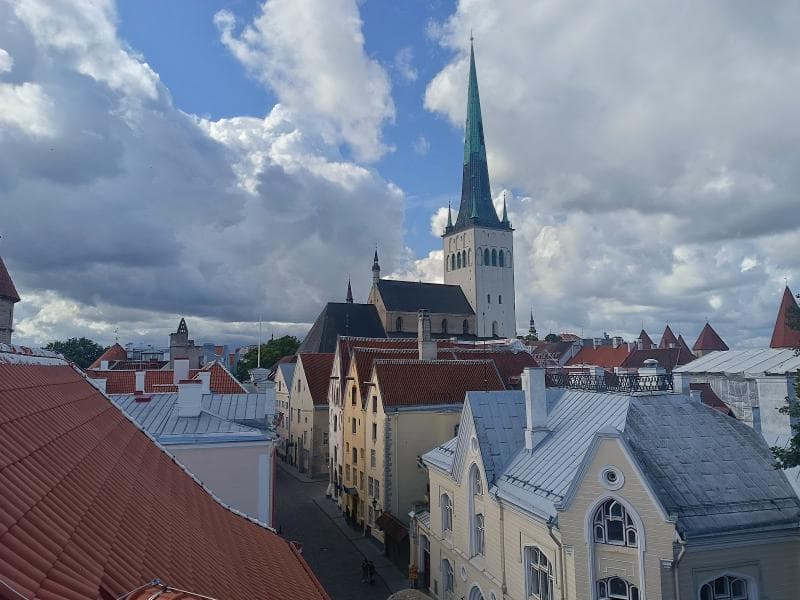
Climb the historic Viewing Tower of St. Olaf's Church in Tallinn, Estonia, for breathtaking panoramic views of the Old Town and Baltic Sea.
Overview
Perched majestically within Tallinn's historic Old Town, the Viewing Tower of St. Olaf's Church, known locally as Oleviste kirik, offers an unparalleled vantage point over Estonia's charming capital. This iconic Gothic structure, with its slender spire, has long dominated the city's skyline, serving as both a spiritual beacon and a practical landmark for centuries. Ascending to its observation deck, located approximately 60 meters above ground, rewards visitors with breathtaking 360-degree panoramas that sweep across the medieval rooftops, the bustling harbor, and the shimmering waters of Tallinn Bay. While the climb is a workout, involving a winding staircase of 232 or 258 steps, the vistas are undeniably worth the effort, providing a unique perspective on Tallinn's rich tapestry of history and urban development.
History & Cultural Background
The origins of St. Olaf's Church trace back to the 12th century, believed to have been established by Scandinavian merchants and named after the canonized Norwegian King Olav II Haraldsson, a patron saint of seafarers. The first written records mentioning the church date to 1267, with significant reconstruction occurring during the 14th century, transforming it into the Gothic masterpiece seen today. For a period between 1549 and 1625, the church's spire, then reaching an astonishing height of around 159 meters, was reputedly the tallest building in the world. This made it an indispensable navigational aid for ships approaching Tallinn's port. The church's history mirrors Tallinn's tumultuous past, transitioning from a Roman Catholic edifice to a Lutheran church during the Reformation, and later, during the Soviet era, becoming a Baptist congregation, which it remains today.
What Makes It Special
Beyond its impressive height and panoramic views, the Viewing Tower holds a special place in Tallinn's narrative due to its dramatic history and multifaceted roles. Its spire has been a recurrent victim of lightning strikes, having been hit at least a dozen times and enduring major fires in 1625, 1820, and 1931, each time necessitating extensive rebuilding. This resilience against natural forces has cemented its status as a symbol of the city's endurance. Furthermore, during the Cold War, from 1944 to 1991, the tower gained an unexpected clandestine function: the Soviet KGB utilized its towering height as a radio transmission and surveillance point. They installed antennas to jam foreign radio signals, including those from Finland, turning a spiritual landmark into an espionage hub. Today, an unofficial agreement or regulation in Tallinn reportedly prevents new constructions in the city center from surpassing St. Olaf's in height, preserving its historical dominance over the skyline.
Stories, Fun Facts & Local Details
The construction of St. Olaf's Church is intertwined with a captivating medieval legend. The tale speaks of a master builder, named Olev, who agreed to construct the church for a hefty fee. To avoid payment, the townspeople sought to discover his name. Just as Olev placed the final cross atop the spire, a spy overheard his wife singing a lullaby revealing his name. Upon hearing his name called, Olev was startled, fell from the spire, and turned to stone upon impact. Legend has it that a toad and a snake crawled out of his mouth when he hit the ground. This vivid story adds a mystical layer to the church's already rich history. Another fascinating detail is the sheer physical challenge of the ascent. The narrow, spiral staircase is an authentic journey through centuries of history, offering glimpses of the church's sturdy medieval construction. For those with a keen eye, the platform at 60 meters provides an exceptional vantage point to observe the intricate details of Tallinn's Old Town, from its terracotta roofs to its defensive walls, all laid out like a historical map beneath.
Visitor Perspective
Climbing the Viewing Tower of St. Olaf's Church is an experience often described as both challenging and immensely rewarding. The 232 to 258 steps of the winding staircase are steep and narrow, a genuine physical undertaking that transports you through the heart of this ancient structure. However, upon reaching the observation deck, visitors are greeted with one of the most comprehensive and beautiful views of Tallinn. From this elevated perspective, the city's red-tiled roofs, the spires of other churches, the expanse of the Baltic Sea, and the modern city beyond unfold in a spectacular panorama. Many find the experience offers a unique sense of accomplishment and a deeper appreciation for Tallinn's historical architecture. The tower is typically open seasonally from April to October, so planning a visit during these months is essential to experience this iconic viewpoint.
Coordinates: 24.747806, 59.441417
View on Google Maps💬 How Travelers Describe This Place
Based on community votes
Must See
996Unique
673Photogenic
186Beautiful
143Interesting
80
Traveler Stories
Discover memorable experiences shared by travelers who have visited this place.
No traveler stories yet.
Be the first traveler to share what made this place memorable.

Tour
By
Spot
Discover amazing places around the world. Your journey starts here.
Explore
© 2026 TourBySpot. All rights reserved.