Nave
Tallinn, Estonia
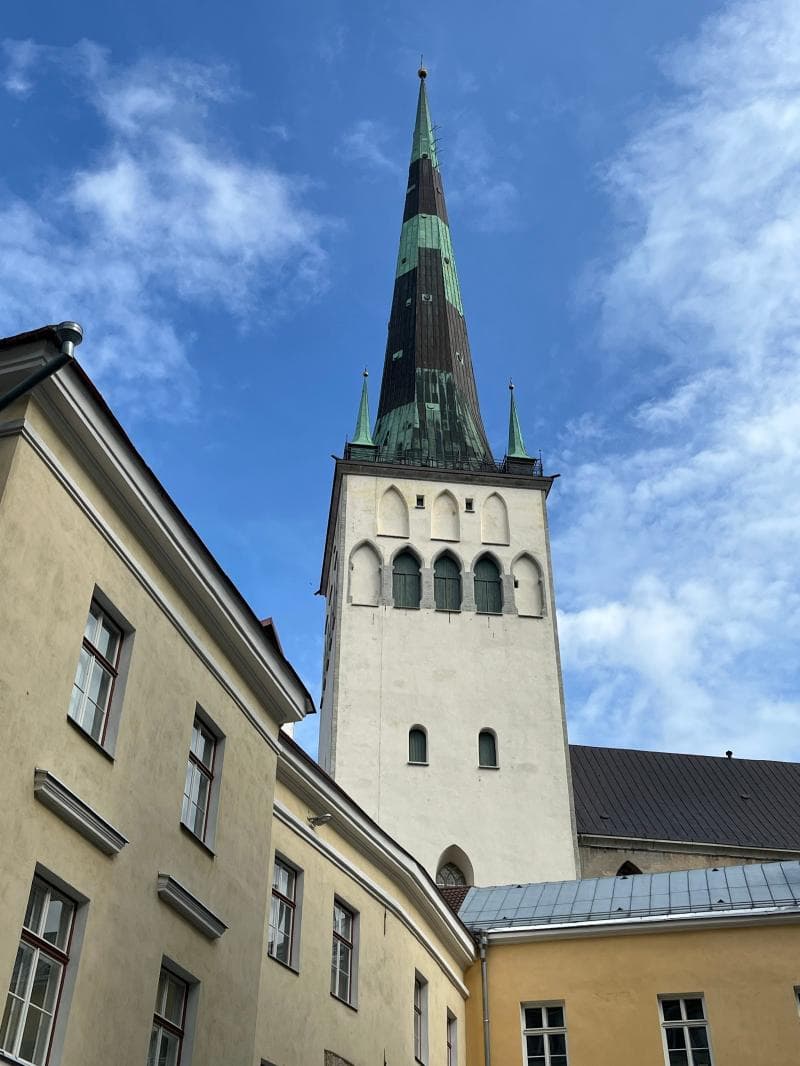
Explore the majestic nave of St. Olaf's Church in Tallinn, Estonia. Discover its Gothic architecture, rich history, and unique cultural significance.
Overview
Stepping inside St. Olaf’s Church, or Oleviste kirik as it's known locally, in Tallinn, Estonia, one is immediately struck by the sheer scale and architectural grandeur of its nave. This central part of the church, where the congregation gathers, is a breathtaking example of Gothic design, reflecting centuries of history and resilience. The nave's impressive height and intricate details offer a profound sense of awe, transporting visitors to a bygone era of medieval craftsmanship and devotion. It stands as a silent testament to the city's rich past, its unwavering faith, and the remarkable architectural ambitions of its builders.
As the largest medieval building in Tallinn, St. Olaf's Church has dominated the city's skyline for centuries. While its towering spire, once among the world's tallest structures, draws the eye from afar, it is within the nave that the church's true character and historical depth can be fully appreciated.
History & Cultural Background
The origins of St. Olaf's Church are believed to trace back to the 12th century, with the first written records appearing in 1267. It was established by Scandinavian merchants and dedicated to the sainted Norwegian King Olav II Haraldsson, a patron saint of seafarers. The current structure began to take shape in the early 14th century, undergoing significant construction phases through the 15th century. A major fire in 1433 necessitated extensive rebuilding, transforming the church into a basilica form. The nave, as it largely stands today, was constructed between 1436 and 1450, becoming longer and wider to its present dimensions.
This medieval marvel has witnessed significant transformations, transitioning from a Roman Catholic church to a Lutheran one during the Reformation, and eventually becoming a Baptist church in 1950. Its enduring presence through wars, fires, and changing political landscapes underscores its deep cultural significance to Tallinn.
What Makes It Special
The nave of St. Olaf's Church is particularly special due to its exceptional height and architectural features. The central nave, crowned with elegant star vaults, soars to an impressive 31 meters, making it the tallest such structure in the Baltic region. This verticality, combined with the soaring pointed arches and robust columns, creates an uplifting and awe-inspiring space that defines Gothic architecture.
The interior's understated elegance, characterized by its high vaulted ceilings and beautiful stained glass windows, provides a serene and contemplative atmosphere. Despite numerous devastating fires throughout its history—sparked by lightning strikes in 1625, 1820, and 1931—the citizens of Tallinn repeatedly rebuilt and restored the church, ensuring the preservation of this magnificent space.
Stories, Fun Facts & Local Details
St. Olaf's Church is steeped in fascinating legends. One popular tale recounts the story of an architect, often referred to as 'Olaf', who promised to build the church's remarkably tall spire. He agreed to forgo payment if the townspeople could discover his name before the structure was completed. As he placed the final cross atop the spire, a spy, having overheard his name from a lullaby sung by his wife, shouted 'Olaf!' Startled, the architect lost his footing and fell to his death. Legend says that as he hit the ground, a toad and a snake emerged from his mouth, a detail still referenced by a cenotaph on the church's exterior wall.
Another remarkable fact is the church's tower, which, at its peak around the 16th century, reached 159 meters, reputedly making it the tallest building in the world for a period. Today, the city of Tallinn respects this historical prominence with an unofficial regulation preventing modern buildings in the city center from exceeding the current height of St. Olaf's spire. During the Soviet occupation, the church's towering spire was even used by the KGB as a radio tower and surveillance point.
Visitor Perspective
For the curious traveler, exploring the nave of St. Olaf's Church is an essential part of a visit to Tallinn's Old Town. As you wander through this expansive space, look up at the intricate star vaults that crown the ceiling and notice the traditional brass chandeliers that add to the historic ambiance. The simple wooden pews invite quiet reflection, offering a moment of peace amidst your travels.
While the interior provides a rich historical and architectural experience, many visitors choose to ascend the church's tower. Though the climb of 232 to 258 narrow, winding steps can be physically demanding, it rewards you with panoramic 360-degree views of Tallinn's Old Town, the red rooftops, Tallinn Bay, and the surrounding cityscape from the 60-meter-high observation platform. This unparalleled perspective, where history meets the modern world, offers a memorable experience and a deeper appreciation for this iconic Estonian landmark.
Coordinates: 24.747806, 59.441417
View on Google Maps💬 How Travelers Describe This Place
Based on community votes
Interesting
872Unique
846Photogenic
684Must See
121Beautiful
87
Traveler Stories
Discover memorable experiences shared by travelers who have visited this place.
No traveler stories yet.
Be the first traveler to share what made this place memorable.

Tour
By
Spot
Discover amazing places around the world. Your journey starts here.
Explore
© 2026 TourBySpot. All rights reserved.