Church Interior
Tallinn, Estonia
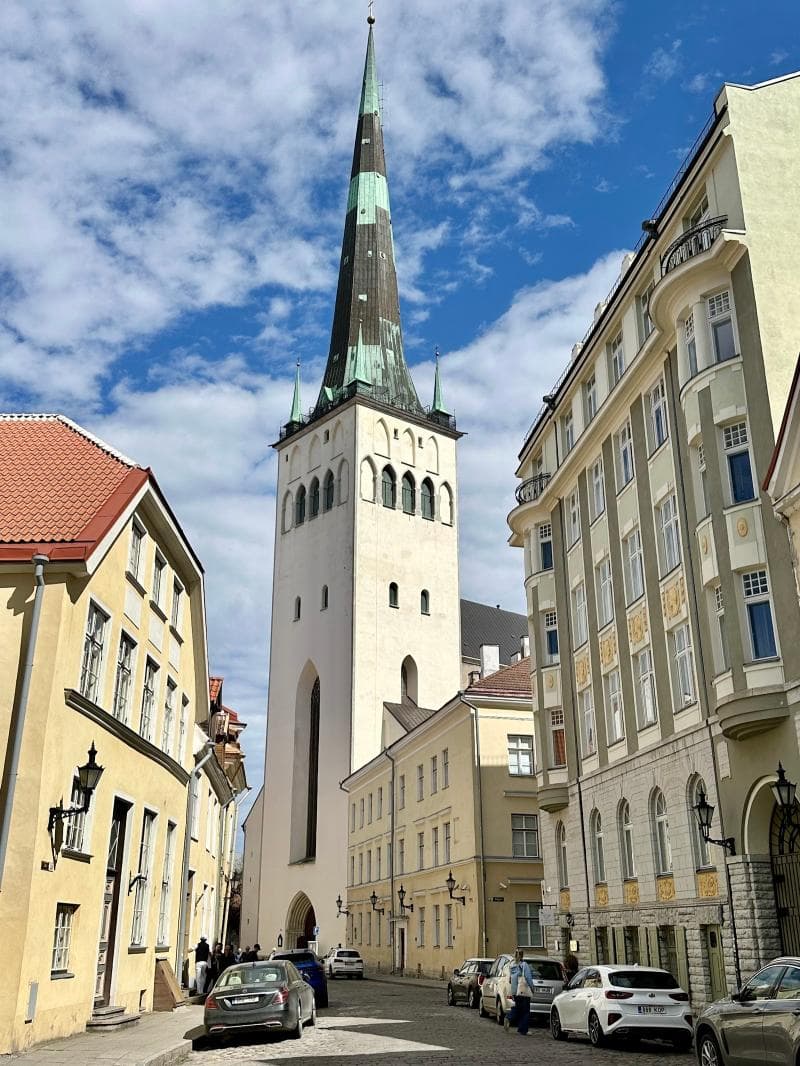
Explore the resilient interior of St. Olaf's Church in Tallinn, Estonia. Discover its neo-Gothic charm, rich history of survival, and peaceful ambiance.
Overview
Stepping inside St. Olaf's Church in Tallinn, Estonia, one encounters an interior that speaks volumes of its tumultuous past and enduring spirit. While its towering spire, once the tallest in the world, often captures the initial gaze from afar, the church's interior offers a contrasting experience of solemnity and architectural grandeur. Characterized by its soaring vaulted ceilings and a distinct sense of peace, the space invites visitors to reflect on centuries of history. The interior is primarily neo-Gothic, a style largely established after significant restorations in the 19th century, yet it retains echoes of its medieval origins. It presents a remarkable blend of resilience and adaptation, a testament to the numerous transformations the building has undergone.
Today, as a Baptist church, its internal decor is often described as more understated compared to its Catholic or Lutheran predecessors, fostering a serene atmosphere that encourages introspection rather than overwhelming with elaborate adornments. Visitors will find medieval hardwood floors and fan-vaulted ceilings contributing to a peaceful ambiance.
History & Cultural Background
The history of St. Olaf's Church's interior is a vivid narrative of destruction and rebirth. First mentioned in 1267, the church was originally a Roman Catholic edifice, believed to have been founded even earlier, possibly in the 12th century, by Scandinavian merchants.
During the Reformation in 1524, a significant event dramatically reshaped the church's interior. A turbulent crowd of reformists plundered the sacred space, devastating much of its medieval furnishings, including numerous paintings, altars, and sculptures. This act of iconoclasm stripped the church of many of its original Catholic embellishments.
The building's interior has also been repeatedly affected by fires, notably in 1625, 1820, and 1931, often triggered by lightning strikes to its lofty spire. Each calamity necessitated extensive rebuilding and restoration. The neo-Gothic interior that largely defines the space today was completed around 1840, following the fire of 1820. This succession of rebuilds means that while the core Gothic structure endures, the interior elements reflect different periods of restoration and changing religious practices, moving from Catholic to Lutheran and eventually, in 1950, becoming a Baptist church.
What Makes It Special
What makes the interior of St. Olaf's Church particularly special is its compelling story of survival and transformation. Despite being repeatedly ravaged by fire and iconoclasm, the fundamental Gothic shell has persevered. The lofty vaulted ceilings, a hallmark of Gothic architecture, still draw the eye upwards, conveying a sense of majesty and aspiration that has inspired awe for centuries.
The current neo-Gothic stylings, largely a product of 19th-century restoration, offer a glimpse into a later architectural interpretation of spiritual grandeur, harmoniously blending with the older structural elements. The arched altar, adorned with a painting depicting the crucifixion of Christ, stands as a focal point, reminding visitors of the church's enduring religious purpose through its many iterations. The simplicity of its current Baptist configuration, in contrast to its more ornate past, highlights an architectural honesty, allowing the sheer scale and structural beauty of the building to take precedence. The presence of medieval hardwood floors and fan-vaulted ceilings further underscores its historical depth and enduring craftsmanship.
Stories, Fun Facts & Local Details
While many legends of St. Olaf's Church focus on its exterior, particularly the mythical builder Olaf and his tragic fall from the spire, the interior holds its own tales of historical drama. One striking historical detail is the intensity of the Reformation's impact: the interior was not merely redecorated but actively 'plundered' by zealous reformists in 1524. This dramatic event erased much of the accumulated medieval artistry and iconography, leaving behind a starker canvas for future generations to rebuild upon.
Interestingly, despite the many devastating fires, the church's tower remained standing enough to be restored, which contributed to the survival of the main interior structure. The repeated destructions and subsequent rebuildings underscore the immense importance the church held for the community, always prompting its resurrection, even if its internal appearance evolved. Today, as a functioning Baptist church, it provides a fascinating example of how a historic structure can continue to serve a contemporary religious community, adapting its interior to its current liturgical needs while preserving its architectural heritage.
Visitor Perspective
For the curious traveler, the interior of St. Olaf's Church offers a powerful, yet unpretentious, experience. Unlike some highly decorated European cathedrals, the emphasis here is on space, light, and history. The atmosphere is often described as peaceful and reflective, providing a quiet respite from the bustling streets of Tallinn's Old Town. While ascending the tower offers breathtaking panoramic views of the city, the ground-level interior provides a different kind of perspective – one focused inward, on the centuries of worship, resilience, and transformation contained within its ancient walls.
Visitors can freely enter the church to admire its impressive architecture and soak in its unique ambiance. Observing the high ceilings, the simple altar, and the general layout helps to piece together the church's long and complex story, from its medieval foundations through its many periods of Catholic, Lutheran, and now Baptist congregation. It's a place where history feels tangible, not just through preserved artifacts, but through the very structure that has stood the test of time, fire, and shifting religious tides.
Coordinates: 24.747806, 59.441417
View on Google Maps💬 How Travelers Describe This Place
Based on community votes
Photogenic
996Must See
953Beautiful
658Interesting
585Unique
69
Traveler Stories
Discover memorable experiences shared by travelers who have visited this place.
No traveler stories yet.
Be the first traveler to share what made this place memorable.

Tour
By
Spot
Discover amazing places around the world. Your journey starts here.
Explore
© 2026 TourBySpot. All rights reserved.