Sarajevo Tunnel Museum
Sarajevo, Bosnia and Herzegovina
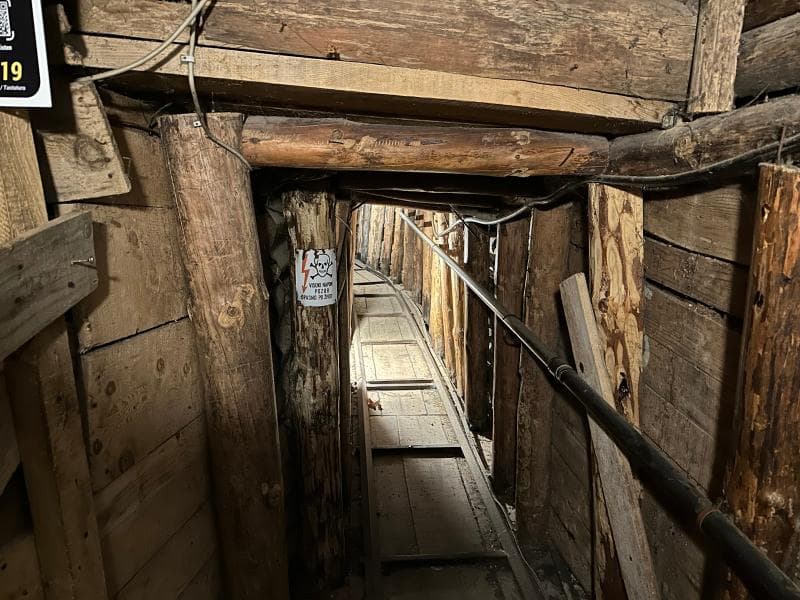
Explore the Sarajevo Tunnel Museum (Tunnel of Hope) in Sarajevo, Bosnia and Herzegovina, a vital lifeline during the 1992-1995 siege, showcasing resilience and history.
Overview
The Sarajevo Tunnel Museum, often referred to as the 'Tunnel of Hope' (Tunel spasa) or 'Tunnel of Salvation,' stands as a profound testament to human resilience and ingenuity in Sarajevo, Bosnia and Herzegovina. This historical site preserves a crucial underground passage that served as the sole lifeline for the besieged city during the Bosnian War from 1992 to 1995. Today, it operates as a museum, offering visitors a poignant glimpse into one of the darkest periods of recent history.
Located beneath the Sarajevo Airport runway, the museum is situated within the unassuming house that once concealed the tunnel's entrance on the Butmir side. Visitors can walk through a preserved section of the original tunnel, typically around 20 to 25 meters long, experiencing the cramped and challenging conditions faced by those who traversed it during the war.
The museum complex includes the Kolar family home, which houses various wartime artifacts, compelling photographs, and documentary films that explain the tunnel's construction and its vital role. It is an emotionally resonant experience, intended to educate and remind future generations of the struggles and extraordinary spirit of the people of Sarajevo.
History & Cultural Background
The Siege of Sarajevo, lasting 1,425 days, was the longest siege of a capital city in modern warfare, effectively cutting off the city from the outside world. Bosnian Serb forces completely encircled Sarajevo, severely limiting access to food, medicine, and other essential supplies.
In response to this dire situation, the Bosnian Army, along with dedicated civilians, initiated a secret project in March 1993, codenamed 'Objekt BD.' Their objective was to construct an underground tunnel that would connect two Bosnian-held neighborhoods: Dobrinja, within the besieged city, and Butmir, on the other side of the UN-controlled airport runway.
Dug almost entirely by hand, with rudimentary tools like pickaxes and shovels, the tunnel was a monumental feat of engineering and human will. Workers labored in round-the-clock shifts, facing constant shelling, perilous underground water, and unstable soil. Despite these immense challenges, the approximately 800-meter-long tunnel, measuring about 1.6 meters in height and 1 meter in width, was completed in just four months, by July 1993. This clandestine passage quickly became the city's indispensable lifeline.
What Makes It Special
The Sarajevo Tunnel's uniqueness lies in its extraordinary purpose and the profound impact it had on the survival of Sarajevo's population. It served as the sole conduit for humanitarian aid, food, medical supplies, and even weapons, bypassing the international arms embargo and allowing the city's defenders to receive crucial military provisions.
Beyond material goods, the tunnel facilitated the movement of people, enabling injured civilians to be taken out for better medical treatment and connecting families separated by the conflict. It represented the collective will to survive and resist, transforming from a secret military project into a powerful symbol of hope and defiance. Its very existence was a testament to the resourcefulness and determination of the people facing unimaginable adversity.
Stories, Fun Facts & Local Details
The tunnel was initially a muddy, hand-carried passage. However, it quickly evolved with the installation of small railway tracks and wagons, capable of transporting up to 400 kilograms of supplies at a time. This ingenuity highlights the desperate measures taken to sustain the city.
One of the most notable historical anecdotes involves the former Bosnian President Alija Izetbegović, who was transported through the tunnel in his wheelchair on its railway system, allowing him to attend peace talks and engage with the outside world.
Statistics reveal the sheer scale of the tunnel's importance: it is estimated that approximately 1 million people passed through it, and millions of kilograms of food, medicine, and other goods flowed into the besieged city. On average, 4,000 people and 20 tons of materials traversed the tunnel daily. The Kolar family, whose house became the tunnel's entrance, played a vital role, and their home is now the heart of the museum, preserving their personal connection to this historic site.
Visitor Perspective
A visit to the Sarajevo Tunnel Museum is a deeply moving and educational experience. Upon arrival, you'll see the modest house that served as the secret entrance, its facade still bearing scars from the war. Inside, you can watch an 18-minute documentary film providing context to the siege and the tunnel's construction, offering a powerful introduction to the narrative.
The museum exhibits a collection of military equipment, uniforms, personal items, and photographs, vividly depicting life during the siege. The highlight for many is walking through the preserved section of the actual tunnel. While short, this walk provides a tangible, visceral connection to the past, allowing visitors to feel the confined space and imagine the journeys taken by thousands. It's advisable to wear comfortable shoes due to the nature of the terrain. The experience is designed to be thought-provoking, leaving a lasting impression of the human spirit's capacity for survival and hope amidst conflict.
Coordinates: 18.33722, 43.81972
View on Google Maps💬 How Travelers Describe This Place
Based on community votes
Interesting
556Must See
394Beautiful
269Photogenic
254Unique
145
Traveler Stories
Discover memorable experiences shared by travelers who have visited this place.
No traveler stories yet.
Be the first traveler to share what made this place memorable.
Things to see at Sarajevo Tunnel Museum



Tour
By
Spot
Discover amazing places around the world. Your journey starts here.
Explore
© 2026 TourBySpot. All rights reserved.