Reconstructed Rooms
Sarajevo, Bosnia and Herzegovina
Explore the Sarajevo Tunnel Museum's reconstructed rooms and preserved tunnel, a powerful symbol of hope and resilience in Bosnia and Herzegovina.
Overview
The Sarajevo Tunnel Museum, often reverently referred to as the 'Tunnel of Hope' or 'Tunnel of Salvation' (Tunel spasa), stands as a profound testament to human resilience during the harrowing Siege of Sarajevo from 1992 to 1996. Located in Sarajevo, Bosnia and Herzegovina, this unique museum is built around a section of the vital underground passageway that served as the city's sole connection to the outside world for over three years. [28, 35]
Today, the museum occupies the former private home of the Kolar family, whose cellar famously served as the entrance to the tunnel on the Butmir side. [28, 30] Visitors can explore a preserved section of the original tunnel, offering a tangible connection to the past, and delve into extensive exhibits housed within the converted rooms of the family home. [27, 28, 30]
History & Cultural Background
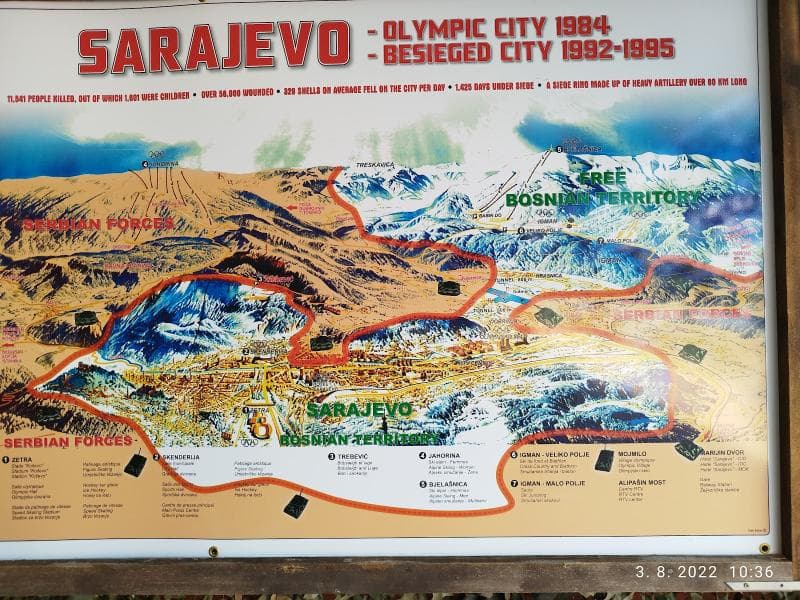
During the Siege of Sarajevo, the longest siege of a capital city in modern warfare, the city was entirely encircled and cut off by the Army of Republika Srpska. [28, 30] With all supply routes blocked, the citizens faced severe shortages of food, medicine, and other essential provisions. [29]
In this desperate situation, the Bosnian Army initiated a secret project in March 1993, codenamed 'Objekt BD', to construct a tunnel underneath the Sarajevo Airport runway, an area controlled by the United Nations. [28, 31] The tunnel was designed to link the besieged Dobrinja neighborhood with the free territory of Butmir. [28]
Construction was an immense undertaking, carried out manually by Bosnian volunteers working in grueling 8-hour shifts, primarily using shovels and picks. [5, 14] Despite constant shelling, underground water, and a lack of proper equipment, the nearly 800-meter-long tunnel, measuring about 1.6 meters high and 1 meter wide, was completed in just over four months, by July 1993. [28, 31, 35] It became an indispensable lifeline, allowing the flow of humanitarian aid, food, fuel, weapons, and providing a route for people, including wounded civilians and President Alija Izetbegović, to enter and exit the city. [28, 31, 35]
What Makes It Special
What makes the Sarajevo Tunnel Museum particularly special is its direct connection to the living history of the siege, particularly through its 'reconstructed rooms' which are, in fact, the original rooms of the Kolar family home, transformed into powerful exhibition spaces. [30, 27]
These converted rooms within the house now serve as galleries displaying an array of wartime artifacts, personal items, photographs, and maps that vividly illustrate the harsh realities of life under siege and the tunnel's vital role. [27, 30] While not literal recreations of living spaces with period furniture, these rooms are meticulously arranged to convey the historical and emotional context, effectively reconstructing the narrative of survival and ingenuity. The careful curation within the Kolar family's former residence allows visitors to step into the very environment where critical decisions were made and incredible efforts undertaken to sustain a besieged city. [30]
Stories, Fun Facts & Local Details
The story of the Kolar family is central to the museum's narrative. Their private home was chosen due to its strategic location, and they bravely allowed its use as the tunnel's entrance, enduring significant risk and hardship. [31, 36] The family's continued dedication to preserving this history is evident, with the house left in a state that reflects its wartime experience. [21]
Inside these exhibition rooms, you'll find fascinating details that bring the past to life. There are improvised tools used for digging, the narrow-gauge railway tracks that once carried essential supplies and people, and countless photographs capturing the grim determination of Sarajevo's citizens. [5, 15, 30] An impactful 18-minute documentary film screens in one of the rooms, featuring archival footage of the tunnel in use, offering a powerful glimpse into the daily struggles and resilience. [28, 30]
It's estimated that during its operation, the tunnel saw the passage of over a million people and transported millions of tons of food and other goods, truly earning its moniker as the 'Tunnel of Hope'. [5, 16]
Visitor Perspective
Visiting the Sarajevo Tunnel Museum offers a deeply emotional and educational experience. Walking through the preserved section of the tunnel—a mere 20 to 125 meters of the original 800-meter length—provides a visceral understanding of the cramped, dark, and often muddy conditions that thousands endured daily. [3, 29, 30] It is a humbling journey that inspires reflection on the human spirit's extraordinary ability to adapt and survive. [29]
The exhibitions within the Kolar family's converted rooms complement this physical experience, providing crucial context and personal stories that resonate long after the visit. The displayed artifacts, from military uniforms to everyday items, coupled with powerful photographs and the documentary, help visitors grasp the immense scale of the siege and the collective effort behind this engineering marvel. This combination of walking through history and witnessing its remnants in the reconstructed spaces fosters a profound appreciation for the resilience of Sarajevo's people. [29, 30]
Coordinates: 18.337212125052623, 43.81975654423921
View on Google Maps💬 How Travelers Describe This Place
Based on community votes
Photogenic
556Must See
422Beautiful
394Unique
269Interesting
145
Traveler Stories
Discover memorable experiences shared by travelers who have visited this place.
No traveler stories yet.
Be the first traveler to share what made this place memorable.

Tour
By
Spot
Discover amazing places around the world. Your journey starts here.
Explore
© 2026 TourBySpot. All rights reserved.