Military Artifacts
Sarajevo, Bosnia and Herzegovina
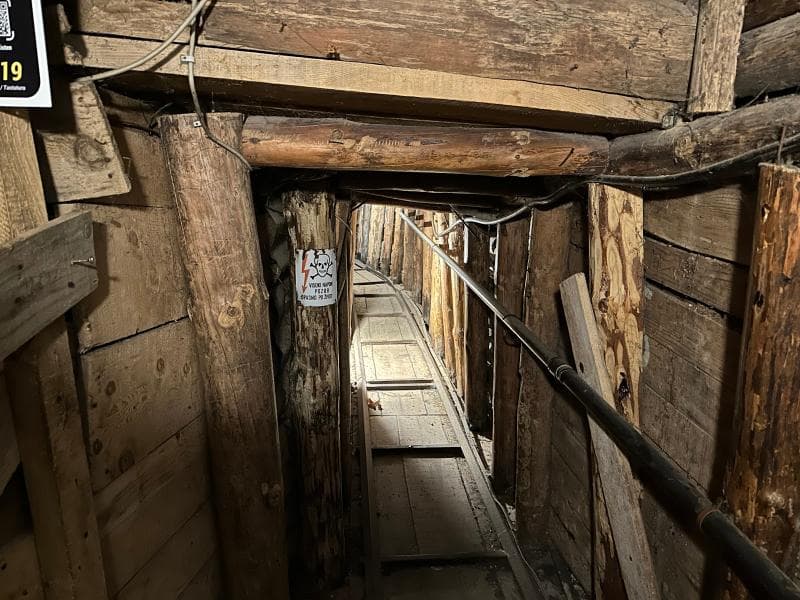
Explore the Military Artifacts at the Sarajevo Tunnel Museum in Sarajevo, Bosnia and Herzegovina, revealing powerful stories of survival and resilience during the Bosnian War.
Overview
The Sarajevo Tunnel Museum, often referred to as the 'Tunnel of Hope,' stands as a profound testament to human resilience and ingenuity during the brutal Siege of Sarajevo (1992-1996). Within this historic site, the exhibition of 'Military Artifacts' offers a raw and tangible connection to the city's desperate struggle for survival. These artifacts are not merely relics; they are storytellers, representing the courage, resourcefulness, and daily sacrifices made by the citizens and defenders of Sarajevo when the city was entirely cut off from the outside world. They provide a vital educational insight into a pivotal period in Bosnian history.
History & Cultural Background
The Bosnian War, particularly the Siege of Sarajevo, marked one of the darkest chapters in modern European history. For 1,425 days, from 1992 to 1996, Sarajevo was besieged by Bosnian Serb forces, rendering it an isolated enclave. Food, medicine, electricity, and all essential supplies were virtually nonexistent, and the city was under constant bombardment and sniper fire. In this dire situation, the Bosnian Army, along with civilians, undertook the monumental task of constructing a secret tunnel. Beginning in March 1993, this 800-meter-long, 1.6-meter-high, and 1-meter-wide underground passage was dug by hand, beneath the Sarajevo airport runway, which was ostensibly under United Nations control. Completed in just four months, by July 1993, it became the city's sole lifeline, connecting the besieged Dobrinja neighborhood with free Bosnian territory in Butmir.
What Makes It Special
The 'Military Artifacts' section of the Sarajevo Tunnel Museum is unique because it directly showcases the practicalities of wartime survival and defense. Visitors can see a compelling array of exhibits, including actual military equipment, flags, and uniforms used by the Bosnian Army during the siege. These items range from simple tools used for construction and daily survival within the tunnel to the weapons that defended the city. The museum displays photographs, tools used in the tunnel's construction, and other wartime artifacts, all of which paint a vivid picture of life under siege. This collection helps visitors understand how an international arms embargo was bypassed, allowing defenders to acquire weaponry essential for their survival.
Stories, Fun Facts & Local Details
The construction of the tunnel itself is a remarkable story of human endurance. It was dug 24 hours a day by volunteers working in eight-hour shifts, using only shovels and picks, with wheelbarrows to remove the excavated earth. The tunnel facilitated the movement of people – an estimated 1,120,000 individuals passed through it – and an astonishing amount of supplies, including 5,534,837 kg of food and 4,500,000 liters of oil. A makeshift railway system was even installed to transport goods more efficiently. The Kolar family, whose house served as the tunnel's hidden southern entrance, played a crucial role in its operation and later in the establishment of the museum. Their home's facade still bears the scars of war, deliberately preserved. Even the former Bosnian President, Alija Izetbegović, reportedly used the tunnel, sometimes transported in a wheelchair along the railway. These artifacts and the stories they represent are a testament to the collective effort and determination of the Sarajevan people.
Visitor Perspective
A visit to the 'Military Artifacts' section, integrated within the larger Sarajevo Tunnel Museum experience, is deeply moving. Walking through a preserved 20-meter section of the original tunnel, visitors gain a visceral sense of the cramped, damp, and dark conditions that thousands endured. Seeing the actual equipment and personal items brings the historical accounts to life, fostering a profound sense of empathy for those who lived through the siege. The exhibits, complemented by archival film footage and photographs, vividly depict the daily struggles and the immense significance of the tunnel as a 'Tunnel of Salvation' or 'Tunnel of Hope.' The museum aims to serve as a reminder, ensuring that such a period of hardship and the resilience displayed will never be forgotten, especially for younger generations learning about their recent past.
Coordinates: 18.337212, 43.819756
View on Google Maps💬 How Travelers Describe This Place
Based on community votes
Photogenic
961Must See
804Beautiful
733Unique
404Interesting
336
Traveler Stories
Discover memorable experiences shared by travelers who have visited this place.
No traveler stories yet.
Be the first traveler to share what made this place memorable.

Tour
By
Spot
Discover amazing places around the world. Your journey starts here.
Explore
© 2026 TourBySpot. All rights reserved.