Entrance House
Sarajevo, Bosnia and Herzegovina
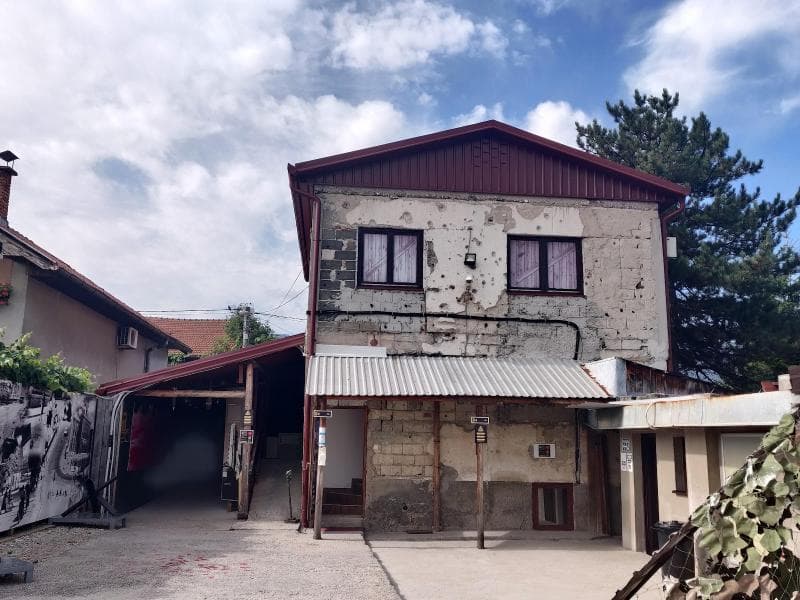
Explore the Entrance House of the Sarajevo Tunnel Museum in Sarajevo, Bosnia and Herzegovina, the Kolar family home that served as the lifeline of hope during the city's siege.
Overview
The 'Entrance House' of the Sarajevo Tunnel Museum, officially known as the Tunnel of Hope (Tunel Spasa), is not just a building; it is the very heart of this poignant historical site in Sarajevo, Bosnia and Herzegovina. Located in the Butmir neighborhood, adjacent to the Sarajevo International Airport, this unassuming house belonging to the Kolar family served as the crucial entry point for the lifeline tunnel during the harrowing Siege of Sarajevo from 1992 to 1995. Today, it stands as a powerful memorial and museum, preserving a tangible connection to a period of immense struggle and remarkable human resilience.
Visitors to the Entrance House are introduced to the story of the tunnel and the siege through a range of exhibits, including an 18-minute documentary film, wartime artifacts, and photographs. The most impactful experience often involves walking through a preserved section of the original tunnel that begins in the house's cellar, offering a visceral sense of the challenging conditions faced by those who relied on it.
History & Cultural Background
During the Siege of Sarajevo, the city was completely encircled by Bosnian Serb forces, cut off from the outside world. Food, medicine, and vital supplies dwindled, and citizens faced constant shelling and sniper fire. To circumvent this blockade, the Bosnian Army, with the help of local civilians, embarked on a secret and ambitious project: to dig an underground tunnel beneath the airport runway, which was then under UN control.
Construction of the tunnel commenced in March 1993, with volunteers working in 8-hour shifts, often using only pickaxes and shovels. The tunnel was completed in just four months, by July 1993. It stretched approximately 800 meters in length, was about 1 meter wide, and stood 1.6 meters high. The Kolar family's house in Butmir became the southern entrance to this clandestine passage, while a garage in Dobrinja served as the other end. The 'Entrance House' in Butmir was strategically chosen for its location and became instrumental in concealing the tunnel's existence from besieging forces.
What Makes It Special
What makes the Entrance House truly special is its authenticity and the direct, personal connection it provides to the past. This isn't a recreated exhibit; it is the actual Kolar family home that sheltered the tunnel's entrance. The bullet-scarred facade of the house still bears witness to the war, left untouched to convey the gravity of the events that transpired.
The house's transformation into a museum allows visitors to not only learn about the tunnel's construction and use but also to grasp the human element of survival. The limited space, the low ceilings of the preserved tunnel section, and the raw exhibits convey a profound sense of the desperation, ingenuity, and sheer will to survive that characterized the people of Sarajevo during the siege.
Stories, Fun Facts & Local Details
The Kolar family, whose home became the tunnel's entrance, continued to play a pivotal role, even housing soldiers and regulating traffic through the tunnel. Today, members of the Kolar family are still involved in running the museum, sharing their personal experiences and maintaining this vital piece of history.
Known as the 'Tunnel of Hope' or 'Tunnel of Salvation' (Tunel Spasa), this passage became the city's literal lifeline. Estimates suggest that approximately 20 to 30 million kilograms of food, medicine, fuel, and weapons passed through, while around 1 million people traversed its length to enter or exit the besieged city. Former Bosnian President Alija Izetbegović famously used the tunnel, sometimes in a wheelchair on its small railway, to attend peace talks abroad. The tunnel also carried electrical cables and telephone lines, providing essential communication and power to the isolated city.
Visitor Perspective
Visiting the Entrance House and the Sarajevo Tunnel Museum offers a deeply moving and educational experience. After exploring the house, filled with displays of uniforms, weapons, tools used for digging, and personal effects, visitors watch a powerful 18-minute film featuring archival footage from the siege and interviews with those who used the tunnel.
The most impactful part for many is the opportunity to walk through a short, preserved section of the original tunnel, typically around 20-25 meters. The cramped, low, and often damp conditions immediately immerse visitors in the reality faced by thousands during the war. It's a humbling walk that encourages reflection on the extraordinary resilience of the human spirit in the face of unimaginable adversity. The experience at the Entrance House is a stark reminder of Sarajevo's recent past and a powerful testament to hope.
Coordinates: 18.33721, 43.81976
View on Google Maps💬 How Travelers Describe This Place
Based on community votes
Photogenic
998Unique
817Interesting
711Must See
299Beautiful
19
Traveler Stories
Discover memorable experiences shared by travelers who have visited this place.
No traveler stories yet.
Be the first traveler to share what made this place memorable.

Tour
By
Spot
Discover amazing places around the world. Your journey starts here.
Explore
© 2026 TourBySpot. All rights reserved.