Sagrada Família
Barcelona, Spain
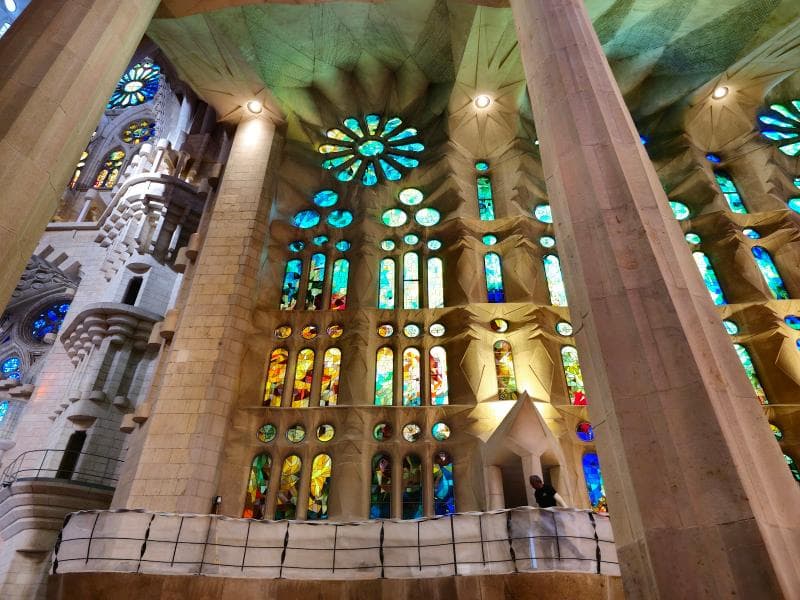
Discover the Sagrada Família in Barcelona, Spain, an unfinished masterpiece by Antoni Gaudí, famed for its unique architecture and spiritual design.
Overview
In the vibrant heart of Barcelona, Spain, stands an architectural marvel unlike any other: the Basílica i Temple Expiatori de la Sagrada Família, commonly known as the Sagrada Família. This Roman Catholic minor basilica is a breathtaking testament to human ingenuity, artistic vision, and enduring faith. Designed by the visionary Catalan architect Antoni Gaudí, it has been under construction for over a century and remains the largest unfinished Roman Catholic church in the world. Its distinctive spires pierce the Barcelona skyline, drawing millions of visitors annually who come to witness its ongoing creation and immerse themselves in its profound symbolism and intricate beauty.
Since construction began in 1882, the Sagrada Família has evolved into a UNESCO World Heritage Site, celebrated for its unique blend of Gothic Revival, Art Nouveau, and Modernisme styles. Gaudí dedicated the latter part of his life to this project, transforming it into a living narrative in stone, where every facade, every column, and every stained-glass window tells a part of the Christian story. Its completion is anticipated around 2026, marking the centenary of Gaudí's death, though construction has faced numerous challenges, including the Spanish Civil War and the COVID-19 pandemic.
History & Cultural Background
The genesis of the Sagrada Família dates back to 1866 when a devout bookseller, Josep María Bocabella, envisioned a temple dedicated to the Holy Family. Inspired by a visit to the Vatican, Bocabella initiated a campaign for its erection, and the first cornerstone was laid on March 19, 1882. The initial architect, Francisco de Paula del Villar, designed a more traditional Gothic Revival church. However, due to disagreements, Villar resigned in 1883, paving the way for the then-young and ambitious Antoni Gaudí to take over the project.
Gaudí completely re-envisioned the basilica, moving away from conventional Neo-Gothic plans and introducing a revolutionary architectural language characterized by organic forms, complex geometry, and profound spirituality. He dedicated over 40 years to the Sagrada Família, spending the last 12 years of his life exclusively on its construction. He understood he would not see its completion, but he meticulously developed designs and models, intending for future generations to continue his work. Tragically, Gaudí died in 1926 after being hit by a tram, and he is buried in the crypt of the basilica. The Spanish Civil War brought significant setbacks, with revolutionaries destroying many of Gaudí's original plans and models in 1936, requiring extensive efforts to reconstruct his vision.
What Makes It Special
What truly sets the Sagrada Família apart is Gaudí's unique architectural philosophy, deeply rooted in nature and faith. He believed that 'sunshine is the best painter' and meticulously designed the basilica to harness natural light, creating a 'temple of harmonious light'. The interior is a forest of tree-like columns that branch out, supporting hyperboloidal vaults and eliminating the need for traditional flying buttresses, a structural innovation. The stained-glass windows are strategically colored; cool blues and greens dominate the Nativity facade (east) to capture the morning light, while warm reds and oranges fill the Passion facade (west) to evoke the sunset. This creates a dynamic, ever-changing play of light and color that transforms the interior throughout the day, guiding the visitor's spiritual journey.
The basilica features three grand facades: the Nativity, Passion, and Glory facades, each depicting different stages of Jesus Christ's life. The Nativity facade, overseen by Gaudí himself, is rich with intricate sculptures detailing the birth of Christ. The stark, angular sculptures of the Passion facade, designed by Josep Maria Subirachs, convey the suffering and sacrifice of Christ. The Glory facade, still under construction, will be dedicated to Christ's eternal glory. The planned eighteen spires symbolize the Twelve Apostles, the four Evangelists, the Virgin Mary, and the tallest, Jesus Christ, which measures 172.5 meters. Gaudí purposefully designed this spire to be one meter shorter than Barcelona's Montjuïc hill, believing no man-made creation should surpass God's work.
Stories, Fun Facts & Local Details
One of the most astonishing facts about the Sagrada Família is its construction timeline: it has been continuously built for over 140 years, making it an architectural project spanning multiple generations. Gaudí himself lived on the construction site during his later years, utterly devoted to the project. Another interesting detail is that the school building on the site, originally designed by Gaudí in 1909, was created for the children of the construction workers, reflecting his holistic vision. The symbolism embedded in the basilica is immense; for example, the spires dedicated to the Evangelists are surmounted by sculptures of their traditional symbols: a winged man for Matthew, a winged lion for Mark, a winged bull for Luke, and an eagle for John.
The realism of some sculptures was achieved by casting human models and even animals, allowing Gaudí to capture authentic expressions and forms. The basilica also features a unique 'noise-proof cloister,' designed to mitigate street noise and provide a peaceful space for processions.
Visitor Perspective
Visiting the Sagrada Família offers an unparalleled experience, blending architectural wonder with spiritual contemplation. It is advisable to purchase tickets online in advance to avoid long queues, as it welcomes nearly 5 million visitors annually. The best times to visit are early morning or late afternoon to fully appreciate the stunning effects of the stained-glass windows as sunlight bathes the interior in a kaleidoscope of colors. Guided tours are highly recommended to gain deeper insights into Gaudí's intricate symbolism and the basilica's rich history. Visitors should be mindful of the dress code, ensuring shoulders and knees are covered, as it remains an active place of worship.
Even with ongoing construction, the Sagrada Família is a truly immersive journey into Gaudí's genius, showcasing his profound connection to nature, geometry, and faith. It stands as a powerful symbol of Barcelona, a city known for its architectural innovation and vibrant cultural heritage.
Coordinates: 2.1744, 41.4036
View on Google Maps💬 How Travelers Describe This Place
Based on community votes
Must See
717Photogenic
618Interesting
449Beautiful
335Unique
22
Traveler Stories
Discover memorable experiences shared by travelers who have visited this place.
No traveler stories yet.
Be the first traveler to share what made this place memorable.
Things to see at Sagrada Família



Tour
By
Spot
Discover amazing places around the world. Your journey starts here.
Explore
© 2026 TourBySpot. All rights reserved.