Glory Façade
Barcelona, Spain
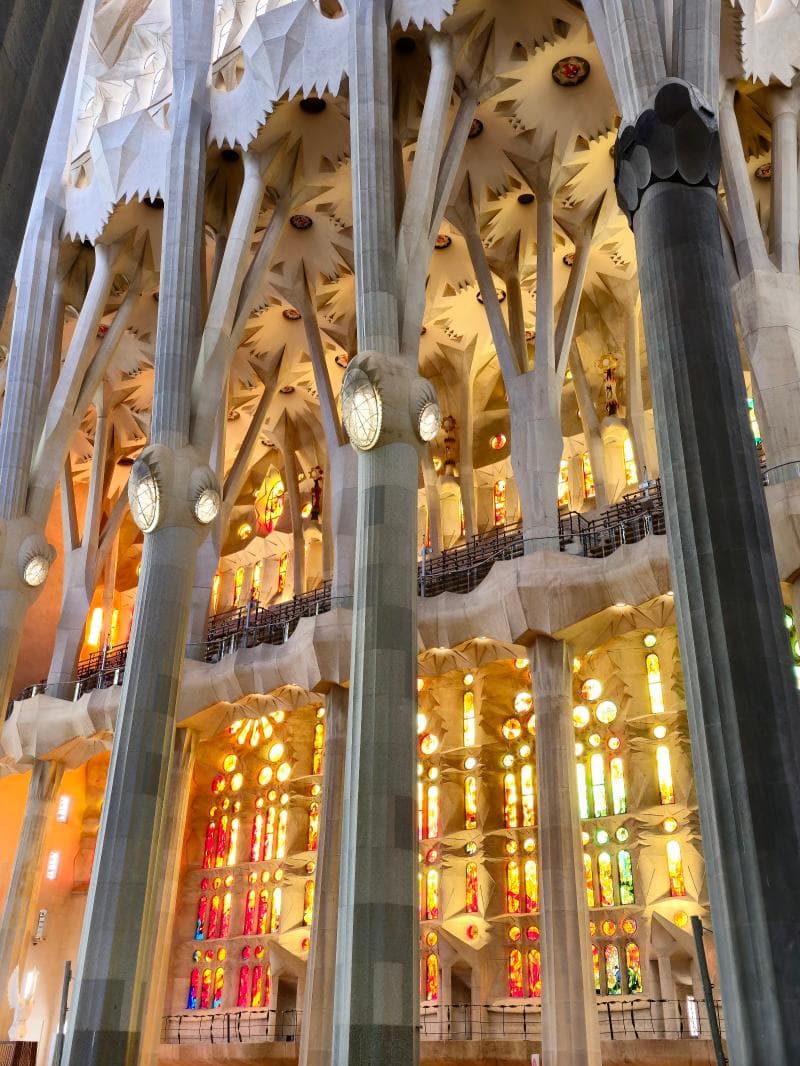
Explore the Sagrada Família's Glory Façade in Barcelona, Spain. Discover its history, profound symbolism, and ongoing construction as the future main entrance.
Overview
The Glory Façade, located on the south side of the Sagrada Família in Barcelona, Spain, is envisioned as the basilica's main entrance and will be the largest and most monumental of its three façades upon completion. Dedicated to the celestial glory of Jesus, it symbolizes humanity's journey toward God, encompassing themes of death, the Last Judgment, hell, and eternal glory. Construction of this ambitious section began in 2002 and remains the final major structural phase of the basilica, with significant decorative and artistic work still in progress.
History & Cultural Background
Antoni Gaudí designed the Glory Façade in 1916, envisioning it as the temple's grand catechetical portico – a stone 'book' for visitors to 'read' before entering the basilica. Unlike the Nativity and Passion façades, Gaudí left less detailed documentation for the Glory Façade, meaning contemporary architects and sculptors have a greater interpretative role in realizing his vision. The three façades of the Sagrada Família together form a unique narrative triptych: the Nativity Façade celebrates the beginning of life, the Passion Façade narrates suffering and redemption, and the Glory Façade will represent the final destiny of human existence. This progression from birth to death to eternal life forms a complete spiritual story.
What Makes It Special
The Glory Façade is extraordinary for its profound symbolic program, designed to guide visitors through a spiritual ascent. The lower sections of the façade are intended to represent the seven deadly sins at the base, countered by the seven heavenly virtues rising above them. The design includes seven large columns symbolizing the sacraments of the Holy Spirit. Perhaps one of its most striking features will be the main entrance doors, which are planned to carry the text of the Lord's Prayer (Pater Noster) in over 50 languages, including ancient liturgical ones, emphasizing a message of universality. This monumental entrance is designed to be the primary public face of the building, intended to create an effect of 'deliberate disorientation followed by revelation' as visitors pass from shadow into light.
Stories, Fun Facts & Local Details
- The Underground Passage: Gaudí's design for the Glory Façade includes a conceptual underground passage beneath Carrer de Mallorca, intended to represent Hell and vice. This passage would be decorated with depictions of demons, idols, and heresy, leading visitors metaphorically from darkness towards the light of salvation.
- The Staircase Controversy: A key element of Gaudí's original plan for the Glory Façade involves a grand staircase leading up to the main entrance. However, realizing this vision would require the demolition of several existing residential buildings across Carrer de Mallorca, affecting hundreds of residents and leading to ongoing negotiations between the Sagrada Família Foundation and the Barcelona City Council. This remains a significant hurdle in the basilica's complete realization.
- Contemporary Artistic Contributions: To bring Gaudí's vision to life, the Board of Trustees has commissioned renowned contemporary artists, such as Miquel Barceló, Cristina Iglesias, and Javier Marín, to create artistic proposals for the façade's intricate sculptural elements.
- The Lord's Prayer in Many Tongues: The bronze doors of the main entrance will feature the Lord's Prayer inscribed in over 50 languages, a powerful testament to the basilica's universal message and Gaudí's comprehensive theological logic.
Visitor Perspective
As of now, visitors to the Sagrada Família will observe the Glory Façade as a significant construction site on the south side, facing Carrer de Mallorca. While the main structure of the basilica and many of its towers, including the Jesus Christ tower, have reached architectural completion, the Glory Façade is still in its early stages of sculptural installation and decorative work. You can see the initial columns rising and the construction scaffolding, offering a glimpse into the immense scale of what is to come. The current provisional bronze doors, featuring the Lord's Prayer, are already visible. The full completion of the Glory Façade, including its planned colonnaded approach and the controversial grand staircase, is projected for the 2030s, making it a living testament to an ongoing architectural dream.
Coordinates: 2.1713, 41.4022
View on Google Maps💬 How Travelers Describe This Place
Based on community votes
Photogenic
996Unique
494Interesting
193Beautiful
125Must See
82
Traveler Stories
Discover memorable experiences shared by travelers who have visited this place.
No traveler stories yet.
Be the first traveler to share what made this place memorable.

Tour
By
Spot
Discover amazing places around the world. Your journey starts here.
Explore
© 2026 TourBySpot. All rights reserved.