Passion Façade
Barcelona, Spain
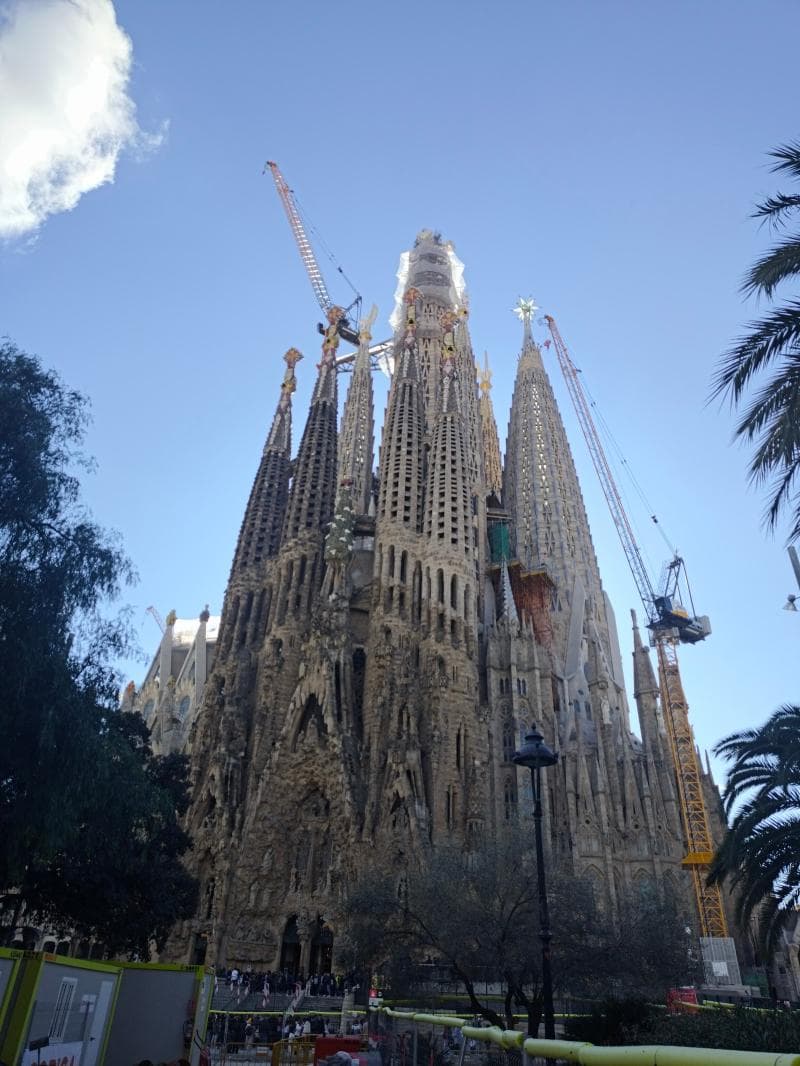
Explore the profound Passion Façade of Sagrada Família in Barcelona, Spain. Discover its stark history, unique symbolism, and powerful sculptures.
Overview
The Passion Façade of the Sagrada Família in Barcelona, Spain, stands as a profound testament to the final days of Jesus Christ, offering a stark and compelling contrast to the basilica's other, more ornate façades. Facing west, this monumental section of Antoni Gaudí's unfinished masterpiece is dedicated to the suffering, death, and resurrection of Christ. It is intentionally austere, designed to evoke a sense of solemnity and contemplation through its rigid, angular forms and powerful sculptural groups. Where the Nativity Façade celebrates life and joy, the Passion Façade confronts visitors with the gravity of sacrifice and redemption, presenting a narrative carved in stone that is both emotionally intense and deeply symbolic.
History & Cultural Background
Antoni Gaudí conceived the idea for the Passion Façade in 1911, during a period of illness that brought him close to death. His sketches and models laid the groundwork for a façade intended to 'terrify' onlookers, depicting the brutality and severity of Christ's sacrifice. He envisioned a skeletal appearance, with bone-like columns and a deliberate lack of the rich ornamentation found elsewhere on the basilica. Construction on the façade itself didn't begin until 1954, decades after Gaudí's death, with the four towering spires being completed in 1976. The most distinctive elements, the sculptural groups, were entrusted to Catalan sculptor Josep Maria Subirachs in 1987. Subirachs, known for his angular, expressionist style, interpreted Gaudí's vision with remarkable artistic freedom, creating figures that conveyed intense emotion. His modernist approach sparked considerable controversy but ultimately defined the façade's unique character.
What Makes It Special
What sets the Passion Façade apart is its dramatic and deliberate departure from conventional religious art. Gaudí's instruction for it to be 'hard, bare and as if made of bones' was realized through its skeletal feel, with pillars resembling bones and expressive, almost gaunt, sculptures. The scenes unfold in a narrative 'S' shape, ascending from left to right, guiding the viewer through Jesus's journey from the Last Supper and the betrayal by Judas, through his trial, flagellation, and crucifixion, to his burial and eventual resurrection. Key moments are powerfully depicted, such as the Kiss of Judas, Peter's denial, and the figure of Veronica holding the veil with Christ's face. The harsh lines, deep shadows, and chiseled forms create a profound sense of suffering and solemnity.
Stories, Fun Facts & Local Details
One of the most intriguing elements of the Passion Façade is the 'Magic Square' located near the Kiss of Judas sculpture. This 4x4 grid of numbers has a remarkable property: the sum of the numbers in any row, column, or diagonal, as well as the four central numbers, always adds up to 33, representing the age of Jesus at his death. Another fascinating detail, though controversial, is the belief among some that a representation of Gaudí's face can be found in the sculpture depicting Jesus being whipped. The façade's westward orientation is not accidental; Gaudí intended for the setting sun to illuminate the sculptures, enhancing their dramatic effect and casting long, evocative shadows that underscore the sorrowful narrative. The angular and stark style of Subirachs's sculptures was a deliberate choice, intended to avoid imitation of Gaudí's organic forms and instead reflect the harsh reality of the Passion, though this choice initially provoked strong reactions among critics and the public.
Visitor Perspective
Visiting the Passion Façade is a powerful and immersive experience. Its dramatic and often unsettling imagery is designed to provoke deep reflection on themes of sacrifice, humanity, and faith. As you approach, the sheer scale and raw emotion etched into the stone are palpable, inviting a moment of quiet contemplation. The best time to appreciate the façade's intended effect is in the afternoon, when the western sun casts dramatic light and shadows across the sculptures, bringing them to life in a visceral way. Access to the towers of the Passion Façade offers breathtaking panoramic views of Barcelona and the Sagrada Família itself, providing a different perspective on the intricate details and the sprawling urban landscape. While the Nativity Façade offers joy and natural beauty, the Passion Façade provides a crucial counterpoint, ensuring a complete and emotionally resonant journey through the narrative of the Sagrada Família.
Coordinates: 2.1744651, 41.403444
View on Google Maps💬 How Travelers Describe This Place
Based on community votes
Interesting
443Must See
414Unique
310Beautiful
277Photogenic
233
Traveler Stories
Discover memorable experiences shared by travelers who have visited this place.
No traveler stories yet.
Be the first traveler to share what made this place memorable.

Tour
By
Spot
Discover amazing places around the world. Your journey starts here.
Explore
© 2026 TourBySpot. All rights reserved.