Crypt
Barcelona, Spain
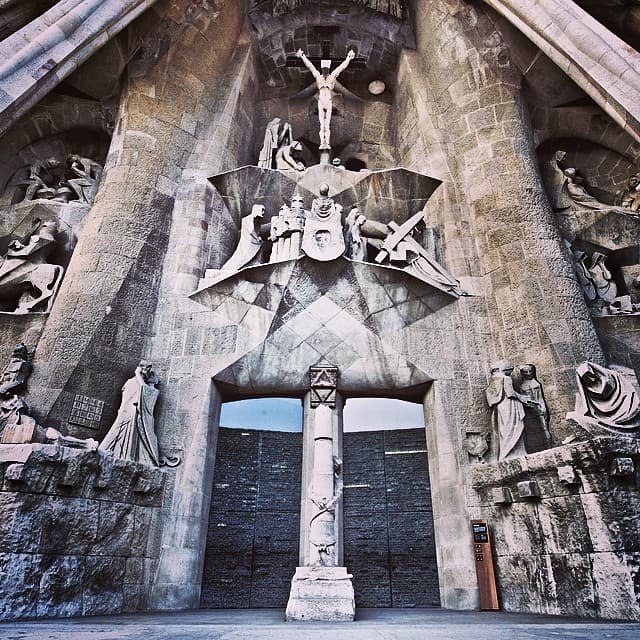
Discover the Sagrada Família Crypt in Barcelona, Spain – the oldest section of Gaudí's masterpiece and his final resting place. Explore its Neo-Gothic beauty.
Overview
Hidden beneath the soaring spires and intricate facades of Antoni Gaudí's masterpiece, the Sagrada Família, lies a tranquil and deeply significant space: the Crypt. This subterranean chapel in Barcelona, Spain, serves as the basilica's oldest section and is a poignant counterpoint to the grandeur found above ground. Unlike the organic, nature-inspired forms that define much of the Sagrada Família, the Crypt retains the more traditional Neo-Gothic style envisioned by the project's initial architect. It is a working church, hosting regular masses, and offers a quiet, meditative experience for visitors. More profoundly, it is the final resting place of Antoni Gaudí himself, making it a sacred pilgrimage site for admirers of his genius. The Crypt, along with the Nativity Facade, was recognized as a UNESCO World Heritage site in 2005, highlighting its immense cultural and architectural importance.
History & Cultural Background
The story of the Sagrada Família's Crypt begins before Gaudí's iconic involvement. Construction of the basilica commenced on March 19, 1882, under the direction of architect Francisco de Paula del Villar. He conceived the Crypt in a standard Gothic Revival style, and its construction was well underway, with completion in 1889 or 1891, even before Villar's resignation in 1883. Antoni Gaudí took over the project in 1883, inheriting Villar's completed Crypt. While Gaudí would drastically alter the overall design of the Sagrada Família, transforming it into the Art Nouveau marvel we know today, the Crypt remained largely true to its original Neo-Gothic blueprint. It stands as a testament to the basilica's origins and a precursor to the monumental work that would follow. It was, in fact, one of the few parts of the Sagrada Família that was substantially completed during Gaudí's lifetime. Tragically, after being hit by a tram in 1926, Gaudí was laid to rest within this very Crypt, specifically in the Chapel of Our Lady of Mount Carmel, by special papal permission. The Crypt also houses the tomb of Josep María Bocabella, the bookseller whose vision and initiative led to the construction of the Sagrada Família as an 'expiatory temple'.
What Makes It Special
What truly sets the Sagrada Família's Crypt apart is its profound historical and spiritual significance. Firstly, it is the hallowed ground where Antoni Gaudí, the visionary architect who dedicated over 40 years of his life to the basilica, found his eternal rest. His simple tomb within the Chapel of Our Lady of Mount Carmel serves as a powerful focal point for reflection and homage. Secondly, the Crypt represents the genesis of the Sagrada Família project, embodying its original foundation and style. Its Neo-Gothic architecture, characterized by low stone arches, dim lighting, and religious frescoes, offers a stark, yet beautiful, contrast to the fluid, organic forms of the upper basilica. This architectural distinction provides a unique glimpse into the evolutionary journey of Gaudí's vision. Visitors can also marvel at the stunning Roman mosaic floors and an altarpiece dedicated to the Holy Family by sculptor Josep Llimona. The space includes several chapels, each with its own character and devotion, including those dedicated to Saint Joseph, the Sacred Heart, and Christ on the Cross. A wrought-iron tabernacle, designed by Gaudí around 1916, also adds to the Crypt's unique artistic treasures.
Stories, Fun Facts & Local Details
The Crypt is steeped in fascinating stories and cultural details. One lesser-known fact is that during the tumultuous Spanish Civil War, revolutionaries set fire to the Crypt. This act of vandalism destroyed many of Gaudí's original plans and plaster models, necessitating 16 years of meticulous restoration work to piece fragments back together. Despite this setback, the Crypt persisted as a testament to the project's resilience. It was the first part of the entire Sagrada Família to be opened for public worship, long before the grand basilica above was consecrated. Gaudí's burial here, specifically in the Chapel of Our Lady of Mount Carmel, underscores his deep Catholic faith and the lifelong devotion he poured into the Sagrada Família. His tomb is remarkably modest, reflecting his humble character. The Crypt's design, even in its Neo-Gothic origins, subtly hints at Gaudí's evolving style, with elements like the slender columns arching overhead, reminiscent of tree branches, already present and foreshadowing his later naturalistic inspirations. The Crypt also serves as the burial site for Josep María Bocabella, the initiator of the Sagrada Família, whose pilgrimage to the Vatican in 1872 inspired the construction of this expiatory temple.
Visitor Perspective
Visiting the Crypt offers a distinctly different experience compared to the bustling main body of the Sagrada Família. It provides a peaceful and contemplative atmosphere, often less crowded, allowing for a more intimate connection with the basilica's spiritual heart. Access to the Crypt is not typically included with a standard Sagrada Família admission ticket. Instead, visitors can usually gain entry by attending one of the regular mass services held there or through special guided tours. These masses are conducted in Catalan and Spanish. The entrance to the Crypt is separate from the main basilica, often located on Carrer de Mallorca or near the Nativity Facade. If you wish to enter the Crypt at ground level, attending a service is the most common way. Otherwise, from the main basilica, you can often view Gaudí's tomb and the Crypt space below through openings in the floor near the apse. It is important to remember that the Crypt is an active place of worship; therefore, a modest dress code is required, and photography is generally not permitted during mass to maintain a respectful environment. Taking a moment to reflect here offers a unique perspective on the profound history and enduring legacy of the Sagrada Família.
Coordinates: 2.17433, 41.40369
View on Google Maps💬 How Travelers Describe This Place
Based on community votes
Unique
670Beautiful
655Photogenic
594Must See
266Interesting
166
Traveler Stories
Discover memorable experiences shared by travelers who have visited this place.
No traveler stories yet.
Be the first traveler to share what made this place memorable.

Tour
By
Spot
Discover amazing places around the world. Your journey starts here.
Explore
© 2026 TourBySpot. All rights reserved.