Museum
Barcelona, Spain
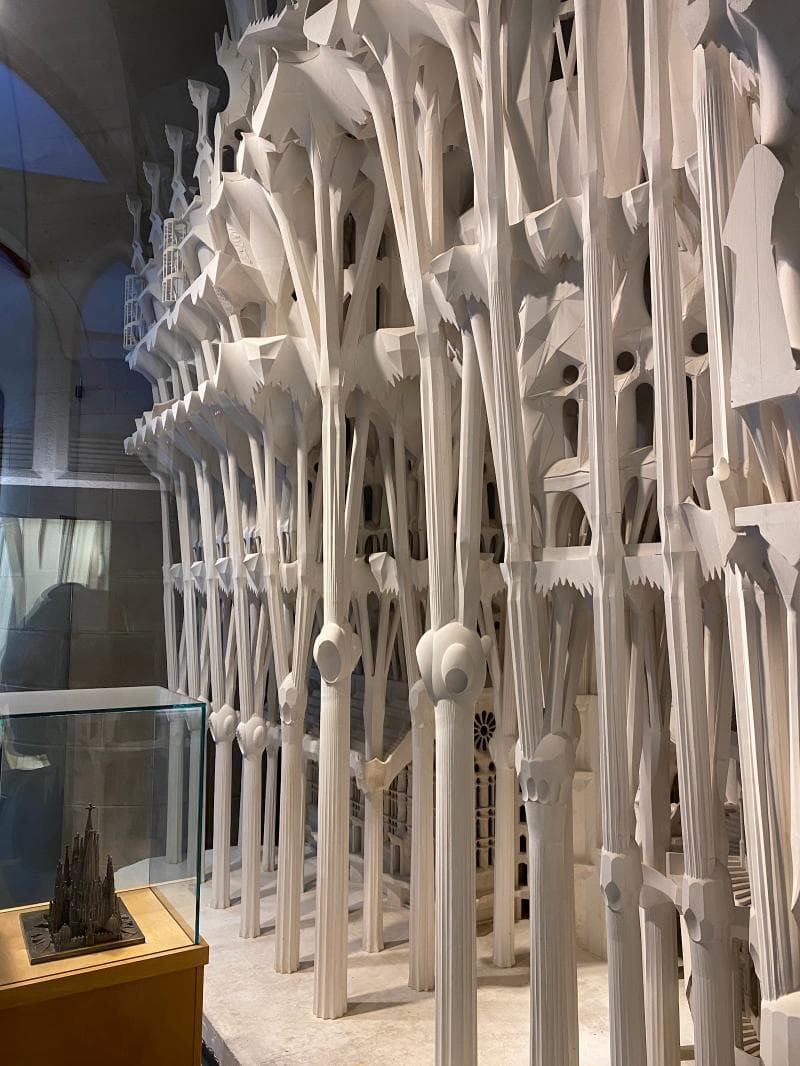
Explore the Sagrada Família Museum in Barcelona, Spain, unveiling Antoni Gaudí's genius through original models, drawings, and the basilica's history.
Overview
Nestled beneath the majestic arches of the Sagrada Família in Barcelona, Spain, lies a captivating museum that serves as an essential gateway to understanding Antoni Gaudí's unparalleled genius. This immersive space, often referred to as the Sagrada Família Museum or the Museu del Temple Expiatori de la Sagrada Família, offers a profound journey into the origins, evolution, and intricate details of the basilica's construction. It is designed not merely as a collection of artifacts, but as an integral part of the Sagrada Família experience, deepening a visitor's appreciation for one of the world's most ambitious architectural undertakings.
The museum's exhibits meticulously unravel the historical, technical, artistic, and symbolic layers embedded within Gaudí's masterpiece, providing context to the soaring columns and vibrant stained-glass windows seen above. It presents a narrative that transcends mere construction, inviting guests to connect with the vision, challenges, and enduring spirit behind this iconic landmark.
History & Cultural Background
The story of the Sagrada Família Museum is deeply intertwined with the basilica's own tumultuous history. While the construction of the Sagrada Família began in 1882, Antoni Gaudí took over as chief architect in 1883, dedicating the latter half of his life exclusively to the project. Gaudí established his workshop directly on the construction site, where he tirelessly developed his designs through three-dimensional models rather than conventional two-dimensional drawings.
Tragically, during the Spanish Civil War in 1936, revolutionaries attacked Gaudí's workshop. A fire destroyed many of his original plans, drawings, and invaluable plaster models. This devastating loss significantly hampered the continuation of his vision. Despite this setback, dedicated architects and artisans meticulously worked to reconstruct these damaged models, piecing together Gaudí's intricate structural ideas. The museum, inaugurated in 1961, emerged from this commitment to preserving and disseminating Gaudí's legacy, first located beneath the Passion Facade and later moved to a larger, more suitable space.
What Makes It Special
What truly sets the Sagrada Família Museum apart is its direct connection to the ongoing construction and the unparalleled insights it provides into Gaudí's mind. Visitors can observe original sketches, early photographs, and meticulously reconstructed scale models. Among the most compelling exhibits is the inverted funicular model, a gravitational experiment Gaudí used to determine the optimal structural forms for his columns and vaults, mirroring nature's principles. This method allowed him to create the basilica's tree-like columns and geometric ceilings, which are a hallmark of its interior.
The museum also features an active model workshop, where visitors can witness the painstaking process of model restoration and the creation of new pieces based on Gaudí's original designs and principles. This living workshop underscores the basilica's status as a work in progress, guided by the architect's enduring spirit and the dedication of modern craftspeople.
Stories, Fun Facts & Local Details
One of the most poignant aspects of the museum is its proximity to Antoni Gaudí's final resting place. The brilliant architect is buried within the Sagrada Família's crypt, a Neo-Gothic section built before he fully took over the project. From a viewing point in the museum corridor, visitors can look into the crypt, a quiet space that honors his profound dedication to the basilica.
Gaudí himself lived an ascetic life, spending his last years almost entirely on the Sagrada Família site, where he had a small workshop. His unwavering commitment to his 'Bible in stone' meant he accepted no other commissions from 1914 until his death in 1926. The museum effectively tells this story, showcasing how his unique blend of Gothic, Art Nouveau, and naturalistic styles created something entirely new, a testament to his deeply spiritual and innovative approach to architecture.
Visitor Perspective
For any curious traveler, the Sagrada Família Museum is an invaluable complement to exploring the basilica itself. It offers a deeper understanding that simply observing the exterior or interior cannot provide. The museum is seamlessly included with all Sagrada Família entrance tickets, making it an accessible part of the visit.
Typically, visitors encounter the museum towards the end of their tour, providing a perfect opportunity to consolidate the architectural and symbolic marvels they have just witnessed. Allowing approximately 30 to 45 minutes for this section is often recommended to fully absorb the wealth of information presented through its graphic documents, models, and audiovisual displays. It transforms a visit from mere sightseeing into a journey of discovery, offering clarity on Gaudí's ingenious design principles and the complex history of Barcelona's most iconic structure.
Coordinates: 2.1744, 41.4036
View on Google Maps💬 How Travelers Describe This Place
Based on community votes
Beautiful
931Photogenic
670Interesting
655Must See
491Unique
266
Traveler Stories
Discover memorable experiences shared by travelers who have visited this place.
No traveler stories yet.
Be the first traveler to share what made this place memorable.

Tour
By
Spot
Discover amazing places around the world. Your journey starts here.
Explore
© 2026 TourBySpot. All rights reserved.