Nativity Façade
Barcelona, Spain
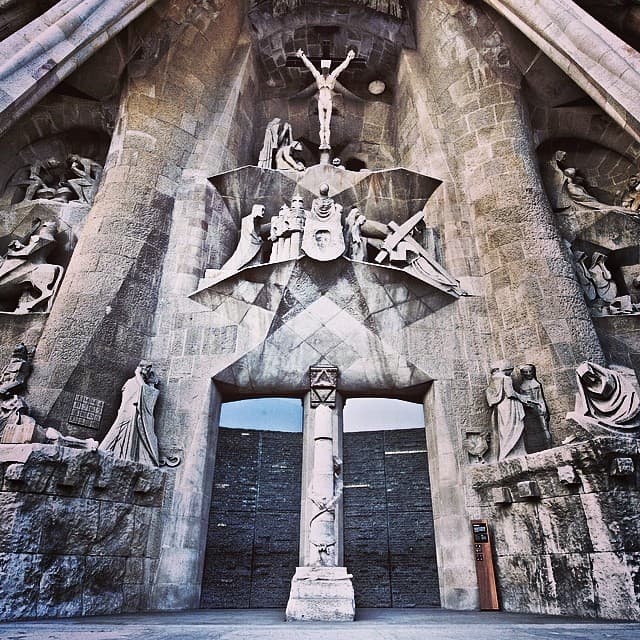
Explore the Nativity Façade of Sagrada Família in Barcelona, Spain. Discover its history, symbolism, and Gaudí's intricate details depicting Christ's birth.
Overview
The Nativity Façade stands as a breathtaking cornerstone of the Sagrada Família in Barcelona, Spain. It is one of the three grand façades of Antoni Gaudí's unfinished masterpiece, distinctively dedicated to the birth of Jesus Christ. What makes this façade particularly significant is that it's the only part of the basilica that Gaudí saw substantially completed during his lifetime, serving as a direct testament to his original vision and naturalistic architectural style. Recognized for its profound artistic and architectural value, the Nativity Façade, along with the Crypt, holds the prestigious status of a UNESCO World Heritage Site.
Facing the rising sun to the east, the façade is a vibrant celebration of life, light, and creation. It contrasts sharply with the starker Passion Façade, embodying joy and exuberance through its intricate sculptures and rich symbolism. This eastern orientation also ensures that the morning light bathes its detailed carvings, enhancing their visual impact for visitors.
History & Cultural Background
Construction of the Nativity Façade began in 1894 and continued until 1930, a period during which Gaudí dedicated a significant portion of his life and creative energy to its development. He intended it to be a compelling 'story book' in stone, narrating the early life of Christ and reinforcing the Christian virtues. Gaudí's approach was deeply rooted in nature, shunning straight lines and rigid geometric shapes in favor of organic forms that mimic a forest or a garden.
The façade is structured around three grand portals, each representing a theological virtue: the Portal of Hope on the left, dedicated to Joseph; the central and largest Portal of Charity, dedicated to Jesus; and the Portal of Faith on the right, dedicated to the Virgin Mary. This tripartite design forms a visual narrative, guiding the viewer through key moments of the Nativity story and the Holy Family's early life.
What Makes It Special
The Nativity Façade is renowned for its extraordinary wealth of detail and its deeply symbolic iconography. Gaudí's naturalistic style is evident in every carving, with sculptures of animals, plants, and human figures integrated seamlessly into the architectural fabric. To achieve lifelike representations, Gaudí famously used real models—both human and animal—to create casts for the sculptures.
Within the three portals, visitors can discover numerous biblical scenes. The central Portal of Charity features the Nativity scene itself, depicting Mary, Joseph, and the infant Jesus, surrounded by angels, shepherds, and the Three Magi bringing their gifts. Above this, the Annunciation and Coronation of the Virgin Mary are portrayed. The Portal of Hope illustrates scenes such as the Flight into Egypt and the Massacre of the Innocents, along with depictions of Joseph and Mary's wedding. The Portal of Faith includes scenes like Mary's Visitation to Elizabeth and Jesus working in his father's workshop.
Beyond the biblical narratives, the façade incorporates rich natural symbolism. A prominent 'Tree of Life', often depicted as a mighty cypress, crowns the central portal, symbolizing eternal life and Christ's connection to nature. At the base of the columns, one can find sculptures of turtles and tortoises, representing stability and the unchanging nature of time, while chameleons symbolize change. The entire façade is an intricate tapestry of religious meaning woven with the beauty of the natural world.
Stories, Fun Facts & Local Details
The Nativity Façade is a treasure trove of stories and fascinating details. Gaudí's meticulous attention to detail extended to incorporating local flora and fauna, such as ivy, palm, olive, wheat, and a variety of birds and insects, each carrying symbolic weight. For instance, the pelican and angels holding chalices at the foot of the cypress tree symbolize the Eucharist. The four bell towers that rise above the façade are dedicated to four apostles: Saint Matthias, Saint Barnabas (the only one completed before Gaudí's death in 1926), Saint Jude, and Saint Simon the Zealot.
It is said that Gaudí wanted the façade to be so rich in imagery that it would tell the story of Christ's birth to anyone, regardless of their literacy. This makes it a compelling visual sermon, a 'Bible in stone'. The painstaking process even involved using real human cadavers to ensure anatomical accuracy for some figures. This blend of artistry, piety, and scientific observation makes the façade truly unique. Today, it still serves as the Sagrada Família's main entrance for individual ticket holders.
Visitor Perspective
For visitors, approaching the Nativity Façade is an immersive experience. Its sheer density of detail encourages lingering, inviting close inspection to discover the myriad sculptures and their stories. Many recommend viewing it in the morning when the eastern sun illuminates its intricate carvings, bringing them to life. A popular spot for photographs and to appreciate the full scope of the façade, especially its reflection, is from Plaça de Gaudí, located directly opposite.
For a deeper understanding and unique vantage points, consider a visit that includes tower access from the Nativity Façade. This allows for panoramic views of Barcelona and a closer look at the façade's intricate designs from above, although be prepared for a stair descent. Given its popularity, booking tickets in advance is highly recommended to secure entry and make the most of your visit to this architectural marvel.
Coordinates: 2.1744, 41.4036
View on Google Maps💬 How Travelers Describe This Place
Based on community votes
Must See
726Beautiful
717Photogenic
449Unique
335Interesting
22
Traveler Stories
Discover memorable experiences shared by travelers who have visited this place.
No traveler stories yet.
Be the first traveler to share what made this place memorable.

Tour
By
Spot
Discover amazing places around the world. Your journey starts here.
Explore
© 2026 TourBySpot. All rights reserved.