Rector's Palace
Dubrovnik, Croatia
Explore Rector's Palace in Dubrovnik, Croatia – a magnificent Gothic-Renaissance landmark, former seat of the Ragusan Republic, now a cultural history museum.
Overview
Stepping into the Rector's Palace in Dubrovnik, Croatia, is like walking through a living testament to the city's rich past. This distinguished Gothic-Renaissance palace, with subtle Baroque additions, stands as a central monument in the heart of Dubrovnik's Old Town. Once the political and administrative hub of the independent Republic of Ragusa, it served as the official residence and workplace for the elected Rector, the highest official of the Republic, during his brief but impactful one-month term. Today, the palace has gracefully transitioned into the Cultural History Museum, part of the Dubrovnik Museums, offering visitors an immersive journey into the city's celebrated history, art, and daily life during its golden age. It's an indispensable stop for anyone eager to understand the spirit and governance of this remarkable maritime republic.
History & Cultural Background
The story of the Rector's Palace is one of resilience and continuous transformation. Its origins trace back to the 12th or 13th century, initially as a fortified 'castrum' or 'castellum' before evolving into a 'palatium' by the 14th century. However, its path to its current grandeur was fraught with challenges. The palace endured several devastating events, including major fires and at least two significant gunpowder explosions in the 15th century (notably in 1435 and 1463), as well as the catastrophic earthquake of 1667. Each reconstruction effort, often led by prominent architects like Onofrio della Cava of Naples and later Michelozzo of Florence, contributed to its unique blend of architectural styles. Onofrio della Cava was instrumental in its late Gothic rebuilding after the 1435 explosion, establishing its core structure with four wings around an inner atrium and an elegant portico. Over time, Renaissance elements were integrated, such as redesigned arches and capitals, while Baroque additions, including a new staircase and a bell in the atrium, emerged following the 1667 earthquake. Throughout its active political life, the palace housed not only the Rector's private chambers but also administrative offices, the Minor Council, the Senate, a notary, courtrooms, an armory, a gunpowder magazine, and even a prison on the ground floor. This multifaceted role underscores its pivotal importance as the epicentre of governance for the Republic of Ragusa until its abolishment in 1808 by Napoleonic forces.
What Makes It Special
What truly sets the Rector's Palace apart is its architectural synthesis and its deep symbolic significance. Despite the repeated destructions and rebuildings, the palace exhibits a striking compositional unity, harmoniously blending Gothic, Renaissance, and Baroque styles. The elegant arcaded façade and the tranquil inner courtyard, with its graceful columns and ornamental staircase, create a captivating atmosphere. More than just a beautiful building, it embodies the strict civic ideals of the Ragusan Republic. The Rector, though powerful, served for a mere one-month term and was confined to the palace, forbidden from leaving except for official duties and separated from his family. This strict protocol ensured his absolute devotion to state affairs, preventing the concentration of too much power in one individual. The palace's UNESCO World Heritage status, as part of Dubrovnik's Old Town, further highlights its exceptional universal value.
Stories, Fun Facts & Local Details
Within the walls of the Rector's Palace, history comes alive with compelling stories and intriguing details. Above the doorway to the Major Council hall, an enduring Latin inscription reads: 'Obliti privatorum publica curate' – translating to 'Forget private affairs, care for public matters.' This powerful motto served as a daily reminder to the statesmen of their unwavering duty to the Republic. Another fascinating aspect is the daily ritual of the Rector symbolically receiving the city keys each evening, returning them in a ceremony the following morning, underscoring the government's accountability to its citizens. The palace also features a bronze bust of Miho Pracat, a wealthy 16th-century shipowner who bequeathed his fortune to the Republic. This monument is particularly noteworthy as Pracat was the only commoner ever honored with a statue in the Republic of Ragusa's millennium-long history, a testament to his extraordinary generosity. Beyond its historical exhibits, the palace's central atrium is celebrated for its excellent acoustics, making it a favored venue for classical music concerts during the renowned Dubrovnik Summer Festival, transforming the ancient courtyard into a vibrant cultural stage. Its preserved medieval grandeur has even attracted modern media, with the palace serving as a filming location for the 'Game of Thrones' series, representing the city of Qarth.
Visitor Perspective
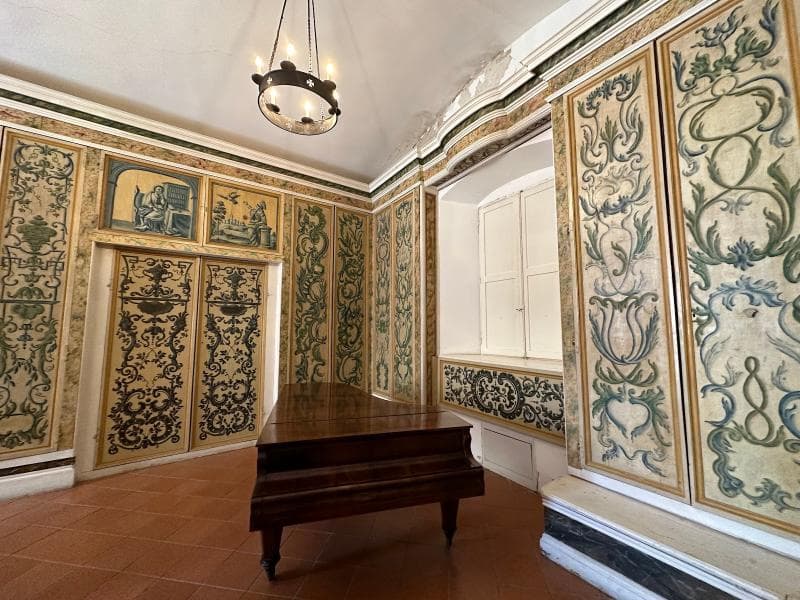
Today, the Rector's Palace invites curious travelers to delve into Dubrovnik's past through its Cultural History Museum. Visitors can explore a rich collection spread across the ground and upper floors, showcasing artifacts from the Republic of Ragusa. The museum's holdings include period furniture, portraits of Dubrovnik's rectors and noble families, textiles, coins minted by the Republic, historic weaponry, original keys to the city gates, and important state documents. Recreated period rooms, such as the Rector's apartment, study, courtrooms, and even the prison, offer an authentic glimpse into the daily life and administrative functions of the palace. The serene courtyard provides a peaceful respite from the bustling Old Town, allowing for quiet contemplation of the surrounding architecture and the historical weight of the place. Whether you're an avid history enthusiast, an architecture admirer, or simply a traveler seeking to connect with the soul of Dubrovnik, the Rector's Palace provides a profound and enriching experience, bringing centuries of heritage vividly to life.
Coordinates: 18.10909, 42.64125
View on Google Maps💬 How Travelers Describe This Place
Based on community votes
Photogenic
692Beautiful
674Must See
503Interesting
261Unique
49
Traveler Stories
Discover memorable experiences shared by travelers who have visited this place.
No traveler stories yet.
Be the first traveler to share what made this place memorable.
Things to see at Rector's Palace



Tour
By
Spot
Discover amazing places around the world. Your journey starts here.
Explore
© 2026 TourBySpot. All rights reserved.