Council Chamber
Dubrovnik, Croatia
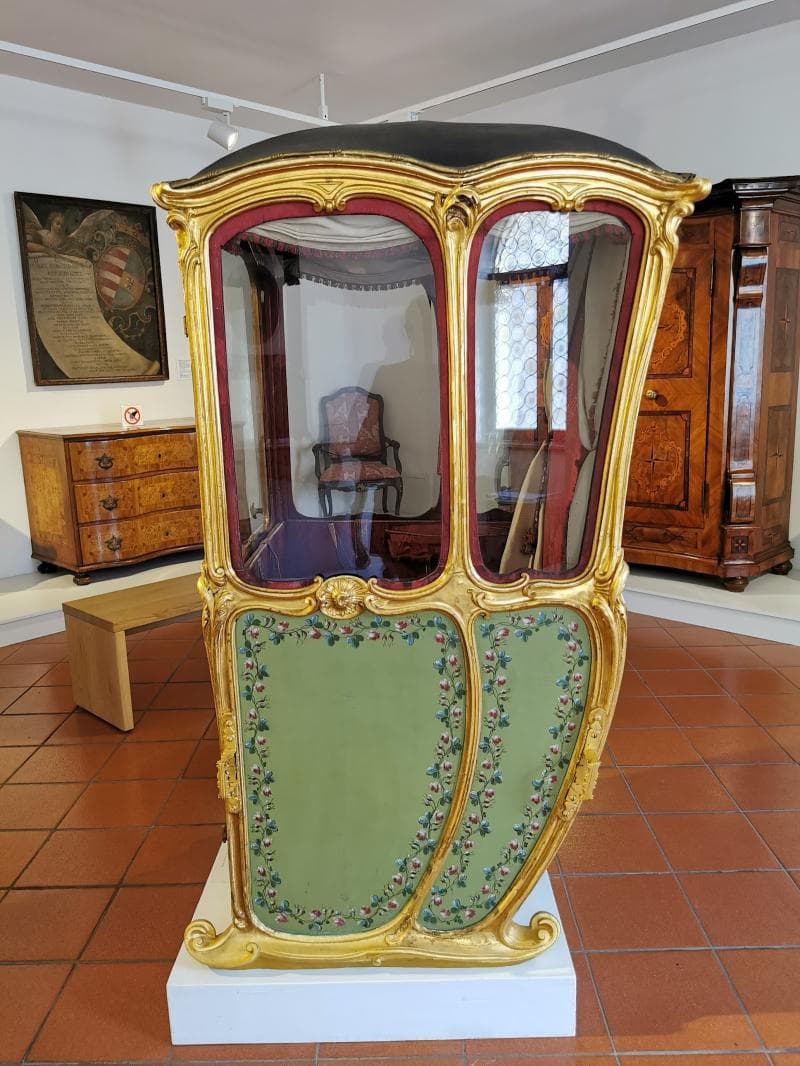
Explore the historic Council Chamber inside Dubrovnik's Rector's Palace, the heart of the Republic of Ragusa's government. Discover its rich history, unique political system, and cultural significance in Croatia.
Overview
Deep within the ancient walls of Dubrovnik's Rector's Palace, a treasure of historical significance awaits: the Council Chamber. This pivotal space, once the very heart of governance for the illustrious Republic of Ragusa, offers a profound glimpse into a bygone era of political intrigue, shrewd diplomacy, and civic dedication. Today, as part of the Cultural History Museum, it stands as a testament to Dubrovnik's enduring legacy, inviting curious travelers to step back in time and imagine the weighty discussions that once shaped a maritime republic.
The Rector's Palace itself is a stunning architectural marvel, blending Gothic, Renaissance, and Baroque styles, a result of numerous reconstructions following fires, gunpowder explosions, and devastating earthquakes. The Council Chamber, an integral part of this grand complex, was where key decisions were debated and ratified, influencing the fate of one of the Adriatic's most prosperous city-states.
History & Cultural Background
The Rector's Palace served as the administrative and political hub of the Republic of Ragusa (Dubrovnik Republic) for centuries, from the 14th century until its abolition in 1808. At its core was the Rector, an elected official who, for a strict one-month term, presided over the Minor Council and held the city's keys, forbidden from leaving the palace except for official state duties. This unique system was meticulously designed to prevent any single individual from accumulating too much power, safeguarding the Republic's democratic ideals.
The Council Chamber housed several critical governing bodies, including the Major Council, the Minor Council, and the Senate. These chambers were not merely meeting rooms; they were the crucible where the Republic's legendary diplomacy and mercantile prowess were forged. It was here that laws were drafted, treaties debated, and justice administered.
The palace's storied past is also marked by resilience. Original construction efforts in the 15th century, led by Neapolitan master builder Onofrio di Giordano della Cava, laid the Gothic foundation. However, explosions of stored gunpowder in 1435 and 1463, followed by the catastrophic earthquake of 1667, necessitated extensive rebuilding and introduced the harmonious blend of Renaissance and Baroque elements seen today.
What Makes It Special
The Council Chamber's true uniqueness lies not just in its preserved architecture but in the echoes of its past functions. It represents a tangible connection to Dubrovnik's extraordinary history as an independent maritime republic, one that prioritized wisdom and collective governance. The famous inscription above the entrance to the Major Council hall, 'Obliti privatorum publica curate' – 'Forget private affairs, care for public matters' – encapsulates the profound civic duty expected of its leaders.
Unlike many powerful states of its time, the Republic of Ragusa maintained its independence through astute diplomacy rather than military might. The decisions made within these chambers allowed Dubrovnik to navigate complex geopolitical landscapes, maintaining a delicate balance between larger empires. This commitment to self-governance and its unique system of a monthly-elected rector made Dubrovnik a beacon of progressive political thought.
Stories, Fun Facts & Local Details
Imagine the scene: a new Rector, elected for merely a month, moving into the palace, separated from his family, tasked with holding the city's keys and governing. This strict regimen ensured accountability and prevented the concentration of power, a clever mechanism long before modern democratic checks and balances. The Rector could only leave the palace for official functions, truly living and breathing the public's business within its walls.
The Rector's Palace, and by extension its Council Chamber, also played a role in the Republic's groundbreaking social policies. Dubrovnik was among the first states in the world to abolish slavery in 1416, a decision likely debated and ratified within these very chambers. This progressive stance highlights the forward-thinking nature of the Republic's leadership and the power vested in its councils.
Today, while the Council Chamber itself is a silent exhibit, the palace's central atrium occasionally comes alive with the sounds of classical music concerts, utilizing its exceptional acoustics – a beautiful modern use for a historic space.
Visitor Perspective
Visiting the Council Chamber within the Rector's Palace offers more than just a historical tour; it's an immersive experience into the soul of Dubrovnik's past. As you walk through these solemn halls, you can almost feel the weight of centuries of decisions, hear the hushed debates, and sense the unwavering commitment to the Republic's welfare. The carefully preserved interiors, alongside artifacts and historical documents displayed in the Cultural History Museum, transport you directly to the heart of the Ragusan Republic.
It's a chance to appreciate not just the architectural beauty of the palace, but the political wisdom and unique governance that allowed a small city-state to thrive for so long. Plan to spend about an hour exploring the museum, allowing ample time to reflect on the legacy of the Council Chamber and its place in shaping the 'Pearl of the Adriatic.'
Coordinates: 18.10833, 42.64028
View on Google Maps💬 How Travelers Describe This Place
Based on community votes
Beautiful
910Must See
755Interesting
658Photogenic
589Unique
374
Traveler Stories
Discover memorable experiences shared by travelers who have visited this place.
No traveler stories yet.
Be the first traveler to share what made this place memorable.

Tour
By
Spot
Discover amazing places around the world. Your journey starts here.
Explore
© 2026 TourBySpot. All rights reserved.