Grand Staircase
Dubrovnik, Croatia
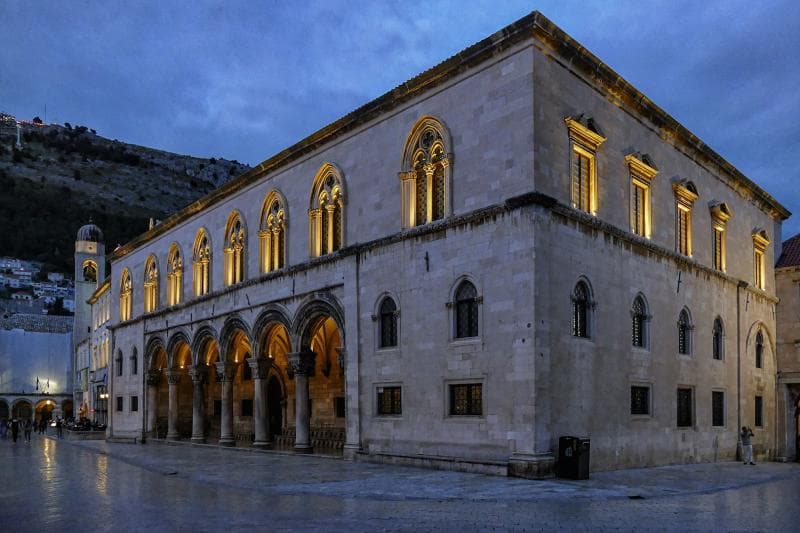
Explore Dubrovnik's Grand Staircase in Rector's Palace, a Baroque masterpiece witnessing centuries of history in Croatia's former Republic of Ragusa.
Overview
Nestled within the venerable walls of Rector's Palace in Dubrovnik, Croatia, lies a remarkable architectural feature known as the Grand Staircase. This elegant ascent is more than just a means to move between floors; it is a focal point of the palace's central atrium, a testament to Dubrovnik's rich history and enduring architectural artistry. As a blend of various styles, the staircase particularly showcases the Baroque influence that swept through the city during periods of reconstruction. Visitors stepping into the palace are immediately drawn to its graceful curves and ornate details, which whisper tales of past glory and ceremonial splendor.
History & Cultural Background
The Rector's Palace itself is a living chronicle of Dubrovnik's turbulent past as the independent Republic of Ragusa, serving as its political and administrative heart from the 14th century until 1808. Originally a defensive building, the palace endured numerous destructions, notably from gunpowder explosions in the 15th century and the devastating earthquake of 1667. Each reconstruction added new layers to its architectural tapestry, evolving from Gothic beginnings to incorporate Renaissance and later Baroque elements. The Grand Staircase is largely a product of these Baroque restorations following the 1667 earthquake, integrating seamlessly into the palace's existing structure. This addition transformed the atrium, enhancing its grandeur and reinforcing the ceremonial nature of the Rector's role within the Republic.
What Makes It Special
The Grand Staircase is particularly special due to its harmonious integration of Baroque opulence within a palace predominantly defined by Gothic and Renaissance styles. It stands as a 'masterpiece of light and proportion,' distinguishing itself with a sweeping ornamental design and classic stone arches. Unlike the more functional, simpler staircases, this grand structure was conceived for visual impact and ceremonial purpose. Its elaborate balustrades and intricate carvings reflect the artistic sensibilities of the 17th and 18th centuries, offering a stunning visual contrast to the older architectural elements. It truly represents a significant chapter in the palace's continuous evolution, a visual anchor in the heart of the building that draws the eye upwards, inviting contemplation of the power and artistry of its era.
Stories, Fun Facts & Local Details
One of the most captivating aspects of the Grand Staircase is its ceremonial function. Historical accounts suggest that this impressive ascent was primarily reserved for the most significant official occasions: the monthly changing of the Rectors. The Rector, who governed for only a one-month term to prevent corruption, would use these stairs during solemn processions, symbolizing the transfer of power and responsibility. Daily movements within the palace, for all other individuals, would typically utilize smaller, less prominent staircases within the atrium. This exclusivity imbued the Grand Staircase with an aura of prestige and importance, making it a silent witness to countless moments of political transition. Today, it remains a highly photogenic spot within the Cultural History Museum, captivating visitors with its elegance and historical weight.
Visitor Perspective
For the modern traveler, encountering the Grand Staircase is an essential part of exploring Rector's Palace. As you step into the central atrium, its majestic presence immediately commands attention. Walking its broad, stone steps offers a tangible connection to the past, allowing one to imagine the Rectors ascending to their chambers or official duties, surrounded by the echoes of Dubrovnik's golden age. The staircase gracefully connects various exhibits of the Cultural History Museum, leading visitors through a journey of antique furniture, portraits of noble families, and historical artifacts. It provides not just a physical transition but a historical one, enhancing the overall experience of immersing oneself in the rich narrative of the Republic of Ragusa and its architectural splendor. It's a moment to pause, appreciate the craftsmanship, and reflect on the grandeur that once filled these historic halls.
Coordinates: 18.110833, 42.640278
View on Google Maps💬 How Travelers Describe This Place
Based on community votes
Interesting
931Beautiful
692Unique
491Photogenic
266Must See
261
Traveler Stories
Discover memorable experiences shared by travelers who have visited this place.
No traveler stories yet.
Be the first traveler to share what made this place memorable.

Tour
By
Spot
Discover amazing places around the world. Your journey starts here.
Explore
© 2026 TourBySpot. All rights reserved.