Cultural History Exhibits
Dubrovnik, Croatia
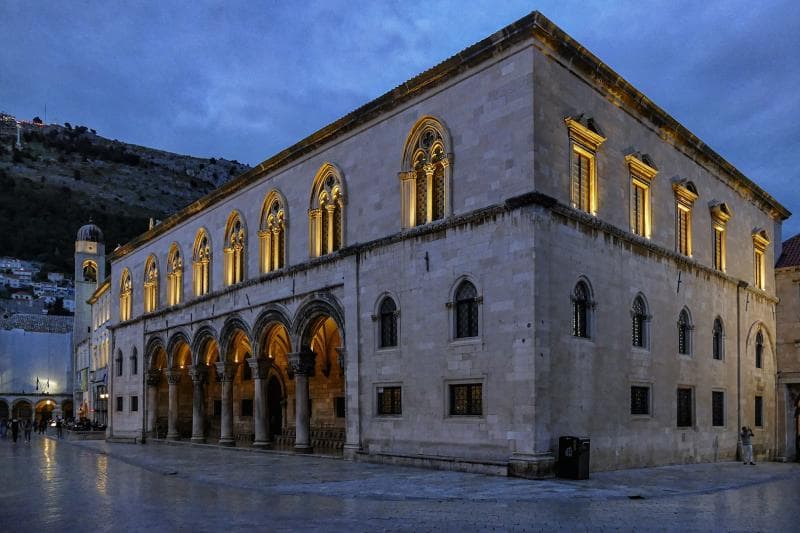
Explore the Cultural History Exhibits inside Dubrovnik's Rector's Palace, a stunning Gothic-Renaissance-Baroque masterpiece showcasing the rich heritage of the Republic of Ragusa, Croatia.
Overview
Nestled within the ancient walls of Dubrovnik, Croatia, the Rector's Palace stands as a magnificent testament to the city's rich and often turbulent past. More than just an architectural marvel, this historic edifice now houses the Cultural History Exhibits, inviting visitors on an immersive journey into the heart of the former Republic of Ragusa. The palace itself is a harmonious blend of Gothic, Renaissance, and Baroque architectural styles, reflecting centuries of resilience and rebuilding after various calamities. Today, it serves as the history department of the Dubrovnik Museums, offering a profound glimpse into the lives, governance, and artistry of a bygone era.
History & Cultural Background
The Rector's Palace, known in Croatian as Knežev dvor, was once the nerve center of the independent Republic of Ragusa. From the 14th century until 1808, it served as the official seat and residence for the elected Rector, the highest official of the republic. This was no ordinary residency; the Rector's mandate lasted a mere month, during which he was strictly forbidden from leaving the palace for personal reasons and was separated from his family. His primary duty was to safeguard the city's keys and oversee the affairs of state, embodying the very spirit of public service over private concern.
Beyond being the Rector's living quarters, the palace was a bustling hub of administration. It housed the Minor Council, the state administration, an armory, a watch house, and even a prison. Its architectural evolution mirrors Dubrovnik's history of challenges and renewal. Originally a Gothic structure, it endured multiple reconstructions following devastating fires, gunpowder explosions, and earthquakes, notably in 1435 and 1667. Master builders like Onofrio della Cava contributed to its transformation, leading to the sophisticated blend of styles visible today. The Cultural History Museum, in its present form, traces its roots back to the Patriotic Museum founded in 1872, with the collection finding its permanent home in the Rector's Palace in 1950, creating a dedicated space to showcase Dubrovnik's artistic and historical heritage.
What Makes It Special
What truly sets the Cultural History Exhibits apart is their ability to transport visitors directly into the historical narrative of the Republic of Ragusa. The museum's permanent display is curated to evoke the authentic atmosphere of the period, featuring meticulously recreated state offices, courtrooms, and even the Rector's personal apartment, complete with his study and bedroom. Walking through these spaces allows one to imagine the weighty decisions and daily life that unfolded within these walls.
The collection itself is vast, comprising approximately 20,000 artifacts from the 15th to the early 20th centuries. These include exquisite period furniture, portraits of Dubrovnik's noble families, and important historical documents like the original Code of Conduct. Visitors can admire old currencies of the Ragusa Republic, ceremonial robes, antique weaponry, ceramics, and glassware, all offering insights into the material culture and social hierarchy of the time. The central atrium, with its elegant Corinthian columns and Baroque staircase, is not only an architectural highlight but also a renowned venue for classical music concerts during the annual Dubrovnik Summer Festival, celebrated for its exceptional acoustics.
Stories, Fun Facts & Local Details
The palace is steeped in captivating stories and intriguing details. Above the main entrance, an enduring inscription reads: 'OBLITI PRIVATORUM PUBLICA CURATE' – meaning 'Forgetting your private business, concern yourselves with public affairs'. This motto perfectly encapsulates the self-sacrificing spirit expected of the Rector.
One notable figure commemorated within the palace is Miho Pracat, a wealthy shipping magnate. He is famously the only commoner in the Republic's millennium-long history to be honored with a statue, a rare bronze bust in the courtyard, a tribute to his immense philanthropy. For fans of popular culture, the Rector's Palace might also look familiar, as its monumental stone courtyard served as a filming location for the city of Qarth in the 'Game of Thrones' series. Furthermore, some clocks displayed within the exhibits are reportedly set to a specific time – quarter to six in the evening – marking the moment Napoleon's troops entered Dubrovnik in 1806, signifying the end of the Republic.
Visitor Perspective
Exploring the Cultural History Exhibits within the Rector's Palace is an unforgettable experience for any curious traveler. It's more than just viewing artifacts; it's an opportunity to step directly into the past and gain a deep appreciation for the ingenuity, resilience, and unique governance of the Republic of Ragusa. The thoughtfully arranged displays and preserved rooms allow for a tangible connection to the lives of Dubrovnik's historical figures, from the austere Rectors to the influential noble families. You'll leave with a richer understanding of how this small, yet powerful, maritime republic maintained its independence and cultural identity for centuries, all while surrounded by architectural beauty that has withstood the test of time.
Coordinates: 18.110675, 42.640313
View on Google Maps💬 How Travelers Describe This Place
Based on community votes
Must See
931Interesting
670Unique
655Beautiful
266Photogenic
166
Traveler Stories
Discover memorable experiences shared by travelers who have visited this place.
No traveler stories yet.
Be the first traveler to share what made this place memorable.

Tour
By
Spot
Discover amazing places around the world. Your journey starts here.
Explore
© 2026 TourBySpot. All rights reserved.