Park Güell
Barcelona, Spain
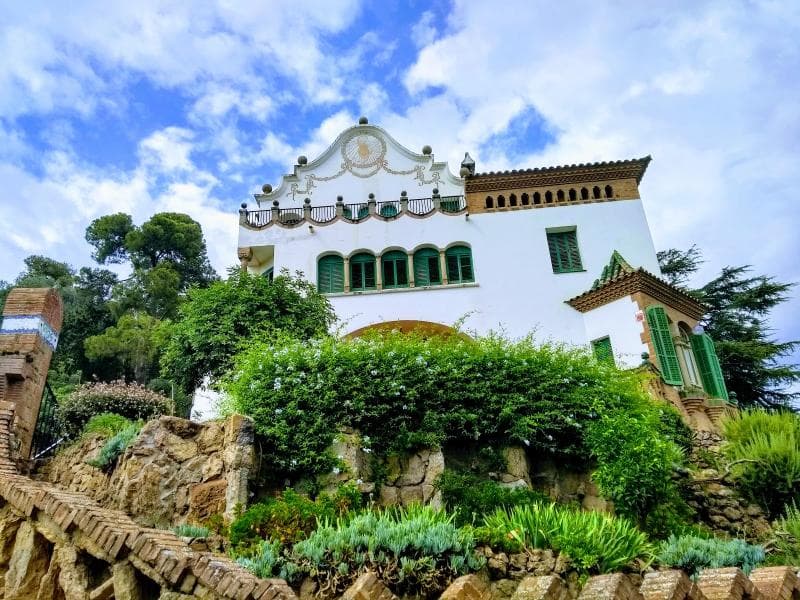
Explore Park Güell in Barcelona, Spain, a UNESCO World Heritage site and Antoni Gaudí's surreal masterpiece of modernist architecture, colorful mosaics, and organic designs. Discover its history, unique features, and visitor tips.
Overview
Park Güell, nestled on Carmel Hill in Barcelona, Spain, is a whimsical masterpiece by the renowned Catalan architect Antoni Gaudí. This public park system, comprised of gardens and distinctive architectural elements, offers a breathtaking blend of natural and designed landscapes, providing panoramic views of the vibrant city and the Mediterranean Sea. Far from being an ordinary green space, Park Güell is a UNESCO World Heritage Site, celebrated for its unique modernist architecture and its profound connection to nature.
Originally conceived as an exclusive residential estate, Park Güell's transformation into a public park has allowed millions of visitors to immerse themselves in Gaudí's fantastical vision, characterized by vibrant mosaics, organic forms, and innovative structural designs.
History & Cultural Background
The story of Park Güell begins in 1900, when Eusebi Güell, a wealthy industrialist and patron of Gaudí, commissioned the architect to create a 'garden city' for Barcelona's elite on a hillside known as Muntanya Pelada, or 'Bare Mountain'. Güell's inspiration came from the British residential parks, which is why he chose the English name 'Park' for the estate.
Gaudí worked on the project between 1900 and 1914, developing a design that harmonized with the natural landscape. However, despite Gaudí's genius, the ambitious housing project was a commercial failure. Only two of the sixty planned houses were ever built and sold, primarily due to difficult access, high prices, and its distance from the city center. Gaudí himself purchased one of these houses in 1906, residing there until his death in 1926.
After Eusebi Güell's death in 1918, his heirs offered the undeveloped land to the City of Barcelona. The city council acquired the property in 1922, and it was officially opened as a municipal park in 1926, the same year Gaudí passed away. In 1984, Park Güell received international recognition when UNESCO designated it a World Heritage Site as part of the 'Works of Antoni Gaudí', cementing its status as a pivotal example of Catalan Modernism.
What Makes It Special
Park Güell stands out for its extraordinary integration of architecture with nature, a hallmark of Gaudí's naturalist period. The park's design consciously mimics natural forms; winding paths, undulating benches, and columns are inspired by tree trunks, seashells, and rocky caves, ensuring that the structures flow with the hillside rather than against it.
One of the most captivating features is the extensive use of 'trencadís', a mosaic technique where broken ceramic tiles, glass, and other discarded materials are ingeniously repurposed to create vibrant, colorful surfaces. This technique is famously seen on the iconic mosaic dragon, 'El Drac', at the main entrance staircase, and the serpentine bench that winds around the main terrace.
The Hypostyle Room, initially intended as a marketplace for the residential estate, features 86 Doric-style columns that support the main terrace above. This space is not only visually striking but also demonstrates Gaudí's innovative approach to sustainability, as it incorporates a rainwater collection system that funnels water into an underground cistern.
Stories, Fun Facts & Local Details
- Gaudí's Home: Antoni Gaudí lived in one of the park's show houses from 1906 to 1926. This house, though not designed by Gaudí himself (it was by his collaborator Francesc Berenguer), now serves as the Gaudí House Museum, offering a glimpse into the architect's life.
- A Fairy-Tale Entrance: Many scholars believe that the two fanciful gatehouses at the park's entrance, with their wavy shapes and sugar-coated appearance, were inspired by the gingerbread house from the story of Hansel and Gretel. This adds to the park's dreamlike quality.
- Recycled Beauty: Gaudí was a pioneer in sustainability. The vivid `trencadís` mosaics throughout the park were created using discarded ceramic pieces, broken tiles, plates, and glass fragments, transforming waste into breathtaking art.
- Water Management Genius: Beneath the Hypostyle Room lies a massive cistern capable of storing up to 1,200 cubic meters of rainwater. This system was designed to supply the park and irrigate its green areas, showcasing Gaudí's foresight in integrating sustainable solutions. The famous dragon sculpture on the main staircase also serves as an overflow spout for this system.
- Austria Gardens: The peaceful Austria Gardens, originally intended as housing plots, became a plant nursery after the residential project failed. Its name comes from a donation of trees from Austria in 1977.
Visitor Perspective
Visiting Park Güell is an unforgettable experience, though it requires some planning. The park is divided into two main areas: a larger public zone that is free to explore, and the Monumental Zone, which contains most of Gaudí's iconic works and requires a paid ticket.
Due to its popularity and to preserve the delicate heritage, access to the Monumental Zone is regulated, with a limited number of visitors allowed per hour. It is highly recommended to purchase tickets online in advance to secure entry and avoid long queues, especially during peak season. Once inside the Monumental Zone, visitors can stay as long as they wish, but re-entry is not permitted.
The park is located on a hill, so comfortable walking shoes are essential. While there are escalators to assist with the uphill climb from certain metro stations, be prepared for some gradients. Early mornings or late afternoons are often suggested for fewer crowds and beautiful lighting. Park Güell offers a unique opportunity to stroll through a living work of art, experiencing Gaudí's creative genius and enjoying stunning vistas of Barcelona.
Coordinates: 2.15278, 41.41361
View on Google Maps💬 How Travelers Describe This Place
Based on community votes
Photogenic
872Interesting
846Must See
201Beautiful
121Unique
87
Traveler Stories
Discover memorable experiences shared by travelers who have visited this place.
No traveler stories yet.
Be the first traveler to share what made this place memorable.
Things to see at Park Güell



Tour
By
Spot
Discover amazing places around the world. Your journey starts here.
Explore
© 2026 TourBySpot. All rights reserved.