Serpentine Bench
Barcelona, Spain
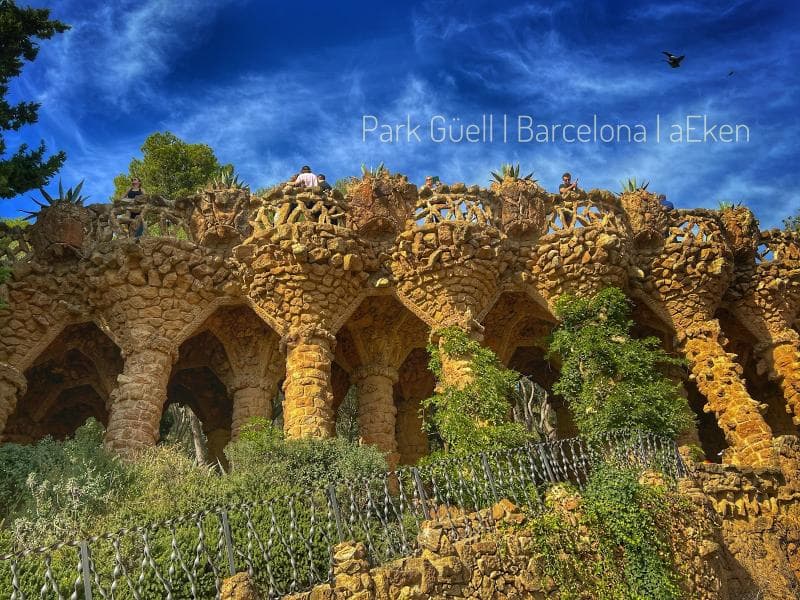
Discover the Serpentine Bench in Park Güell, Barcelona, Spain. An iconic 110-meter mosaic masterpiece by Gaudí and Jujol, offering panoramic city views.
Overview
Nestled within the enchanting landscape of Park Güell in Barcelona, Spain, the Serpentine Bench stands as a vibrant testament to the boundless creativity of Catalan Modernism. More than just a place to rest, this iconic feature is a continuous, undulating mosaic bench that winds gracefully around the perimeter of the park's main terrace, known as the Plaça de la Natura (Nature Square), formerly 'The Greek Theatre'.
Designed with significant input from Antoni Gaudí and his brilliant assistant, Josep Maria Jujol, the Serpentine Bench is celebrated for its distinctive ergonomic form and its breathtaking panoramic views of the Barcelona cityscape, stretching all the way to the glistening Mediterranean Sea. At an impressive 110 meters in length, it holds the distinction of being considered the world's longest public bench. This architectural marvel is an integral part of Park Güell, a UNESCO World Heritage Site, drawing visitors from across the globe to experience its unique blend of art, nature, and functional design.
History & Cultural Background
The Serpentine Bench was constructed between 1907 and 1913, as part of the broader Park Güell project, which unfolded from 1900 to 1914. The vision for Park Güell originated with Catalan industrialist Eusebi Güell, who, inspired by the English garden city movement, commissioned Antoni Gaudí to design an exclusive residential garden city. The Plaça de la Natura, where the bench resides, was originally conceived as a central community gathering space and an open-air theater, with the Serpentine Bench intended to serve as audience seating for performances that were never staged.
Despite its ambitious beginnings, the residential development proved commercially unsuccessful, with only a few plots sold. Following Güell's death, the estate was acquired by the city of Barcelona and was officially opened to the public as a municipal park in 1926. The park, including the Serpentine Bench, beautifully embodies the principles of Catalan Modernism, seamlessly integrating innovative architecture with organic forms inspired by the natural world.
What Makes It Special
The Serpentine Bench is a masterpiece of innovation and artistry, primarily defined by its use of the 'trencadís' technique. This iconic mosaic style involves meticulously arranging broken ceramic tiles, china, glass, and mirror shards into vibrant, intricate patterns. This technique is a hallmark of Catalan Modernism and a testament to Josep Maria Jujol's artistic genius, transforming discarded materials into a dazzling surface.
Beyond its visual appeal, the bench is renowned for its remarkably ergonomic design. Its undulating, wave-like shape is said to have been molded for comfort, with a popular anecdote suggesting it was formed by a workman sitting in wet plaster. This ingenious design allows visitors to sit comfortably and converse privately, despite the openness of the square.
The bench's functionality extends beyond seating; it cleverly integrates into the park's infrastructure, acting as a protective balustrade along the terrace edge and forming part of an innovative drainage system. Small holes in the backrest channel rainwater down to the Hypostyle Room below. The Serpentine Bench represents a harmonious collaboration between Gaudí, who conceived the overall structural form, and Jujol, who brought the mosaic surface to life with unparalleled artistic flair. Its staggering 110-meter length contributes to its status as the world's longest undulating public bench. From its vantage point, visitors are treated to breathtaking panoramic views that capture Barcelona's architectural splendor, including the distant Sagrada Família and the expansive Mediterranean Sea, making it a truly unforgettable experience.
Stories, Fun Facts & Local Details
One of the most charming anecdotes associated with the Serpentine Bench involves its ergonomic curves. Legend has it that Antoni Gaudí achieved its supremely comfortable shape by having a workman sit in wet plaster, creating a natural, body-contoured mold. While a delightful story, its historical accuracy remains a topic of spirited discussion.
Josep Maria Jujol, Gaudí's gifted collaborator, infused the bench with highly personal touches. He reportedly embedded pieces of his own household china and even cryptic symbols within the intricate mosaic, showcasing his extraordinary 'poetry in assembling recycled elements'. These hidden details invite a closer look, revealing the depth of artistic expression woven into the park's fabric.
The bench's design also incorporates practical elements. Small bumps strategically placed along the seating area were intended to facilitate quick drying after rain and discourage people from sitting in wet spots, demonstrating Gaudí's attention to visitor comfort and maintenance. Furthermore, the oval shape of the Main Terrace was deliberately chosen for its acoustic properties, enhancing its original purpose as a 'Greek Theatre' for public gatherings. This multifunctional masterpiece seamlessly blends art, comfort, and ingenious engineering.
Visitor Perspective
For many travelers, encountering the Serpentine Bench is a highlight of their visit to Park Güell. It is one of Barcelona's most iconic and frequently photographed landmarks, offering an unparalleled opportunity to engage directly with Gaudí's visionary world. The bench provides a unique and inviting space to pause, relax, and absorb the magnificent views of the city, framed by the intricate mosaic work that comes alive up close.
Visitors often describe how the true scale and intricate detail of the trencadís mosaic are far more impressive in person than in photographs. Each fragment, deliberately placed by Jujol, tells a story of vibrant color and texture. Sitting on the Serpentine Bench offers a moment of reflection, allowing one to appreciate the genius of its creators and the historical context of a park that began as an ambitious, albeit unrealized, residential dream. It's a place where you can feel connected to the rich tapestry of Catalan art and architecture, a functional masterpiece that continues to inspire and delight.
Coordinates: 2.1523, 41.4137
View on Google Maps💬 How Travelers Describe This Place
Based on community votes
Unique
670Beautiful
655Photogenic
594Must See
266Interesting
166
Traveler Stories
Discover memorable experiences shared by travelers who have visited this place.
No traveler stories yet.
Be the first traveler to share what made this place memorable.

Tour
By
Spot
Discover amazing places around the world. Your journey starts here.
Explore
© 2026 TourBySpot. All rights reserved.