Viaducts
Barcelona, Spain
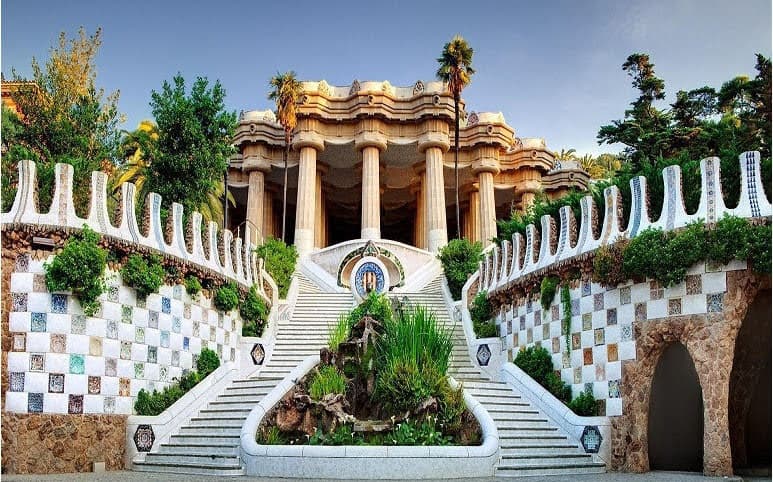
Discover the enchanting Viaducts of Park Güell in Barcelona, Spain. Explore Gaudí's organic architecture, history, and unique blend of art and nature.
Overview
Nestled within the enchanting landscape of Park Güell in Barcelona, Spain, lie the remarkable Viaducts, an integral part of Antoni Gaudí's visionary urban park. These architectural wonders were meticulously designed to navigate the park's undulating terrain, facilitating movement and seamlessly blending functionality with artistic expression. Comprising three distinct sections – the Pont de Baix (lower bridge), Pont del Mig (middle bridge), and Pont de Dalt (high bridge) – they formed a crucial network of paths intended for carriages, winding their way up the hillside towards the Turó de Tres Creus. Today, they continue to serve as picturesque walkways, inviting visitors to explore the park's diverse elevations while immersed in Gaudí's unique interpretation of nature and architecture.
Each viaduct, approximately five meters wide, was conceived not merely as a bridge but as an organic extension of the park itself, an early example of sustainable design. They demonstrate Gaudí's profound respect for the natural environment, ensuring that his constructions enhanced rather than dominated the existing topography. The Viaducts stand as a testament to his genius, offering both practical passage and captivating visual experiences for all who traverse them.
History & Cultural Background
The story of Park Güell's Viaducts begins in 1900, when the wealthy industrialist Eusebi Güell commissioned Antoni Gaudí to design a residential garden city on the 'Muntanya Pelada' (Bare Mountain). Inspired by the English garden city movement, the ambitious project aimed to create a luxurious housing development with a harmonious blend of architecture and natural green spaces.
Construction of the park commenced swiftly, and the Viaducts were among the key features completed early on, by January 1903. Gaudí's design ingeniously adapted to the site's steep slopes, creating a complex network of paths, viaducts, and steps. Although the residential development ultimately proved unsuccessful, with only a few plots sold, the work on the common areas, including these magnificent viaducts, continued until around 1914. Following Güell's death in 1918, the estate was sold to the city of Barcelona and opened as a public park in 1926, allowing Gaudí's architectural marvels, including the Viaducts, to be appreciated by a wider audience.
What Makes It Special
What truly sets the Viaducts apart is Gaudí's distinctive organic architecture, where structures appear to emerge directly from the landscape, mimicking natural forms. They are supported by a fascinating array of leaning columns and vaults, constructed from local, unhewn stones found directly on the site. These supports often resemble tree trunks or natural rock formations, creating a profound sense of integration with the surrounding environment.
Gaudí's innovative use of inverted catenary arches in their construction exemplifies his blend of artistic vision with structural ingenuity, ensuring optimal load-bearing compression. The balustrades atop the viaducts are often crowned with plots of vegetation, further blurring the lines between built structure and nature. Beyond their aesthetic appeal, the Viaducts also incorporated practical environmental solutions, such as systems for capturing and filtering rainwater, which was then deposited into cisterns within each viaduct. This ingenious feature highlights Gaudí's holistic approach to design, where every element served multiple purposes, seamlessly merging beauty and utility.
Stories, Fun Facts & Local Details
The Viaducts, particularly the Pont de Baix, Pont del Mig, and Pont de Dalt, were so emblematic of the park even in its early days that their names appeared on the first postcards of Park Güell. Some architects have even studied specific sections, like the 'Carob's viaduct' (likely a local name for one of the main viaducts), noting its 'perfect shape' and how weight is 'perfectly shared in the column' due to its sophisticated structure. This speaks to the depth of Gaudí's engineering prowess, often masked by his whimsical aesthetic.
Gaudí's intention was to create structures that simulated natural caves, allowing the Viaducts to act simultaneously as buttresses and retaining walls for the mountain. This duality of appearing natural while serving a critical structural role is a hallmark of his work. They represent Gaudí's deep-seated philosophy of drawing inspiration directly from the forms and efficiencies found in the natural world, transforming mere pathways into artistic and functional masterpieces.
Visitor Perspective
For the modern traveler, traversing the Viaducts offers a truly unique perspective on Park Güell. They provide a serene and often less crowded experience compared to the park's more monumental zones, making them ideal for leisurely strolls and photography. Walking beneath their organic arches, one can appreciate the intricate stonework and the way light filters through, creating an atmosphere that feels both ancient and fantastical.
The Viaducts are more than just passages; they are an invitation to slow down and observe Gaudí's genius in integrating human-made structures with the environment. They contribute significantly to the park's overall 'enchanted green spaces,' forming part of a maze of paths and arcades that invite exploration. From these vantage points, visitors can enjoy picturesque views, gain a deeper understanding of Gaudí's architectural principles, and experience the harmonious blend of art and nature that defines Park Güell.
Coordinates: 2.1517, 41.4082
View on Google Maps💬 How Travelers Describe This Place
Based on community votes
Unique
953Must See
695Interesting
658Photogenic
69Beautiful
22
Traveler Stories
Discover memorable experiences shared by travelers who have visited this place.
No traveler stories yet.
Be the first traveler to share what made this place memorable.

Tour
By
Spot
Discover amazing places around the world. Your journey starts here.
Explore
© 2026 TourBySpot. All rights reserved.