Hypostyle Room
Barcelona, Spain
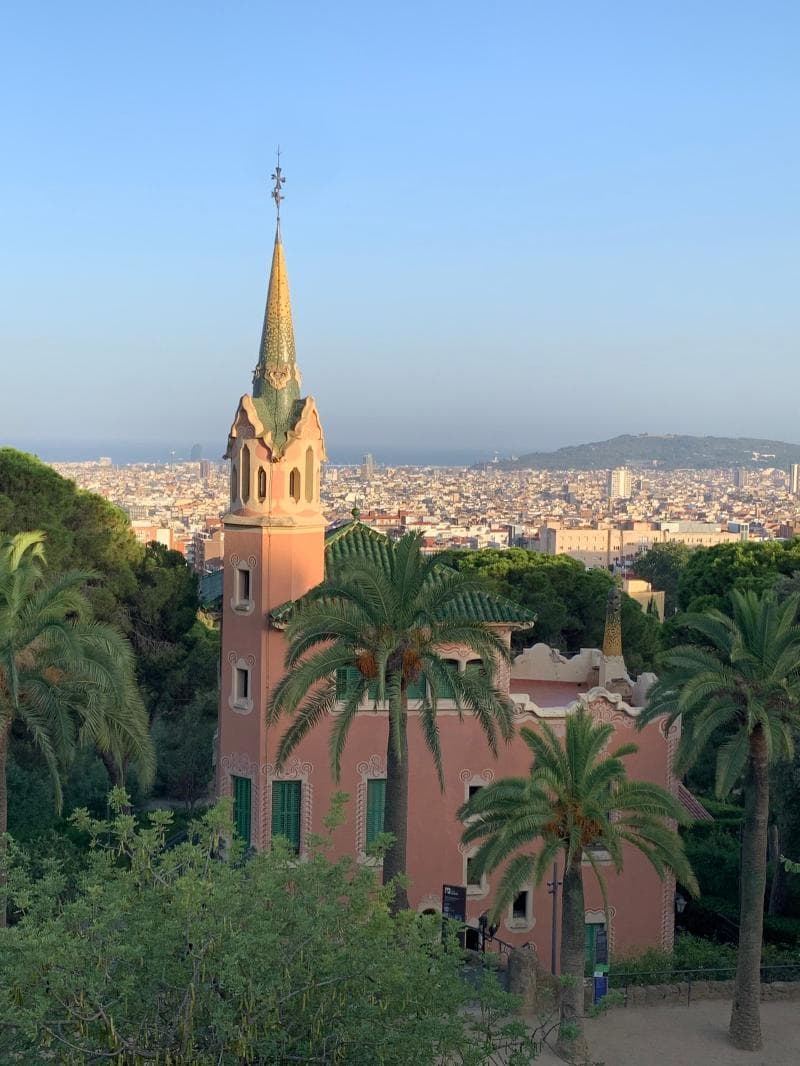
Explore the Hypostyle Room in Park Güell, Barcelona, Spain. Discover Gaudí's innovative columns, stunning trencadís mosaics, and unique history.
Overview
Deep within the artistic landscape of Park Güell in Barcelona, Spain, lies the magnificent Hypostyle Room, a structural marvel designed by Antoni Gaudí. This iconic space, often referred to as the 'Hall of a Hundred Columns' despite housing exactly 86, was originally envisioned as a bustling marketplace for the residential estate Gaudí was creating for his patron, Eusebi Güell. Today, it stands as a grand covered entrance hall to the park's central terrace, captivating visitors with its distinctive architecture and serene ambiance. Situated directly above the Dragon Staircase, it serves as a cool, column-filled sanctuary before one ascends to the sprawling main terrace and its famous serpentine bench.
History & Cultural Background
The creation of the Hypostyle Room, between 1906 and 1914, is intrinsically linked to the ambitious yet ultimately unfulfilled vision of Park Güell. Eusebi Güell commissioned Gaudí to design a high-end garden city on Carmel Hill, inspired by the English garden city movement, for Barcelona's elite. Gaudí, a leading figure of Catalan Modernisme, meticulously planned the estate's common services, with the Hypostyle Room intended as the heart of its commercial activity – a vibrant marketplace where residents could gather. Drawing inspiration from ancient Egyptian and Greek architecture, Gaudí borrowed the concept of a hypostyle hall, a large enclosed space supported by numerous columns, yet imbued it with his revolutionary structural and aesthetic interpretations. However, the residential project failed commercially, with only two houses ever built, and the estate eventually became a public park in 1922. Thus, the Hypostyle Room found a new, unplanned but equally vital role as a grand gateway to the park's upper levels.
What Makes It Special
The Hypostyle Room is a testament to Gaudí's genius and his profound understanding of both engineering and art. It features 86 robust columns, predominantly inspired by the Doric order, yet possessing a distinct Gaudínian flair. While the inner columns stand vertically, the outer ring leans outward at a calculated angle, a deliberate structural innovation derived from Gaudí's study of classical temple architecture, enhancing its load-bearing capacity. Beyond their structural role, these columns are ingeniously hollow, forming a sophisticated part of the park's rainwater drainage system. Rainwater from the expansive square above filters through these columns into an underground cistern, which then feeds the park's gardens and fountains – a remarkably ecological design for its time. The ceiling, composed of small clay brick domes between the column capitals, is a breathtaking display of 'trencadís' mosaic work. Designed and largely executed by Gaudí's most talented assistant, Josep Maria Jujol, it features 18 circular medallions: four larger ones representing the four seasons and the lunar cycle, and fourteen smaller sun medallions. Jujol ingeniously embedded ceramic cups, bottle bottoms, and mirror shards, creating capricious spirals and vibrant patterns that make the ceiling one of Catalan Modernisme's most important applied art pieces.
Stories, Fun Facts & Local Details
One of the enduring fun facts about the Hypostyle Room is its popular but misleading nickname, the 'Hall of a Hundred Columns'. Despite its imposing appearance, a precise count reveals only 86 columns. This misnomer simply reflects the sheer visual density of the columns that create an optical illusion of a much larger number. The extraordinary acoustics of the room are another fascinating detail; Gaudí deliberately designed the space to ensure voices would carry clearly across it, a feature initially intended for the bustling market environment. Josep Maria Jujol's artistic contributions extend beyond the ceiling, as he also designed the mosaics for the famous serpentine bench on the terrace above. His role in shaping the park's vibrant aesthetic is immense, often working with creative freedom granted by Gaudí. The water collection system embedded within the columns also connects to the famous mosaic dragon (El Drac) at the main staircase, which serves as an overflow spout for the underground cistern.
Visitor Perspective
Stepping into the Hypostyle Room is like entering a cool, shaded oasis, offering a welcome respite from the Barcelona sun. The sheer number of columns creates a sense of depth and grandeur, reminiscent of an ancient temple. As you wander among them, you can appreciate the subtle variations in their inclination and the innovative use of materials. Looking up, the vibrant trencadís mosaics on the ceiling draw the eye, each medallion telling a silent story through its colorful shards of ceramic, glass, and mirror. The play of light and shadow, combined with the room's unique acoustics, creates an almost ethereal atmosphere. It's a space that encourages slow exploration and contemplation, revealing new details and artistic nuances with every glance, allowing one to truly connect with Gaudí's visionary blend of nature, architecture, and innovative design. It's a powerful experience of entering a man-made forest, crafted with artistic genius.
Coordinates: 2.1517, 41.4082
View on Google Maps💬 How Travelers Describe This Place
Based on community votes
Unique
683Interesting
642Photogenic
300Must See
251Beautiful
88
Traveler Stories
Discover memorable experiences shared by travelers who have visited this place.
No traveler stories yet.
Be the first traveler to share what made this place memorable.

Tour
By
Spot
Discover amazing places around the world. Your journey starts here.
Explore
© 2026 TourBySpot. All rights reserved.