Dragon Stairway
Barcelona, Spain
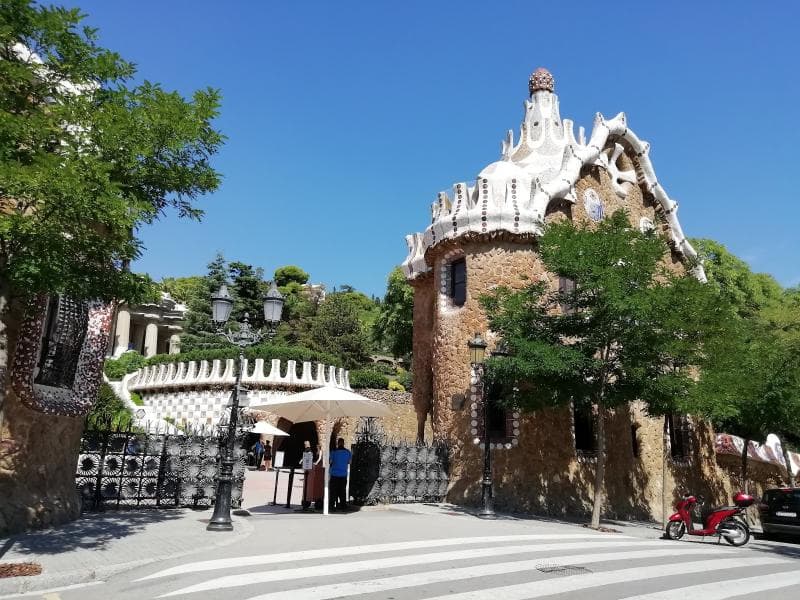
Discover Barcelona's iconic Dragon Stairway in Park Güell, featuring Gaudí's vibrant trencadís mosaic salamander, 'El Drac'. Explore its history and unique design in Spain.
Overview
As you step into the captivating realm of Park Güell in Barcelona, Spain, your gaze is immediately drawn to the iconic 'Dragon Stairway', a masterpiece of architectural whimsy and functional design. This grand double staircase is not merely a path but an integral part of Antoni Gaudí's fantastical vision, culminating in the globally recognized mosaic creature known affectionately as 'El Drac'. Located at the main Carrer d'Olot entrance to the park's Monumental Zone, the Dragon Stairway is one of Barcelona's most photographed landmarks, embodying the vibrant spirit of Catalan Modernism.
Its unique blend of art and utility, adorned with the characteristic 'trencadís' mosaic technique, serves as a whimsical welcome to the park, inviting visitors to ascend into Gaudí's imaginative world where nature and architecture harmoniously intertwine.
History & Cultural Background
The Dragon Stairway, along with much of Park Güell, was constructed between 1900 and 1914. The park itself was originally conceived by industrialist Eusebi Güell as an upscale residential garden city, inspired by English garden cities, for Barcelona's wealthy citizens. Gaudí, with his profound understanding of nature and organic forms, was given creative freedom to design this unique space.
The central figure on the stairway, 'El Drac', holds deep symbolic meaning. While anatomically a salamander, it is widely referred to as a dragon in Catalan. This ambiguity is intentional, allowing for multiple layers of interpretation. In Catalan culture, the dragon is inseparable from the legend of Sant Jordi (Saint George), Catalonia's patron saint, who slayed a dragon to save a princess, connecting the creature to Catalan identity and the Modernisme movement's celebration of Catalanism. Some scholars also link 'El Drac' to Ladon, the serpent guarding Hera's golden apples in Greek mythology's Garden of the Hesperides, symbolizing protection and a harmonious connection between nature and architecture.
What Makes It Special
The Dragon Stairway is a spectacular example of Gaudí's architectural genius and his innovative use of materials. The staircase rises in three ascending flights, flanked by retaining walls featuring battlements and grottos. The most striking feature is 'El Drac' itself, a approximately 2.4-meter-long mosaic sculpture positioned on the second landing.
It is entirely covered in 'trencadís' mosaic, a technique pioneered by Gaudí involving the breaking of ceramic tiles, glass, and crockery into irregular fragments and assembling them onto curved surfaces. This method not only allowed for artistic expression and vibrant colors but also made use of recycled materials, demonstrating Gaudí's early commitment to sustainability. The shimmering quality of the 'trencadís' creates an effect of scales, enhancing the creature's mythical presence.
Beyond its aesthetic appeal, the Dragon Stairway serves a crucial hidden function: it is an integral part of the park's sophisticated water management system. 'El Drac' sits above the overflow outlet of a 1,200 cubic-meter underground cistern located beneath the Hypostyle Room. Rainwater collected from the Main Terrace passes through hollow columns and fills this cistern, with excess water exiting through 'El Drac's' mouth, creating a natural fountain.
Stories, Fun Facts & Local Details
The creature's identity as either a dragon or a salamander has long been a playful debate. While anatomically it resembles a salamander, the local Barcelonians have affectionately called it 'El Drac' (the dragon) for generations, and the name has endured. This charming ambiguity contributes to its mystique and multifaceted symbolism. The salamander, in alchemical and mythological traditions, is believed to resist fire, symbolizing purification and rebirth.
The dynamic flow of water from its mouth, particularly after rainfall, is a captivating sight, transforming the static sculpture into a living element of the park's ecosystem. Gaudí's inspiration for the fountains along the staircase may also draw from the 'Jardins de la Fontaine' in Nîmes, a place he knew from his youth. The Dragon Stairway is not only a symbol of Park Güell but also a recognized icon of Barcelona itself, often appearing on postcards and souvenirs.
Visitor Perspective
Ascending the Dragon Stairway is often the first and most memorable experience for visitors entering Park Güell's Monumental Zone. The vibrant colors and organic forms instantly transport one into Gaudí's unique architectural landscape. The double staircase, with its intricate details and the watchful 'El Drac', offers countless photographic opportunities, making it a focal point for many. However, due to its delicate mosaic work, visitors are requested not to touch the sculpture to help preserve its beauty for future generations. The journey up the stairway eventually leads to the Hypostyle Room, offering a grand transition into the park's central areas and panoramic views of Barcelona.
Coordinates: 2.1517, 41.4082
View on Google Maps💬 How Travelers Describe This Place
Based on community votes
Interesting
494Must See
242Photogenic
193Unique
125Beautiful
82
Traveler Stories
Discover memorable experiences shared by travelers who have visited this place.
No traveler stories yet.
Be the first traveler to share what made this place memorable.

Tour
By
Spot
Discover amazing places around the world. Your journey starts here.
Explore
© 2026 TourBySpot. All rights reserved.