Monumental Zone
Barcelona, Spain
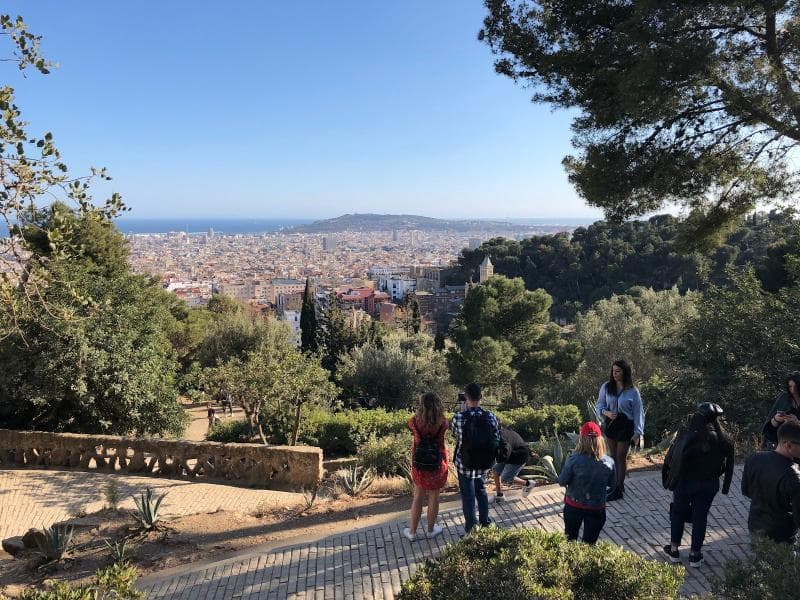
Explore the enchanting Monumental Zone of Park Güell in Barcelona, Spain, a UNESCO World Heritage site showcasing Antoni Gaudí's unique architectural masterpieces.
Overview
Stepping into the Monumental Zone of Park Güell in Barcelona, Spain, is like entering a vibrant, fantastical dreamscape designed by the ingenious Antoni Gaudí. This iconic area, a UNESCO World Heritage Site, is the heart of Park Güell and showcases Gaudí's most recognizable architectural masterpieces. It is a captivating blend of nature and imaginative design, where flowing lines, whimsical sculptures, and an explosion of color create a truly unique experience. Though the entire Park Güell covers a larger area, the Monumental Zone, spanning 12 hectares, is where the essence of Gaudí's genius truly shines, featuring structures that have become emblematic of Barcelona itself.
History & Cultural Background
The story of Park Güell begins in the early 20th century, specifically between 1900 and 1914, born from the vision of wealthy industrialist Eusebi Güell. Inspired by the English garden city movement, Güell commissioned his frequent collaborator, Antoni Gaudí, to design a luxurious residential complex on Muntanya Pelada (Bare Mountain), intended for Barcelona's affluent families. The original plan envisioned around 60 private villas amidst generous green spaces. However, the project faced challenges, including the site's location and transport difficulties, and ultimately failed to attract enough buyers, with only two houses ever built. Following Güell's death in 1918, his family sold the estate to the city of Barcelona in 1922, and it was opened as a public park in 1926, the same year of Gaudí's passing. Park Güell was later recognized as an artistic monument in 1969 and inscribed as a UNESCO World Heritage Site in 1984, alongside other works by Gaudí, acknowledging its exceptional contribution to architecture and construction techniques of the era.
What Makes It Special
The Monumental Zone is a testament to Gaudí's unique Modernisme style, characterized by organic forms, colorful mosaics, and an integration with nature. Key features include the iconic Dragon Stairway, guarded by 'El Drac', a vibrant mosaic salamander or dragon that has become a symbol of the park and one of Barcelona's most photographed landmarks. Ascending this stairway leads to the Hypostyle Room, originally intended as a market for the proposed garden city, supported by 86 Doric-inspired columns. Above the Hypostyle Room lies the vast Nature Square (Plaça de la Natura), formerly known as the Greek Theatre, offering breathtaking panoramic views of Barcelona and the Mediterranean Sea. The square is framed by the famous serpentine bench, an ergonomically designed, undulating seat adorned with colorful *trencadís* (broken ceramic tile mosaics). At the main entrance, the two whimsical Porter's Lodge pavilions, with their distinctive mosaic roofs, appear almost like gingerbread houses. Throughout the zone, elevated pathways and viaducts, designed with leaning columns mimicking natural forms, seamlessly blend with the landscape.
Stories, Fun Facts & Local Details
Gaudí's innovative use of *trencadís* – a mosaic technique using colorful, irregular pieces of recycled ceramic, glass, and tiles – is evident everywhere, from 'El Drac' to the serpentine bench, giving the park its signature vibrant aesthetic. This technique was pioneered and perfected here by Gaudí and his collaborator Josep Maria Jujol. The ergonomically shaped backrest of the serpentine bench was reportedly designed after a worker sat in wet clay to create a perfect mold, showcasing Gaudí's attention to human comfort and functionality. Another intriguing detail is found in the Hypostyle Room: its ceiling features circular mosaics depicting celestial bodies and other natural elements, and it also cleverly functions as part of Gaudí's rainwater collection system, channeling water to an underground tank. Interestingly, Antoni Gaudí himself resided in one of the two houses built within the park from 1906 to 1925, before moving to the Sagrada Família. This house, though not designed by Gaudí but by Francesc Berenguer, is now the Gaudí House Museum. The name 'Park Güell' itself reflects Eusebi Güell's admiration for English garden cities.
Visitor Perspective
Visiting the Monumental Zone today offers an unparalleled journey into the mind of Antoni Gaudí. Due to its immense popularity and the need for preservation, access to this core area is regulated and requires a ticket, with capacity limits in place. This managed access helps maintain the integrity of Gaudí's work and ensures a more enjoyable experience for visitors. While the Monumental Zone is ticketed, other parts of Park Güell remain freely accessible and offer additional green spaces and walking paths. It is recommended to book tickets in advance and arrive at your scheduled entry time. The park's location on Carmel Hill means some uphill walking, so comfortable footwear is advisable. Visitors typically spend 1 to 3 hours exploring the Monumental Zone, immersing themselves in the intricate details and enjoying the stunning vistas over Barcelona.
Coordinates: 2.15278, 41.41361
View on Google Maps💬 How Travelers Describe This Place
Based on community votes
Unique
996Interesting
726Photogenic
717Must See
494Beautiful
193
Traveler Stories
Discover memorable experiences shared by travelers who have visited this place.
No traveler stories yet.
Be the first traveler to share what made this place memorable.

Tour
By
Spot
Discover amazing places around the world. Your journey starts here.
Explore
© 2026 TourBySpot. All rights reserved.