Gaudí House Museum
Barcelona, Spain
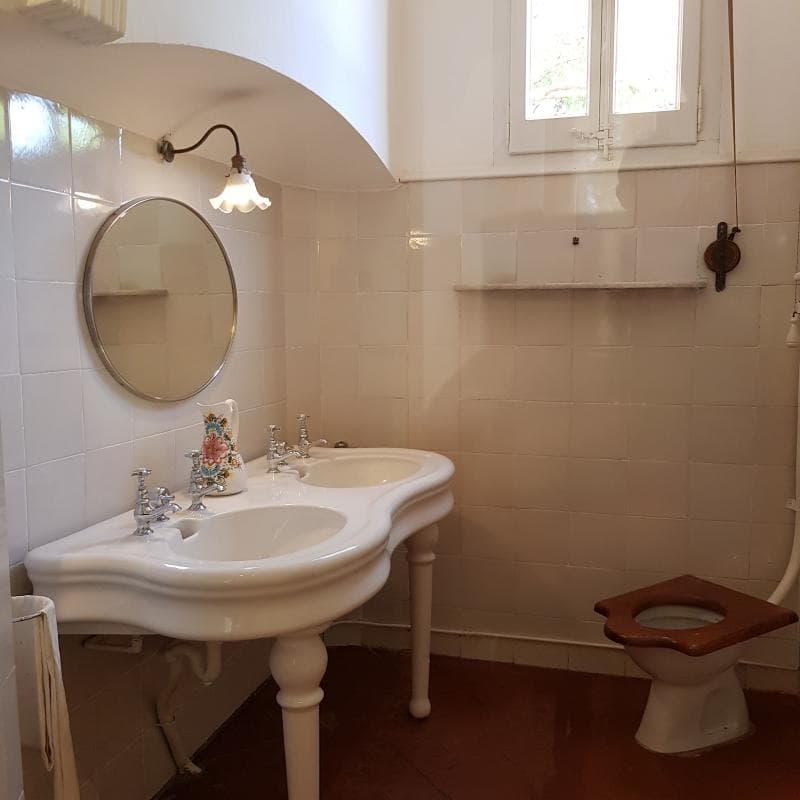
Explore the Gaudí House Museum in Barcelona, Spain, Antoni Gaudí's former residence within Park Güell, showcasing his personal life and designs.
Overview
Nestled within the enchanting landscape of Park Güell in Barcelona, Spain, stands the Gaudí House Museum (Casa Museu Gaudí). This charming pink residence, affectionately known as the 'Torre Rosa' or Pink Tower, offers an intimate glimpse into the personal world of the legendary Catalan architect Antoni Gaudí. Though often associated with designing his own distinct architectural masterpieces, the house itself was designed by Gaudí's close friend and collaborator, Francesc Berenguer i Mestres, between 1903 and 1905 [29, 34]. It was initially conceived as a show home to entice potential buyers to the ambitious Park Güell residential development, a vision that ultimately never fully materialized [3, 29].
Gaudí acquired this house in 1906 and made it his home for nearly two decades, living there from 1906 until late 1925, just months before his passing [2, 5]. Today, the museum preserves his former living spaces and showcases a fascinating collection of furniture and objects he designed for some of his most famous projects, such as Casa Batlló, Casa Calvet, and Casa Milà [2, 5]. It also features various personal belongings, offering visitors a unique perspective on the man behind the architectural genius [5, 28].
History & Cultural Background
The story of the Gaudí House Museum is intrinsically linked to the grander, albeit unfulfilled, vision of Park Güell. In the late 19th century, industrialist Eusebi Güell i Bacigalupi, inspired by English garden cities, commissioned Antoni Gaudí to create an exclusive residential complex for Barcelona's bourgeoisie on the Carmel Hill [11, 16]. The plan envisioned sixty houses, but by 1914, due to a lack of interest and complex lease contracts, only two houses were ultimately built, one of which was the Casa Museu Gaudí [11, 16].
The house, constructed between 1903 and 1905, was meant to serve as a model to attract buyers to Güell's development [5, 11]. When it failed to sell, Gaudí himself purchased it in 1906 and moved in with his father, Francesc Gaudí i Serra, and his niece, Rosa Egea i Gaudí [5, 11]. Following the deaths of his father in 1906 and niece in 1912, Gaudí lived there alone, dedicating much of his time to his architectural endeavors, particularly the Sagrada Família [5, 11]. In 1925, he relocated to the Sagrada Família workshop to be closer to the ongoing construction [5, 9].
After Gaudí's death in 1926, the house was sold, with proceeds benefiting the Sagrada Família Foundation as per his will [5, 9]. Decades later, in 1960, the 'Friends of Gaudí' association launched a campaign to acquire the property, successfully opening it as a museum on September 28, 1963 [2, 11]. The Gaudí House Museum is now recognized as part of the UNESCO World Heritage-listed 'Works of Antoni Gaudí,' underscoring its cultural significance [28, 33].
What Makes It Special
What truly distinguishes the Gaudí House Museum is its ability to reveal the architect's human side, moving beyond his monumental works to showcase his daily life and design philosophy on a personal scale [5, 6]. Visitors can explore recreated rooms, including Gaudí's bedroom and study, furnished with original pieces he designed with his characteristic ergonomic and functional solutions [3, 5, 14]. These items, often crafted from noble materials and featuring organic forms, exemplify his unique aesthetic development [5, 8].
The museum also displays personal artifacts, documents, and drawings, providing context to his creative process and profound religious devotion [5, 28]. The house's exterior, with its pink stucco walls, pointed tower, and trencadís mosaic chimneys, though designed by Berenguer, foreshadows some of the organic and nature-inspired elements that would become hallmarks of Gaudí's later work within Park Güell [7, 28]. Furthermore, the surrounding garden features wrought-iron elements salvaged from other Gaudí projects, such as Casa Vicens and Casa Milà, integrating his broader artistic legacy into this intimate setting [5, 7].
Stories, Fun Facts & Local Details
During his nearly two decades living in the Casa Museu Gaudí, the architect was deeply immersed in his projects, especially the Sagrada Família, which he worked on almost exclusively from 1914 [5, 9]. It's said that his intense focus led him to eventually move directly into the Sagrada Família workshop to supervise its construction more closely [5].
A poignant detail within the museum is the recreation of Gaudí's bedroom, complete with crucifixes on the walls and a kneeling stool, reflecting his devout Catholic faith [8]. The house's nickname, 'Torre Rosa' or Pink Tower, comes from its distinctive façade, making it easily recognizable within the park [25]. It's a testament to the ambitious yet ultimately undersubscribed vision of Eusebi Güell that Gaudí ended up purchasing and residing in a house initially built as a sales pitch for a residential estate that never came to fruition [11, 16]. The museum aims to show not just Gaudí the architect, but Gaudí the man – a reserved individual whose life was deeply shaped by his beliefs [20].
Visitor Perspective
A visit to the Gaudí House Museum offers a distinct experience from exploring Gaudí's larger, more public architectural works. Located conveniently within Park Güell, it provides an intimate look into his private life [3, 6]. While entrance to Park Güell's monumental zone typically requires a ticket, the Gaudí House Museum can often be visited with a combined ticket, or as an add-on [21, 22]. It is highly recommended to book tickets online in advance to secure entry and avoid potential queues, especially during peak seasons [4, 17].
Visitors should allocate approximately 30 to 45 minutes to thoroughly explore the house and its small garden [17]. Audio guides are often available, enhancing the experience with multilingual commentary [13, 14]. As the museum is situated within Park Güell, which can involve some uphill walking, comfortable shoes and staying hydrated are advisable [4]. Visitors are encouraged to respect the preserved home environment by keeping noise to a minimum and refraining from flash photography, allowing for a contemplative journey through the personal world of one of history's most celebrated architects [4].
Coordinates: 2.1521611, 41.41355
View on Google Maps💬 How Travelers Describe This Place
Based on community votes
Beautiful
886Unique
564Must See
233Interesting
201Photogenic
121
Traveler Stories
Discover memorable experiences shared by travelers who have visited this place.
No traveler stories yet.
Be the first traveler to share what made this place memorable.

Tour
By
Spot
Discover amazing places around the world. Your journey starts here.
Explore
© 2026 TourBySpot. All rights reserved.