Nature Square
Barcelona, Spain
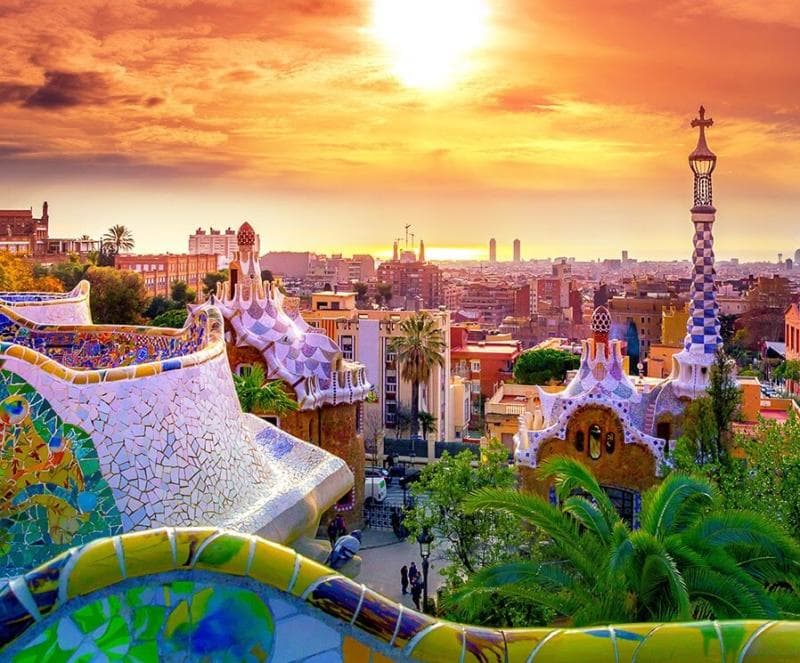
Discover Nature Square in Park Güell, Barcelona, Spain. Explore Gaudí's iconic mosaic serpentine bench, panoramic views, and unique architectural blend with nature.
Overview
Nestled within the enchanting Park Güell in Barcelona, Spain, lies the magnificent Nature Square, known locally as Plaça de la Natura. This expansive central esplanade, originally named the Greek Theatre, serves as a breathtaking focal point, harmoniously blending Gaudí's iconic architectural vision with the natural landscape. It is most famous for its vibrant, undulating serpentine bench, adorned with a dazzling mosaic of broken ceramic tiles, offering visitors unparalleled panoramic views of the city of Barcelona and the sparkling Mediterranean Sea.
The square is a masterful example of Antoni Gaudí's unique approach, where organic forms and ingenious design solutions create a space that feels both meticulously crafted and inherently natural. Partially carved into the hillside and partly supported by the columns of the Hypostyle Hall below, Nature Square is a place of wonder, inviting contemplation and admiration of its artistic and natural beauty.
History & Cultural Background
Park Güell itself began as an ambitious, albeit ultimately unfulfilled, urban development project conceived by Eusebi Güell and designed by Antoni Gaudí between 1900 and 1914. Güell envisioned a luxurious residential estate inspired by British garden cities, situated on the 'Muntanya Pelada' (Bare Mountain) with splendid views.
The grand square, now known as Nature Square, was initially designed as the 'Greek Theatre,' intended to host large open-air shows and cultural events, providing a communal gathering space for the residents of the envisioned garden city. However, due to a lack of buyers, the residential project failed, and the park was eventually purchased by the City Council of Barcelona in 1922, opening to the public in 1926. It was later recognized as an artistic monument in 1969 and declared a UNESCO World Heritage Site in 1984, acknowledging Gaudí's works as exceptional examples of Catalan Modernisme.
What Makes It Special
Nature Square's distinctiveness stems from Gaudí's revolutionary integration of architecture with nature, an approach he pursued throughout his naturalist period. The most striking feature is undoubtedly the serpentine bench that defines its perimeter. This continuously flowing, ergonomically designed seat is not just a decorative element but a functional masterpiece, allowing visitors to sit comfortably while taking in the views.
The bench is intricately covered in 'trencadís,' a mosaic technique perfected by Gaudí, utilizing broken ceramic tiles, glass, and other materials to create vibrant, textured surfaces. Collaborating with his assistant Josep Maria Jujol, Gaudí ensured that each piece contributed to a lively, organic pattern. Beneath the square lies the Hypostyle Hall, with its 86 Doric-style columns, originally intended as a market. These columns not only support the square above but also ingeniously function as part of a rainwater collection system, channeling water to an underground cistern.
Stories, Fun Facts & Local Details
- Trencadís Technique: Gaudí was a pioneer in the use of 'trencadís,' transforming discarded ceramic fragments into dazzling works of art. This eco-friendly approach not only added vibrant color and texture but also demonstrated resourcefulness and a playful spirit.
- Ergonomic Design: Legend has it that Gaudí had a worker sit in wet plaster to capture the perfect ergonomic curve for the serpentine bench, ensuring maximum comfort for those enjoying the views. The undulations of the bench also create intimate 'niches' for conversations.
- Rainwater Harvesting: The columns of the Hypostyle Hall beneath Nature Square are hollow, cleverly designed to collect rainwater that filters through the square. This water was intended for the estate's inhabitants and demonstrates Gaudí's commitment to sustainable design and respect for natural resources.
- Symbolism: Gaudí often imbued his work with deep symbolism. The organic forms, the integration with nature, and even the choice of plants reflected his philosophical and religious beliefs, seeking harmony between human creation and the divine order of nature.
Visitor Perspective
Visiting Nature Square is an immersive experience that transports one into Gaudí's imaginative world. As you ascend towards the square, the sweeping views of Barcelona, from the Sagrada Família to the sea, gradually unfold, providing a stunning backdrop to the architectural marvels.
The vibrant mosaics of the serpentine bench invite visitors to linger, offering numerous spots to sit, relax, and soak in the atmosphere. It's a place where you can feel the blend of art and nature, where every curve and color tells a story. Early mornings are often recommended for a visit to avoid crowds and fully appreciate the tranquility and photographic opportunities, especially on the famous bench. The square, along with the entire park, embodies a 'playground for the mind,' as one might say, a testament to Gaudí's genius in creating a space that inspires awe and joy in equal measure.
Coordinates: 2.15278, 41.41361
View on Google Maps💬 How Travelers Describe This Place
Based on community votes
Unique
996Interesting
726Photogenic
717Must See
494Beautiful
193
Traveler Stories
Discover memorable experiences shared by travelers who have visited this place.
No traveler stories yet.
Be the first traveler to share what made this place memorable.

Tour
By
Spot
Discover amazing places around the world. Your journey starts here.
Explore
© 2026 TourBySpot. All rights reserved.