National Museum Of Indonesia
Jakarta, Indonesia
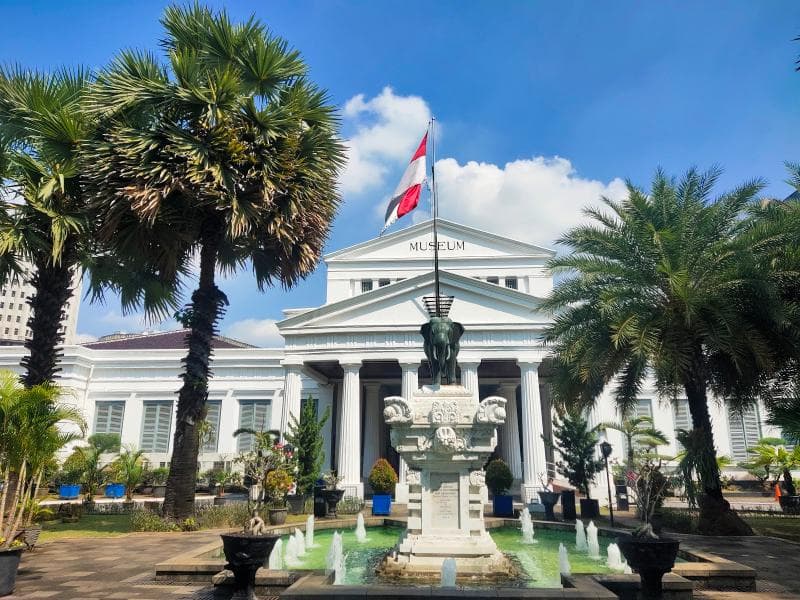
Explore Indonesia's rich heritage at the National Museum of Indonesia in Jakarta. Discover ancient artifacts, cultural treasures, and historical narratives.
Overview
The National Museum of Indonesia, located in the vibrant heart of Jakarta, is a beacon of the nation's rich cultural heritage. Widely known by its endearing nicknames, 'Museum Gajah' (Elephant Museum) due to the iconic bronze elephant statue in its forecourt, and 'Gedung Arca' (House of Statues), this institution stands as the oldest and largest museum in Indonesia. It is an essential destination for anyone seeking to understand the archipelago's intricate past, housing an immense collection of over 140,000 artifacts that span millennia. From prehistoric relics to ethnographic treasures and exquisite artworks, the museum meticulously preserves and showcases the diverse narratives that have shaped Indonesia into the nation it is today.
History & Cultural Background
The origins of the National Museum of Indonesia trace back to April 24, 1778, with the establishment of the 'Bataviaasch Genootschap van Kunsten en Wetenschappen' (Batavian Society of Arts and Sciences) by Dutch scholars during the Age of Enlightenment. This society was dedicated to advancing research in various fields, including biology, physics, archaeology, literature, ethnology, and history. The burgeoning collection soon outgrew its initial home, leading to the construction of the current stately neoclassical building in 1868, which was then officially opened to the public. Over the years, as Indonesia journeyed towards and achieved independence, the museum evolved significantly. It was first renamed 'Lembaga Kebudayaan Indonesia' in 1950, then 'Museum Pusat' (Central Museum) in 1962, and finally, in 1979, it proudly became the National Museum of Indonesia. A testament to its resilience, the museum underwent extensive renovation and successfully reopened in October 2024, following a fire in September 2023 that affected parts of its older building.
What Makes It Special
What truly sets the National Museum of Indonesia apart is the sheer breadth and depth of its collections, which are categorized into seven main types: prehistoric, archaeological, ethnographical, numismatic, ceramic, historical, and geographical. Visitors can journey through time, encountering ancient stone age artifacts like fossilized skulls of early human settlements, including models of Homo floresiensis, famously known as the 'hobbit' from Flores. The archaeological halls boast monumental pieces such as the 4.5-meter tall Bhairawa king statue from Sumatra, believed to represent King Adityawarman, depicted triumphing over human skulls. Another artistic marvel is the serene Prajnaparamita statue, symbolizing transcendental wisdom. The museum also houses one of Southeast Asia's most extensive collections of ancient Chinese ceramics, reflecting Indonesia's historical trade links, alongside a rich display of traditional textiles, gold treasures, and ethnographic artifacts from across the diverse archipelago.
Stories, Fun Facts & Local Details
Beyond its impressive artifacts, the museum's identity is woven with fascinating stories. The 'Museum Gajah' nickname originated from a striking bronze elephant statue, a diplomatic gift from King Chulalongkorn of Siam (now Thailand) during his visit in 1871. This statue still greets visitors at the museum's entrance, a symbol of historical friendship. The alternative name, 'Gedung Arca,' simply translates to 'House of Statues,' acknowledging the vast array of sculptures housed within its walls. Among its most prized possessions is the Wonoboyo Hoard, an extraordinary collection of 9th-century gold and silver artifacts discovered near Prambanan, offering a dazzling glimpse into ancient Mataram kingdom's wealth. In a move towards modern engagement, the museum features ImersifA, an immersive digital experience that brings history to life through captivating audio-visual storytelling. Furthermore, as of September 2026, the museum proudly inaugurated Perpustakaan Danantara (Danantara Library), expanding its resources for researchers and the public, reinforcing its role as a center for cultural study and knowledge.
Visitor Perspective
The National Museum of Indonesia is conveniently situated at Jl. Medan Merdeka Barat No.12, Central Jakarta, making it easily accessible for all. Its prime location is just west of Merdeka Square and adjacent to the iconic National Monument (Monas). Visitors can reach the museum using public transportation such as TransJakarta, alighting at the Monas stop, or by taking the KRL Commuter Line to Gambir Station. The museum welcomes guests from Tuesday to Sunday, typically from 8 AM to 8 PM, though it is closed on Mondays and national public holidays. To maximize your visit, arriving in the morning is recommended to avoid larger crowds and allow ample time to explore. Guided tours, often available in English, provide deeper insights into the collections. Essential facilities like WiFi, ATMs, restrooms, a souvenir shop, a café, and a prayer room are available for visitor comfort. For those experiencing the ImersifA digital exhibition, remember to remove shoes and avoid food or drinks to preserve the experience.
Coordinates: 106.8217, -6.1761
View on Google Maps💬 How Travelers Describe This Place
Based on community votes
Unique
886Interesting
564Must See
443Beautiful
233Photogenic
201
Traveler Stories
Discover memorable experiences shared by travelers who have visited this place.
No traveler stories yet.
Be the first traveler to share what made this place memorable.
Things to see at National Museum Of Indonesia


Tour
By
Spot
Discover amazing places around the world. Your journey starts here.
Explore
© 2026 TourBySpot. All rights reserved.