Museum Of Occupations And Freedom Fights
Vilnius, Lithuania
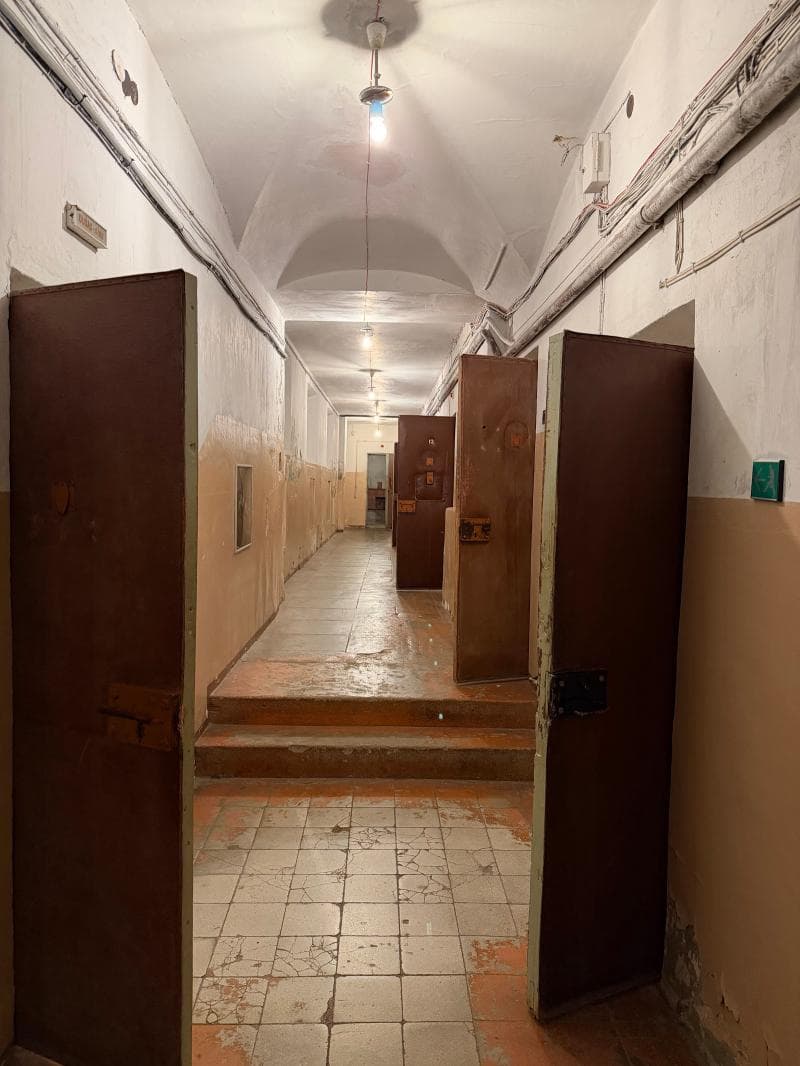
Explore the Museum of Occupations and Freedom Fights in Vilnius, Lithuania, housed in the former KGB headquarters, revealing Soviet occupation history and resistance.
Overview
The Museum of Occupations and Freedom Fights, known in Lithuanian as Okupacijų ir laisvės kovų muziejus, stands as a profound testament to Lithuania's tumultuous 20th-century history. Located in Vilnius, the nation's capital, it is informally but widely referred to as the 'KGB Museum' due to its unsettling past. Established in 1992, the museum is housed within the very building that served as the headquarters for the Soviet occupation's repressive security agencies, including the NKVD, NKGB, MGB, and most notably, the KGB, from 1940 to 1991. Its primary mission is to document and commemorate the 50-year Soviet occupation of Lithuania, the courageous anti-Soviet Lithuanian partisans, and the countless victims who suffered arrests, deportations, and executions during this grim period. Prior to 2018, the institution was known as the Museum of Genocide Victims, a name reflecting its initial focus on the human cost of the Soviet regime.
History & Cultural Background
The building itself holds a century of layered history. Completed in 1890, it first served as a court for the Russian Empire's Vilna Governorate. Through various occupations, its purpose shifted dramatically. During World War I, it was used by the German Empire. Following Lithuania's brief period of independence between the world wars, it housed justice courts under Polish occupation after Żeligowski's Mutiny of 1920. The Soviet Union's invasion in 1940 marked a sinister turn, as the building became the seat of the NKVD and NKGB, with its basement transformed into a prison. From 1941 to 1944, during the Nazi occupation, it functioned as the Gestapo headquarters and prison. However, it was the subsequent Soviet re-occupation in 1944 that solidified its dark reputation. For nearly five decades, until Lithuania regained independence in 1991, it was the central hub for the KGB's operations, interrogations, and imprisonment of dissidents. Within its basement, over 1,000 prisoners were executed between 1944 and the early 1960s, a stark reminder of the brutality that transpired within these walls.
What Makes It Special
What sets the Museum of Occupations and Freedom Fights apart is its unparalleled authenticity. It is the only museum in the Baltic States to be located within the very building where such extensive repressive activities took place, offering an immersive and profoundly personal historical encounter. Visitors are not merely observing artifacts; they are stepping into the preserved original basement cells, interrogation rooms, and the execution chamber, left largely as they were when the KGB departed in 1991. The museum's exhibits meticulously detail the Sovietization of Lithuania, the clandestine guerilla warfare waged by the 'Forest Brothers', the mass deportations of Lithuanians to Siberian Gulags, and the extensive network of KGB operations. A particularly chilling feature is the recreated telephone surveillance room, complete with authentic eavesdropping equipment, providing a tangible sense of the constant monitoring citizens endured. Messages of despair and defiance, etched by prisoners into the cell walls, remain visible, offering direct, poignant connections to those who suffered here. Furthermore, a glass floor in the execution chamber allows visitors to view objects discovered in the mass graves beneath the building, grounding the horrors in tangible evidence.
Stories, Fun Facts & Local Details
The museum is replete with stories that personalize the broader historical narrative. Outside, the names of those killed within are carved into the stone blocks of the building's exterior, a public memorial to the fallen. During the Soviet era, locals would deliberately cross the street to avoid even walking past this foreboding structure, a testament to its pervasive atmosphere of fear. The design of the prison cells themselves speaks volumes about the systematic cruelty: some were tiny 'boxes' too small to stand in, others were solitary confinement cells, and 'water cells' forced prisoners to balance on a small platform surrounded by freezing water. While primarily focusing on Soviet repression, one chamber acknowledges the Holocaust, highlighting the period from 1941-1944 when the building served as the Gestapo headquarters. The museum also showcases the non-violent resistance, displaying underground publications, documents, and photographs. The collection is continuously enriched by donations from the public, ensuring that personal stories and belongings of victims are preserved. In a significant gesture of remembrance, Pope Francis visited the museum in September 2018 to pray for the victims of the Soviet regime.
Visitor Perspective
Visiting the Museum of Occupations and Freedom Fights is consistently described as an intense, emotional, and deeply sobering experience. It is far from a typical museum outing; instead, it is a raw and powerful encounter with history that brings the past vividly to life. Walking through the actual spaces where atrocities occurred, where countless lives were impacted, leaves an indelible impression on visitors. Many attest to the profound emotional weight of the exhibits, emphasizing the need for visitors to be in a reflective frame of mind to process the difficult information. The museum effectively conveys the immense resilience and enduring spirit of the Lithuanian people in the face of overwhelming oppression. For those seeking to grasp the full historical context and personal stories, guided tours are highly recommended, offering deeper insights into the complex narratives presented within this significant historical site.
Coordinates: 25.27111, 54.68806
View on Google Maps💬 How Travelers Describe This Place
Based on community votes
Interesting
804Photogenic
733Unique
563Must See
100Beautiful
63
Traveler Stories
Discover memorable experiences shared by travelers who have visited this place.
No traveler stories yet.
Be the first traveler to share what made this place memorable.
Things to see at Museum Of Occupations And Freedom Fights



Tour
By
Spot
Discover amazing places around the world. Your journey starts here.
Explore
© 2026 TourBySpot. All rights reserved.