Former KGB Prison
Vilnius, Lithuania
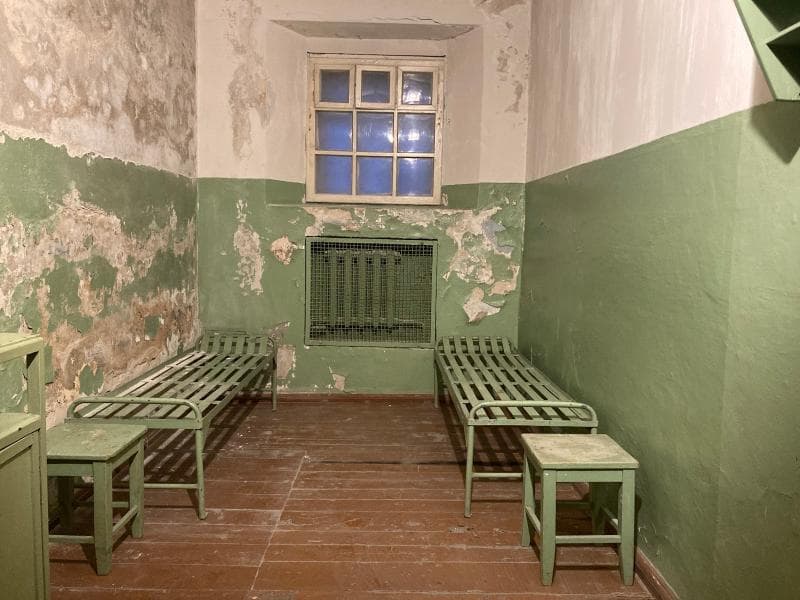
Explore the Former KGB Prison within Vilnius' Museum of Occupations and Freedom Fights, a harrowing memorial to Lithuania's fight for freedom.
Overview
The Former KGB Prison, located within the Museum of Occupations and Freedom Fights in Vilnius, Lithuania, serves as a poignant and unvarnished testament to the brutal occupations that shaped the nation's 20th-century history. While officially known as the Museum of Occupations and Freedom Fights, it is widely referred to as the 'KGB Museum' due to its unsettling past as the former headquarters of the Soviet secret police. This building, a symbol of oppression, was where the Soviet security agencies (NKVD-NKGB-MGB-KGB) operated for nearly 50 years, from 1940 until Lithuania regained its independence in 1991. The museum offers visitors a chilling journey through Lithuania's difficult past, preserving the authentic cells, interrogation rooms, and execution chamber where countless individuals suffered and died for their country's freedom.
Housed in a grand building that once also served as Gestapo headquarters during Nazi occupation, the museum meticulously documents the fifty-year Soviet occupation, the anti-Soviet resistance movement, and the victims of arrests, deportations, and executions. Its unique location within these historical walls sets it apart, providing an immersive experience that leaves a lasting impression on all who visit.
History & Cultural Background
The building itself dates back to the late 19th century, originally constructed as a courthouse. However, its purpose dramatically shifted with the tumultuous events of the 20th century. Following the Soviet occupation of Lithuania in 1940, it became the local headquarters for Soviet security services, including the NKVD, and subsequently the KGB. During the brief Nazi occupation from 1941 to 1944, the building was appropriated by the Gestapo.
When the Soviets retook Lithuania in 1944, the building once again became the epicenter of state-sponsored terror. The basement was transformed into a highly secretive internal prison and interrogation center, where Lithuanian resistance fighters, political dissidents, and ordinary citizens suspected of disloyalty were held, interrogated, tortured, and often executed. Between 1944 and the early 1960s, over 1,000 prisoners were executed in the basement, many for resisting the occupation. This period, marked by mass arrests, deportations to Siberian Gulags, and relentless suppression of Lithuanian identity, forms the core of the museum's narrative.
What Makes It Special
What makes the Former KGB Prison particularly compelling is its unparalleled authenticity. It stands as the only former Soviet KGB prison in the Baltic States accessible to the public, largely preserved as it was when the KGB agents departed in August 1991. Stepping into its dimly lit corridors and cold cells is not merely viewing exhibits; it's walking through the physical remnants of a brutal regime.
The museum's basement is the most chilling and significant section, retaining the original prison layout, including processing cells, group cells, solitary confinement cells, and punishment rooms. Visitors can see the authentic padded cells, the prisoners' exercise yard, and, most hauntingly, the execution chamber where death sentences were carried out. The sheer preservation of these spaces allows for a profound connection to the suffering endured by those imprisoned within these walls.
Stories, Fun Facts & Local Details
The museum is replete with stories of resilience and defiance. One example tells of Juozas Aleksejunas, a Lithuanian independence fighter who was imprisoned here and later, decades after his release from a Soviet labor camp, worked at the museum, guiding visitors through the very cell where he suffered. He recounted interrogation methods, including being forced to sit on the corner of a stool while guards struck his neck.
Visitors can still see inscriptions on the cell walls left by prisoners, some dating back to the Gestapo era. The exhibition includes personal belongings, documents, and photographs of those sent to Gulags or executed, offering deeply personal insights into the lives of ordinary people who resisted oppression. A recreated telephone surveillance room on an upper floor, showcasing authentic eavesdropping equipment, provides a stark reminder of the pervasive surveillance tactics of the KGB.
Visitor Perspective
A visit to the Former KGB Prison is often described as a raw, emotional, and profoundly impactful experience, a necessary journey for anyone seeking to understand Lithuania's modern identity. Many find the atmosphere intensely grim and oppressive, yet crucial for reflection on human rights, state power, and the courage required to stand against tyranny.
While emotionally challenging, the museum is highly regarded for its informative and dignified presentation of a difficult past. It allows visitors to engage directly with history, fostering a deeper appreciation for the Lithuanian people's unwavering pursuit of freedom. Plan for at least two hours to explore the extensive exhibits and the somber basement sections. It is a site that compels introspection and ensures that the sacrifices made for freedom are never forgotten.
Coordinates: 25.27111, 54.68806
View on Google Maps💬 How Travelers Describe This Place
Based on community votes
Photogenic
551Interesting
547Unique
336Beautiful
219Must See
186
Traveler Stories
Discover memorable experiences shared by travelers who have visited this place.
No traveler stories yet.
Be the first traveler to share what made this place memorable.

Tour
By
Spot
Discover amazing places around the world. Your journey starts here.
Explore
© 2026 TourBySpot. All rights reserved.