Underground Cells
Vilnius, Lithuania
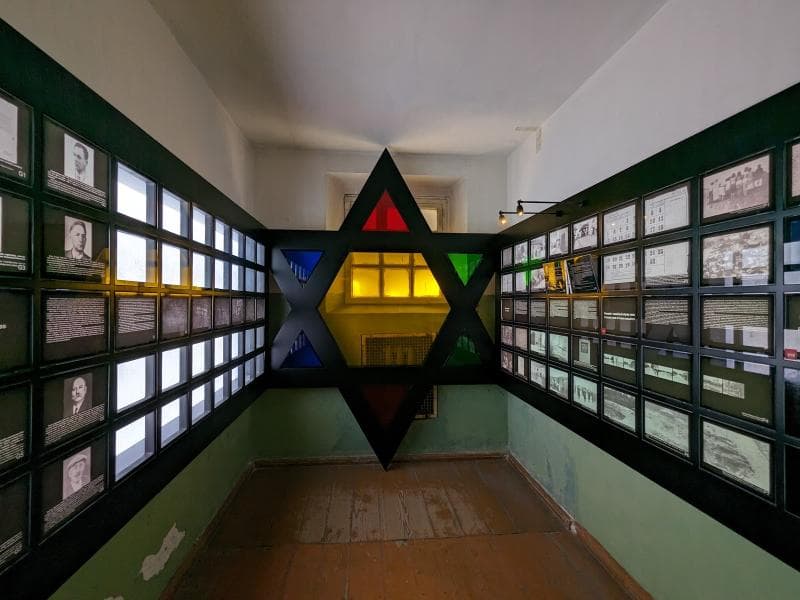
Explore the Underground Cells at the Museum of Occupations and Freedom Fights in Vilnius, Lithuania, a preserved former KGB prison telling stories of Soviet repression and Lithuanian resilience.
Overview
Deep within the Museum of Occupations and Freedom Fights in Vilnius, Lithuania, lies a haunting and profoundly moving section known as the 'Underground Cells.' This isn't merely an exhibition; it is the authentic, preserved former internal prison of the Soviet KGB, situated in the very building where Lithuanians suffered under totalitarian rule for decades. The basement complex, maintained largely as it was left by the Soviet security forces in 1991, offers an unfiltered and chilling glimpse into the brutality of the Soviet occupation. Visitors step directly into the physical remnants of a brutal regime, where thousands of people were interrogated, imprisoned, tortured, and even executed.
This powerful space serves as a visceral testament to the courage and resilience of the Lithuanian people, chronicling the widespread repression that characterized their lives from the mid-20th century. The museum, often informally referred to as the 'KGB Museum,' dedicates itself to remembering the victims and honoring those who fought for freedom against successive occupations.
History & Cultural Background
The building housing the museum, originally constructed in 1890 as a courthouse for the Russian Empire, has a complex and grim history. Following the Soviet occupation of Lithuania in 1940, it was transformed into the headquarters for the NKVD (and later the KGB) and its internal prison. During World War II, it was also briefly utilized by the German Gestapo. For nearly 50 years, until Lithuania regained its independence in 1991, this imposing structure became a symbol of oppression, where Soviet security services carried out mass arrests, interrogations, and executions.
The prison in the basement began its grim operation in the autumn of 1940, holding residents deemed suspicious by the occupation authorities. It was here that freedom fighters, dissidents, and ordinary citizens faced unimaginable suffering. The museum itself was established in 1992, shortly after the Soviet withdrawal, with a mission to collect and exhibit documents and artifacts related to the Soviet occupation and the Lithuanian anti-Soviet resistance.
What Makes It Special
What sets the Underground Cells apart is their remarkable authenticity. Unlike many historical sites that rely on reconstructions, these cells are largely preserved as they were when the KGB departed in 1991. Visitors can walk through original prison cells, solitary confinement cells, interrogation rooms, and even the chilling execution chamber.
The basement originally contained over 50 cells, which were later reduced to 19 as some were repurposed for KGB archives. Among the most harrowing features are the soundproofed padded cells, designed to muffle the screams of tortured prisoners, and the infamous 'ice-water cells.' In these cells, prisoners were forced to stand on a tiny platform in freezing water, collapsing into the icy depths if they fell asleep.
Stories, Fun Facts & Local Details
The stories embedded within these walls are those of immense human suffering and unwavering spirit. Thousands of Lithuanians passed through these cells, enduring torture, interrogation, and psychological torment. Over 1,000 people were executed in the building's execution chamber between 1944 and the early 1960s, often for resisting the occupation. The victims' remains were frequently buried in mass graves outside Vilnius.
One poignant detail is the small exercise yard, a concrete enclosure where prisoners were briefly brought for fresh air, overlooked by guard towers. The museum also displays items recovered from executed individuals, such as buttons and glasses, beneath a glass floor in the execution room, making the grim reality palpable. The very name of the museum has evolved; it was initially known as the 'Museum of Genocide Victims' until 2018, reflecting debates surrounding the definition of genocide in the context of Soviet repression.
Visitor Perspective
Visiting the Underground Cells is not a casual experience; it is an emotionally challenging but essential journey into a dark chapter of Lithuanian history. Many describe it as a powerful and sobering encounter, where the authenticity of the preserved spaces evokes a profound sense of the past. Walking through the cramped cells and cold corridors, one can almost feel the weight of the stories held within these walls. The museum effectively conveys the personal sacrifices made by countless individuals in their fight for freedom and highlights the devastating impact of totalitarian regimes. It offers a unique and invaluable opportunity to confront history directly and to understand the resilience that ultimately led to Lithuania's re-establishment of independence.
Coordinates: 25.27111, 54.68806
View on Google Maps💬 How Travelers Describe This Place
Based on community votes
Interesting
639Photogenic
526Beautiful
421Unique
366Must See
212
Traveler Stories
Discover memorable experiences shared by travelers who have visited this place.
No traveler stories yet.
Be the first traveler to share what made this place memorable.

Tour
By
Spot
Discover amazing places around the world. Your journey starts here.
Explore
© 2026 TourBySpot. All rights reserved.