Execution Chamber
Vilnius, Lithuania
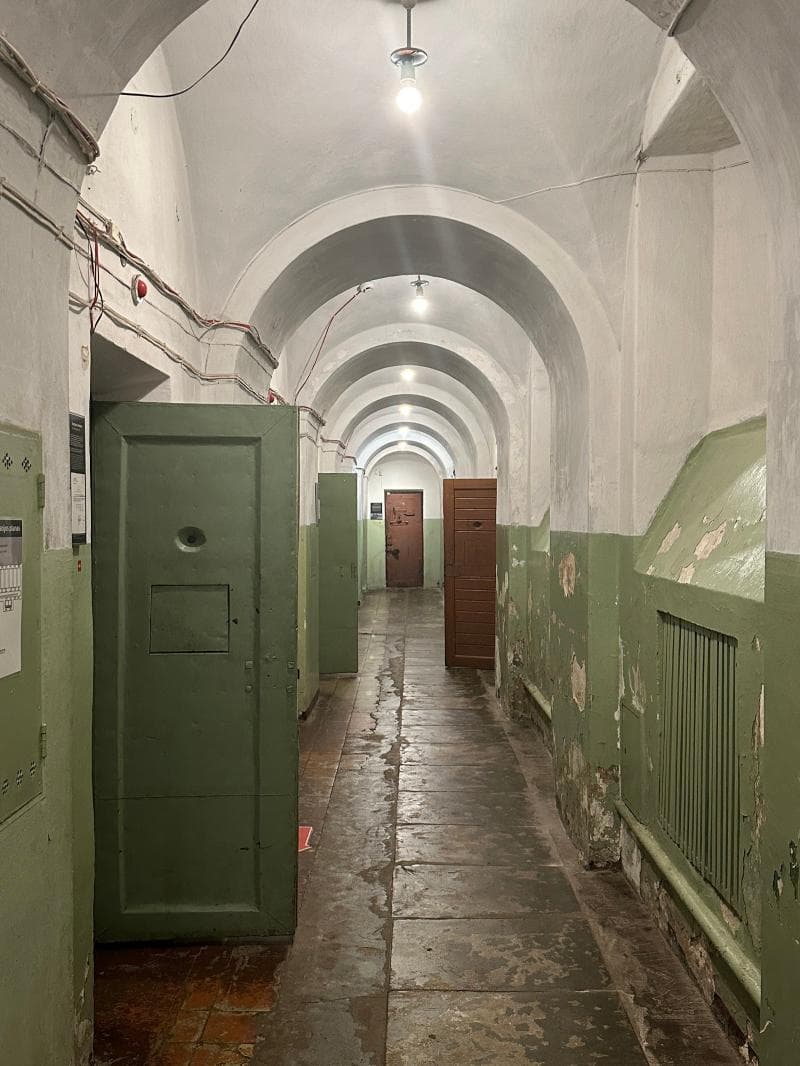
Explore the chilling Execution Chamber within the Museum Of Occupations And Freedom Fights in Vilnius, Lithuania, a powerful memorial to Soviet-era repression and the fight for freedom.
Overview
The Museum of Occupations and Freedom Fights in Vilnius, Lithuania, stands as a stark and powerful testament to a turbulent period in the nation's history. Housed within the former headquarters of the Soviet Committee for State Security, famously known as the KGB, the museum preserves the authentic spaces where Soviet repression was orchestrated and carried out for nearly 50 years. Among its most impactful exhibits is the Execution Chamber, located in the building's basement, which serves as a chilling reminder of the thousands of lives lost during the Soviet occupation.
Originally established in 1992, the museum was first known as the Museum of Genocide Victims, but was renamed in 2018 to the Museum of Occupations and Freedom Fights, reflecting a broader scope that encompasses the anti-Soviet resistance and the various occupations Lithuania endured.
History & Cultural Background
The building itself has a long and complex history, dating back to 1890 when it was constructed as a courthouse for the Russian Empire's Vilnius Governorate. Over the decades, it served various occupiers and regimes, including the German Empire during World War I, the Polish administration, and the German Gestapo during World War II. However, its most infamous role began in 1944 when it became the operational center for the Soviet KGB.
For nearly half a century, until Lithuania regained independence in 1991, this building was the nerve center of Soviet secret police activities. It was here that operations against Lithuanian partisans were planned, mass deportations were coordinated, and countless individuals deemed 'enemies of the state' were imprisoned, interrogated, tortured, and ultimately executed. The museum's existence in this very location ensures that the painful memories and the enduring fight for freedom are never forgotten.
What Makes It Special
The Execution Chamber is arguably the most profoundly moving and sobering part of the museum. Located in the cold, damp basement, it was the site where over a thousand prisoners were executed by firing squad between 1944 and 1969. About a third of these victims were sentenced for their participation in the anti-Soviet resistance.
The room has been largely preserved as it was left, allowing visitors to bear witness to the brutal reality of the past. Bullet holes are still visible in the walls, a stark and undeniable physical testament to the horrific events that transpired here. A particularly poignant element is the glass floor, beneath which artifacts recovered from mass graves—such as buttons, glasses, and even bones—are displayed. This immersive presentation underscores the scale of human tragedy and provides a tangible connection to the victims.
Stories, Fun Facts & Local Details
The executions in this chamber were carried out predominantly at night by a highly classified special group of security officers from Section 'A' of the KGB. Historical records, though scarce, indicate that up to 45 convicts could be executed in a single night. Following the executions, bodies were stacked behind a wooden partition in the same room before being transported by lorry to secret burial sites.
Initially, many of the remains were buried in Tuskulėnai, almost in the center of Vilnius, where 767 people shot between 1944 and 1947 were interred. Later, during the period of 1956-1969, bodies were secretly buried in the Antakalnis Orphans' Cemetery. Astonishingly, archaeological excavations between 2017 and 2021 in this cemetery led to the discovery of some of these remains, including those of Adolfas Ramanauskas-Vanagas, one of Lithuania's most prominent partisan commanders, highlighting the enduring impact of this dark chapter.
Visitor Perspective
Visiting the Execution Chamber is an intensely emotional experience that leaves a lasting impression on travelers. It is not merely an exhibit; it is a preserved space where the echoes of suffering and the resilience of the human spirit are palpable. Many visitors describe a profound sense of solemnity and quiet reflection while standing in the room.
The museum is designed to educate and remember, prompting contemplation on the values of freedom and human dignity. It's a place that compels visitors to confront the harsh realities of occupation and the immense sacrifices made by those who fought for Lithuania's independence. While heavy and at times unsettling, the visit offers invaluable insight into the courage and determination of the Lithuanian people.
Coordinates: 25.27111, 54.68806
View on Google Maps💬 How Travelers Describe This Place
Based on community votes
Unique
639Interesting
526Must See
421Beautiful
366Photogenic
181
Traveler Stories
Discover memorable experiences shared by travelers who have visited this place.
No traveler stories yet.
Be the first traveler to share what made this place memorable.

Tour
By
Spot
Discover amazing places around the world. Your journey starts here.
Explore
© 2026 TourBySpot. All rights reserved.