Jewish Quarter
Prague, Czech Republic
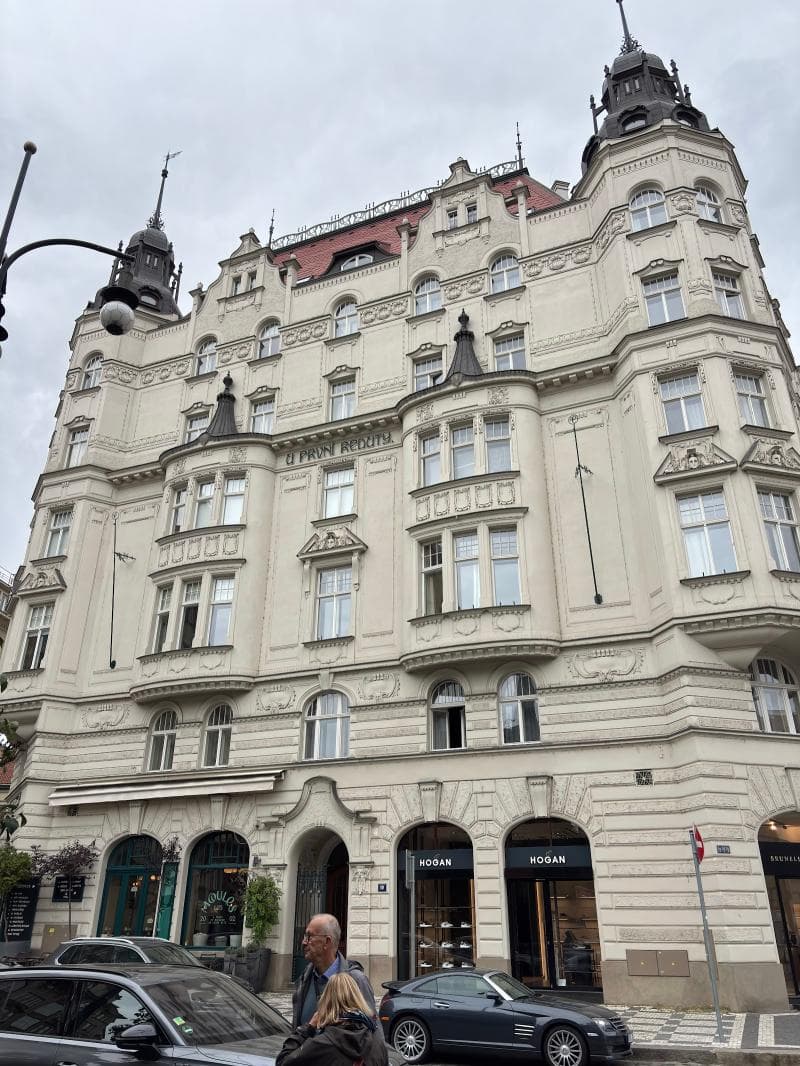
Explore Prague's historic Jewish Quarter, Josefov. Discover ancient synagogues, the Old Jewish Cemetery, and rich cultural heritage in the Czech Republic.
Overview
Nestled within the heart of Prague, Czech Republic, the Jewish Quarter, known locally as Josefov, stands as a profound testament to centuries of Jewish life and resilience. Situated between the iconic Old Town Square and the serene Vltava River, this historic district is an essential part of Prague's rich cultural tapestry. Recognized as a UNESCO World Heritage Site since 1992, Josefov is renowned for possessing the best-preserved complex of Jewish monuments in Europe.
Visitors to Josefov are invited to explore a unique collection of historical synagogues, the evocative Old Jewish Cemetery, the Jewish Ceremonial Hall, and the comprehensive Jewish Museum. While much of the original medieval ghetto was reshaped by urban renewal in the late 19th and early 20th centuries, the most significant historical structures were fortunately spared, allowing their stories to endure.
History & Cultural Background
The origins of Jewish settlement in Prague trace back to the 10th century. By the 13th century, Jewish communities were forced to relocate and reside within this designated area, marking the beginning of the Jewish Ghetto.
The 16th century is often considered Josefov's 'golden age,' witnessing significant development and cultural flourishing. Prominent figures like Mordecai Maisel, a wealthy and influential businessman, financed the paving of streets and construction of synagogues and public buildings. During this period, Rabbi Judah Loew ben Bezalel, often associated with the legend of the Golem, served as Prague's chief rabbi, further enriching the community's spiritual and intellectual life.
In 1850, the quarter was renamed Josefov, in honor of Emperor Joseph II, whose reforms in the late 18th century granted Jewish citizens greater rights and reduced restrictions, leading to their eventual emancipation. However, the late 19th and early 20th centuries brought a period of 'sanitation,' or urban renewal, where many dilapidated buildings were demolished to modernize the district, though thankfully, most of the crucial Jewish landmarks were preserved.
Perhaps one of the most chilling chapters in Josefov's history occurred during World War II. Paradoxically, the Nazi regime preserved the Jewish Quarter, intending to create a 'Museum of an Extinct Race.' They plundered Jewish artifacts from across Central Europe and brought them to Prague, a grim collection that now forms a significant part of the Jewish Museum's extensive holdings, serving as a powerful memorial.
What Makes It Special
Josefov stands out as a unique historical and cultural site due to several remarkable features. It represents the most intact complex of Jewish historical monuments in Europe, offering an unparalleled glimpse into a deeply rooted cultural heritage.
The Old Jewish Cemetery, one of the oldest surviving Jewish burial sites in the world, is an incredibly poignant and visually striking location. Its crowded, layered gravestones, some dating back to 1439, speak volumes about the community's limited space and reverence for its deceased.
The Old-New Synagogue, built around 1270, is Europe's oldest active synagogue and a splendid example of early Gothic architecture. Its survival through centuries of turmoil, including pogroms and urban redevelopment, makes it a symbol of enduring faith.
The district also boasts other historically significant synagogues, each with its own architectural style and story, such as the Spanish Synagogue with its magnificent Moorish Revival interior, and Pinkas Synagogue, now a moving memorial to Holocaust victims.
Stories, Fun Facts & Local Details
One of the most enduring legends associated with Josefov is that of the Golem of Prague. Created by Rabbi Judah Loew ben Bezalel in the 16th century from clay, the Golem was said to protect the Jewish community from persecution. The legend holds that the Golem's remains still rest in the attic of the Old-New Synagogue.
The very name 'Old-New Synagogue' itself is steeped in a fascinating tale. It was originally called the 'New Synagogue,' but gained its current name when other, newer synagogues were built in the area. Another legend suggests its Hebrew name, 'Alt-Nai,' meaning 'on condition,' refers to stones brought by angels from the Temple in Jerusalem, on the condition that they would be returned when the Temple is rebuilt.
The Old Jewish Cemetery's unique appearance, with over 12,000 visible tombstones densely packed and even layered up to twelve deep in some areas, stems from a religious custom prohibiting the disturbance of graves and the ghetto's limited expansion possibilities. Walking through it, one can observe various symbols on the gravestones, such as a crown for wisdom, grapes for abundance, or a pitcher for a Levite.
Josefov was also the birthplace of the celebrated Jewish novelist Franz Kafka, whose legacy is subtly woven into the fabric of the district.
Visitor Perspective
Exploring Josefov offers a profound and contemplative experience. Many of the historical sites are part of the Jewish Museum in Prague, and a combined 'Jewish Town Ticket' provides access to most of them, including several synagogues and the Old Jewish Cemetery. The Old-New Synagogue typically requires a separate ticket.
To truly appreciate the rich history and cultural nuances, considering a guided tour is highly recommended, as local guides can illuminate the layered stories and intricate details that might otherwise be missed. The area is best explored on foot due to its compact nature. Visitors should allow several hours (2-3 hours minimum) to respectfully experience the main sites. It is important to dress appropriately and maintain a quiet, respectful demeanor, especially at memorial sites like Pinkas Synagogue, where the names of over 77,000 Czech Holocaust victims are inscribed on the walls.
Coordinates: 14.4191362, 50.0900985
View on Google Maps💬 How Travelers Describe This Place
Based on community votes
Beautiful
872Must See
846Unique
684Interesting
363Photogenic
250
Traveler Stories
Discover memorable experiences shared by travelers who have visited this place.
No traveler stories yet.
Be the first traveler to share what made this place memorable.
Things to see at Jewish Quarter



Tour
By
Spot
Discover amazing places around the world. Your journey starts here.
Explore
© 2026 TourBySpot. All rights reserved.