Pinkas Synagogue
Prague, Czech Republic
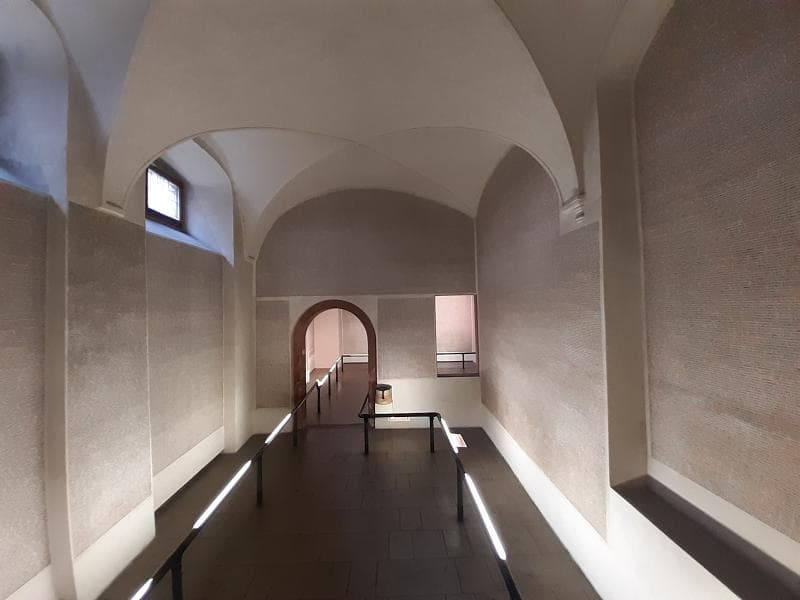
Explore Pinkas Synagogue in Prague's Jewish Quarter, a solemn Holocaust memorial inscribed with 80,000 names and Terezín children's art.
Overview
Nestled within Prague's historic Jewish Quarter, Josefov, the Pinkas Synagogue stands not only as one of the city's oldest surviving synagogues but, more profoundly, as a poignant memorial to the nearly 80,000 Jewish victims from Bohemia and Moravia who perished during the Holocaust. Administered by the Jewish Museum in Prague, this sacred space invites visitors into a solemn atmosphere of remembrance and reflection, offering a profound journey through history and human resilience.
Originally a private house of worship dating back to the 15th century, its walls today bear the meticulously inscribed names of men, women, and children, transformed into a powerful and unique memorial. Beyond the names, the synagogue also houses an immensely moving exhibition of children's drawings from the Terezín ghetto, offering a glimpse into the lives and hopes of those tragically lost.
History & Cultural Background
The origins of the Pinkas Synagogue trace back to the 15th century, with archaeological evidence suggesting the presence of a private oratory by 1492. It was officially founded and built in 1535 by Aaron Meshulam Horowitz, a prominent member of Prague's Jewish community, as a private place of worship for his family. Initially constructed in the late Gothic style, the synagogue has seen several architectural modifications over the centuries, incorporating early Renaissance elements, such as its portal, and later Baroque features following flood damage.
Its location, often below ground level due to the rising street levels over time, made it susceptible to frequent floods, necessitating various reconstructions. In the 17th century, additions included a women's gallery and a vestibule. However, the synagogue's most significant transformation occurred after World War II. Between 1950 and 1954, it was restored to its original appearance, and then, from 1955 to 1960, it was dedicated as a memorial. This ambitious project saw painters Václav Boštík and Jiří John meticulously inscribe the names of 77,297 Holocaust victims from Bohemia and Moravia onto its interior walls, arranged by community with birth and death dates where known.
The memorial was opened to the public in 1960 but was tragically closed in 1968 after the Soviet occupation of Czechoslovakia, ostensibly due to moisture damage. After the fall of the communist regime in 1989, the synagogue underwent further reconstruction, and the inscriptions, damaged by moisture, were painstakingly restored and reopened to the public in 1995.
What Makes It Special
What truly sets the Pinkas Synagogue apart is its profound role as a memorial to the Shoah. It is one of the oldest monuments of its kind in Europe, transforming a house of prayer into a monumental tribute to individual lives lost. The sheer scale of names, inscribed floor-to-ceiling across every available surface, creates an overwhelming sense of the immense human cost of the Holocaust. Visitors are confronted with 77,297 names, each representing a life, a family, and a story tragically cut short.
Further amplifying this impact is the permanent exhibition on the synagogue's upper floor: children's drawings from the Terezín ghetto. Created between 1942 and 1944 during art lessons led by Friedl Dicker-Brandeis, these 4,387 drawings provide a heartbreakingly vivid and intimate insight into the lives, fears, and dreams of children imprisoned before their deportation to extermination camps. Many of these children did not survive, making their artwork an invaluable, often sole, trace of their existence.
The combination of these two elements – the endless roll call of names and the vibrant yet somber artwork of children – renders the Pinkas Synagogue an intensely moving and unforgettable experience, a powerful reminder of a history that must never be forgotten.
Stories, Fun Facts & Local Details
Beyond its solemn memorial function, the Pinkas Synagogue holds layers of intriguing stories and historical details. One local legend, though likely apocryphal, attributes the synagogue's construction to an unexpected source: Rabbi Pinkas discovering gold coins swallowed by a monkey thrown through his window, which he then dedicated to the building. While the documented history points to Aaron Meshulam Horowitz as the founder, such tales are part of Prague's rich Jewish folklore.
The synagogue's enduring presence despite centuries of challenges is remarkable. It has repeatedly contended with devastating floods due to its lower ground level, leading to numerous reconstructions and changes in its interior over time. During one such renovation in the late 18th century, a Rococo grille adorned with the Star of David and a medieval Jewish hat motif was added to the bimah, donated by Joachim von Popper. Interestingly, a 15th-century ritual bath (mikveh) was discovered beneath the synagogue in 1968, a testament to the site's ancient spiritual roots. Today, the Mikveh is still used by the Prague Jewish community and can be visited. The Pinkas Synagogue also remains an active site for certain important Jewish ceremonies for the Prague Reform Jewish community.
Visitor Perspective
Visiting the Pinkas Synagogue is a deeply immersive and often emotional experience. It is intentionally designed as a quiet and reflective space, encouraging contemplation rather than a hurried tour. Travelers should allocate ample time not just to walk through, but to pause and truly absorb the enormity of the names inscribed on the walls, perhaps even searching for specific communities or surnames.
The synagogue is part of the Jewish Museum in Prague's extensive circuit, and tickets are typically purchased as a combined entry to several sites within the Jewish Quarter, including the Old Jewish Cemetery, Maisel Synagogue, and Spanish Synagogue. Visitors are advised to check the official Jewish Museum website for current opening hours and any specific guidelines, especially regarding Jewish holidays. While photography might be restricted to maintain a reverent atmosphere, the impact of the memorial walls and the children's drawings will undoubtedly remain long after the visit, offering a powerful and essential understanding of a pivotal chapter in European history.
Coordinates: 14.417, 50.08926
View on Google Maps💬 How Travelers Describe This Place
Based on community votes
Interesting
618Unique
449Must See
335Photogenic
308Beautiful
22
Traveler Stories
Discover memorable experiences shared by travelers who have visited this place.
No traveler stories yet.
Be the first traveler to share what made this place memorable.

Tour
By
Spot
Discover amazing places around the world. Your journey starts here.
Explore
© 2026 TourBySpot. All rights reserved.