Ceremonial Hall
Prague, Czech Republic
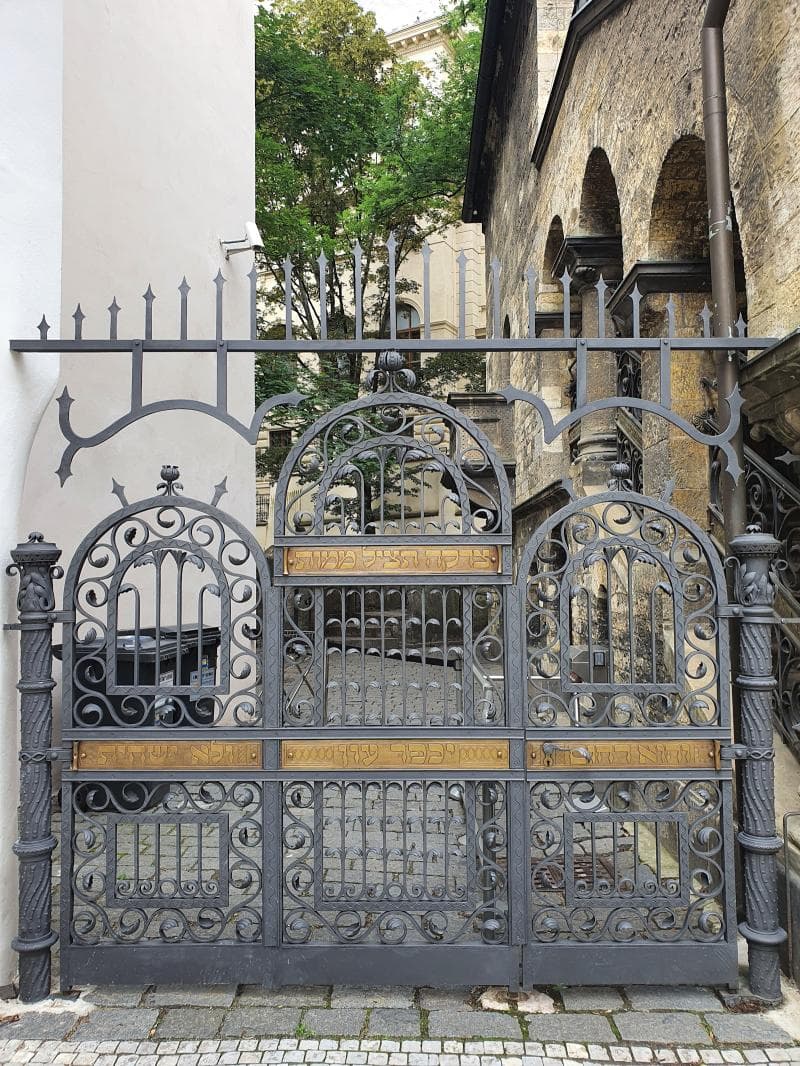
Explore the Ceremonial Hall in Prague's Jewish Quarter, Czech Republic, a Neo-Romanesque building detailing Jewish burial traditions and the Chevra Kadisha's role.
Overview
Nestled within the historic Jewish Quarter of Prague, Czech Republic, the Ceremonial Hall stands as a profound testament to Jewish traditions and community life. Adjacent to the revered Old Jewish Cemetery and the Klausen Synagogue, this distinctive Neo-Romanesque building, with its castle-like appearance, is far more than just an architectural marvel. It served as the central point for the Prague Jewish Burial Society, known as the Chevra Kadisha, embodying centuries of deep respect for life's final journey. Today, it forms an integral part of the Jewish Museum in Prague, preserving and sharing the rich cultural heritage of the Jewish community.
While currently undergoing reconstruction to restore its original grandeur and prepare for new exhibitions, the Ceremonial Hall remains a powerful symbol of the enduring legacy of Prague's Jewish population. Visitors have long explored its exhibition on Jewish burial customs, delving into rituals that underscore the sanctity of life and the dignity afforded to the deceased.
History & Cultural Background
The story of the Ceremonial Hall is inextricably linked to the Prague Jewish Burial Society, the Chevra Kadisha, an institution founded in 1564 by Eliezer Ashkenazi. This society was groundbreaking, being the first in the world to perform burial ceremonies for any Jewish person in the city, extending its sacred duties beyond its own members.
The current Neo-Romanesque structure is not the first of its kind on this site. The original Ceremonial Hall, established by the Chevra Kadisha, contained a morgue, an office, and a ritual room. This earlier building was eventually replaced, and the version visitors see today was constructed between 1906 and 1908 (some sources say 1911–1912) by architects Jan Gerstl and Alois Gabriel (also mentioned as František Gerstel).
Its primary purpose was to function as a 'bejt tahara,' a house of purification. The building's layout reflected its solemn duties: a mortuary in the basement, a space for the ritual purification of the dead on the ground floor, and a meeting room for the Chevra Kadisha on the upper floor. This design facilitated the sacred rites of preparing the deceased for burial according to Jewish law. The Hall served its original, vital purpose until the end of World War I, and by 1926, it was leased to the Jewish Museum in Prague, beginning its new life as a museum and exhibition space.
What Makes It Special
What sets the Ceremonial Hall apart is its unique blend of architectural style, profound historical function, and emotional resonance. Its Neo-Romanesque facade, often described as resembling a small castle or manor house, stands out within the Jewish Quarter, reflecting an early 20th-century interpretation of historical styles.
More significantly, the building offers a rare glimpse into the intimate and often private rituals surrounding Jewish death and mourning. It embodies the core values of the Chevra Kadisha, which translates to 'Sacred Society' or 'Holy Brotherhood of Those Who Perform Charitable Deeds.' This society's dedication to performing the 'mitzvah' (commandment) of ensuring a dignified burial for every Jewish person highlights a deep communal responsibility and respect for human life, even in death.
For decades, the Hall housed an exhibition that meticulously detailed these customs, from caring for the sick and dying to the rituals of purification (taharah) and burial. This educational role allowed visitors to connect with a fundamental aspect of Jewish tradition that emphasizes humility, equality, and spiritual purity.
Stories, Fun Facts & Local Details
The history of the Ceremonial Hall is rich with fascinating details. The Prague Chevra Kadisha, founded in the 16th century, set a precedent by extending its services to all members of the Jewish community, not just its own. This inclusive approach was revolutionary for its time and solidified the society's role as a cornerstone of communal welfare.
An intriguing architectural detail is that the building was equipped with one of the first technical elevators in Prague, showcasing a blend of traditional purpose with early 20th-century innovation.
The Ceremonial Hall, as it stands today, is actually the third iteration of such a structure associated with the Old Jewish Cemetery. The first version, located near the Pinkas Synagogue, burned down in 1754. The second version was demolished during the urban renewal of the Jewish Ghetto around 1905, necessitating the construction of the current building.
Within Jewish tradition, the act of accompanying the deceased is considered a profound act of kindness, as it is a kindness that cannot be repaid. The Chevra Kadisha performed crucial duties, including *sh'mirah* (keeping vigil over the deceased), *rehitzah* (cleaning the body), and *taharah* (ritual purification). These practices ensure that the deceased is prepared with the utmost respect and according to ancient religious laws, focusing on simplicity and equality in death.
Furthermore, the Hall once displayed an evocative 18th-century painting series that illustrated these burial customs, providing a visual narrative of the society's work and the reverence involved in these rites.
Visitor Perspective
For travelers exploring the Jewish Quarter, the Ceremonial Hall offers a poignant and educational experience, even amidst its current transformation. Until July 2024, it housed an exhibition that provided deep insights into Jewish customs and traditions, particularly those surrounding death and burial. This exhibit allowed visitors to understand the profound spiritual and communal significance of these practices.
As of late 2024 and throughout 2025-2026, the Ceremonial Hall is undergoing extensive reconstruction. Its former exhibition on Jewish burial customs closed, and the building is being restored to its original form. The Jewish Museum plans to introduce new exhibitions that will continue to highlight the inspiring role of the burial society within Jewish culture and reflect on Prague's urban renewal. While the exact reopening date for new exhibitions varies in reporting, some sources indicate a new core exhibition dedicated to Jewish customs and traditions is anticipated to open by late 2025 or end of 2026.
Visitors should check the official Jewish Museum in Prague website for the most current information regarding its accessibility and exhibition schedule. Despite its temporary closure for renovations, the Ceremonial Hall's exterior, visible beside the Old Jewish Cemetery, continues to evoke its rich history and profound cultural importance.
Coordinates: 14.4172, 50.0899
View on Google Maps💬 How Travelers Describe This Place
Based on community votes
Unique
996Interesting
726Photogenic
717Must See
494Beautiful
193
Traveler Stories
Discover memorable experiences shared by travelers who have visited this place.
No traveler stories yet.
Be the first traveler to share what made this place memorable.

Tour
By
Spot
Discover amazing places around the world. Your journey starts here.
Explore
© 2026 TourBySpot. All rights reserved.