Maisel Synagogue
Prague, Czech Republic
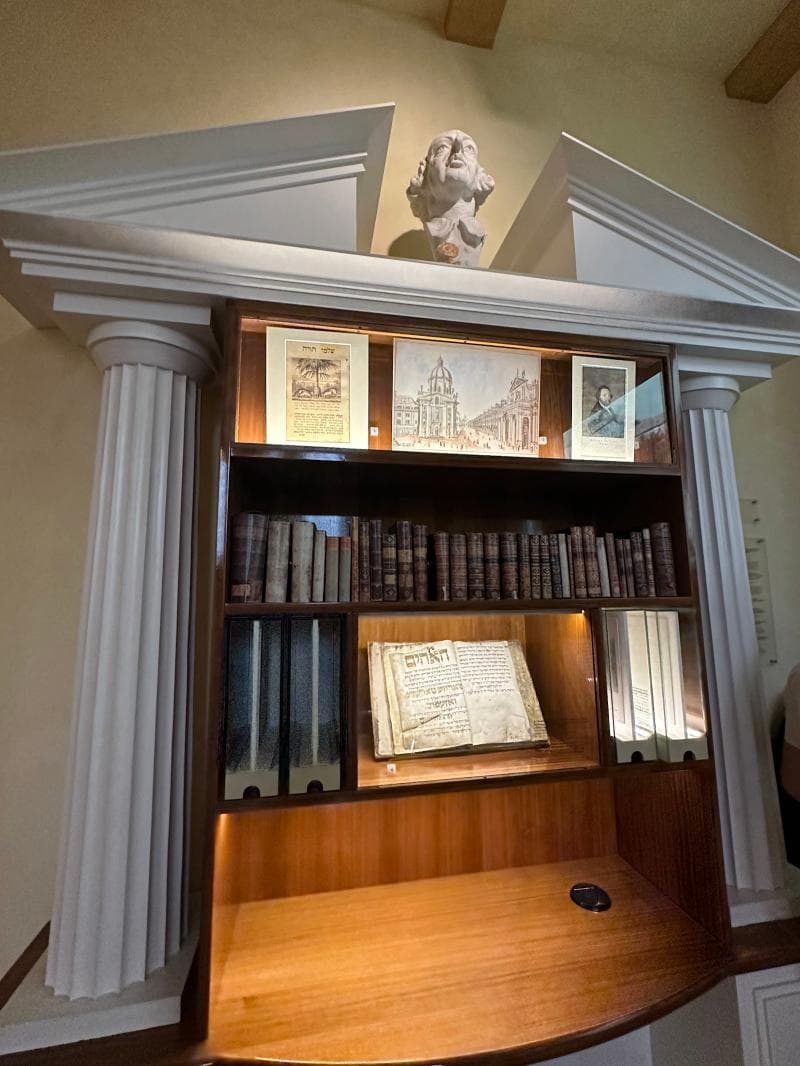
Explore Maisel Synagogue in Prague, Czech Republic, a historic gem detailing Jewish life from the 10th-18th century with unique exhibits.
Overview
Nestled within the historic Jewish Quarter (Josefov) of Prague, Czech Republic, the Maisel Synagogue stands as a poignant testament to centuries of Jewish life and resilience. Commissioned by Mordecai Maisel, a prominent Jewish leader and financier, it was once the largest and most impressive synagogue in the Prague Ghetto. Today, it serves as a crucial part of the Jewish Museum in Prague, housing a compelling exhibition that illuminates the history of Jews in the Bohemian Lands from the 10th to the 18th century. Visiting the Maisel Synagogue offers a unique gateway into the rich cultural tapestry and often tumultuous past of Prague's Jewish community.
History & Cultural Background
The Maisel Synagogue's story began in the late 16th century, a period often referred to as a golden age for Prague's Jewish community under Emperor Rudolf II. Mordecai Maisel, a wealthy mayor of the Jewish Town, initiated its construction between 1590 and 1592, obtaining a special privilege from the Emperor to build his private place of worship. Designed by Judah Tzoref de Herz and Josef Wahl, the original synagogue was a grand Renaissance building with three naves, a unique and unusually large structure for its time.
However, the synagogue's architectural form has undergone several dramatic transformations. A devastating ghetto fire in 1689 severely damaged the original Renaissance edifice, causing its vaulting to collapse and shortening the building by a third. It was subsequently rebuilt in a Baroque style. The synagogue acquired its current Neo-Gothic appearance during a significant urban renewal of the Jewish Quarter between 1893 and 1905, based on plans by architect Alfred Grotte.
During World War II, the Maisel Synagogue was tragically used by the Nazis as a storage facility for approximately 6,000 valuable Jewish artifacts. These items were part of a chilling plan to create a 'Museum of an Extinct Race' after the expected extermination of European Jewry. In 1955, the synagogue became the property of the Jewish Museum in Prague, undergoing further restorations in the latter half of the 20th century to preserve its historical integrity and repurpose it for educational exhibitions.
What Makes It Special
What makes the Maisel Synagogue particularly special is its remarkable ability to blend historical architecture with modern exhibition techniques to tell a profound story. While its exterior and much of its interior reflect the Neo-Gothic style of its last major reconstruction, it stands as a living museum, continually adapted to present its narrative. The building itself is a layered testament to various historical periods, with elements from its Renaissance origins subtly preserved beneath later additions.
The permanent exhibition, 'Jews in the Bohemian Lands, 10th–18th Century,' offers visitors a comprehensive look at the early history of Jewish communities in Bohemia and Moravia. It showcases rare artifacts, including synagogue textiles, silver ceremonial objects, and old prints. Interactive touch screens allow deeper engagement, providing access to old Hebrew manuscripts, historical maps of Jewish settlements, and information about prominent Jewish figures.
Stories, Fun Facts & Local Details
Mordecai Maisel, the synagogue's founder, was not only a wealthy merchant and banker but also a generous patron who significantly shaped the Jewish Ghetto. He financed numerous public buildings, paved main streets, and even contributed to a Christian church, reflecting the relatively tolerant atmosphere of Prague under Rudolf II. Initially, the Maisel Synagogue served as Maisel's private house of prayer, opening to the public only after his death.
A particularly engaging feature of the current exhibition is a unique video projection that presents a film rendition of Langweil's Model of Prague from the 19th century. This animated visualization allows visitors to wander virtually through the labyrinthine streets of the original Jewish ghetto before its urban renewal, offering a vivid glimpse into a bygone era of Prague's Jewish Town.
Visitor Perspective
For the curious traveler, the Maisel Synagogue offers an insightful and moving experience. It is an ideal starting point for exploring Prague's Jewish Quarter, providing essential historical context before delving into other sites like the Old Jewish Cemetery or the Old-New Synagogue. The exhibition is thoughtfully curated, making complex history accessible and engaging.
A typical visit might last around 30 minutes, allowing ample time to absorb the exhibits and reflect on the narratives presented. It is important to note that tickets to the Maisel Synagogue are typically purchased as part of a comprehensive Jewish Town ticket, which grants access to several other significant Jewish Museum sites. This integrated approach ensures a holistic understanding of the Jewish Quarter's heritage. Beyond its daytime role as a museum, the synagogue occasionally transforms into a cultural venue, hosting concerts and other events, offering another dimension to its enduring legacy.
Coordinates: 14.41885, 50.08961
View on Google Maps💬 How Travelers Describe This Place
Based on community votes
Must See
717Photogenic
618Interesting
449Beautiful
335Unique
22
Traveler Stories
Discover memorable experiences shared by travelers who have visited this place.
No traveler stories yet.
Be the first traveler to share what made this place memorable.

Tour
By
Spot
Discover amazing places around the world. Your journey starts here.
Explore
© 2026 TourBySpot. All rights reserved.