Jakarta Cathedral
Jakarta, Indonesia
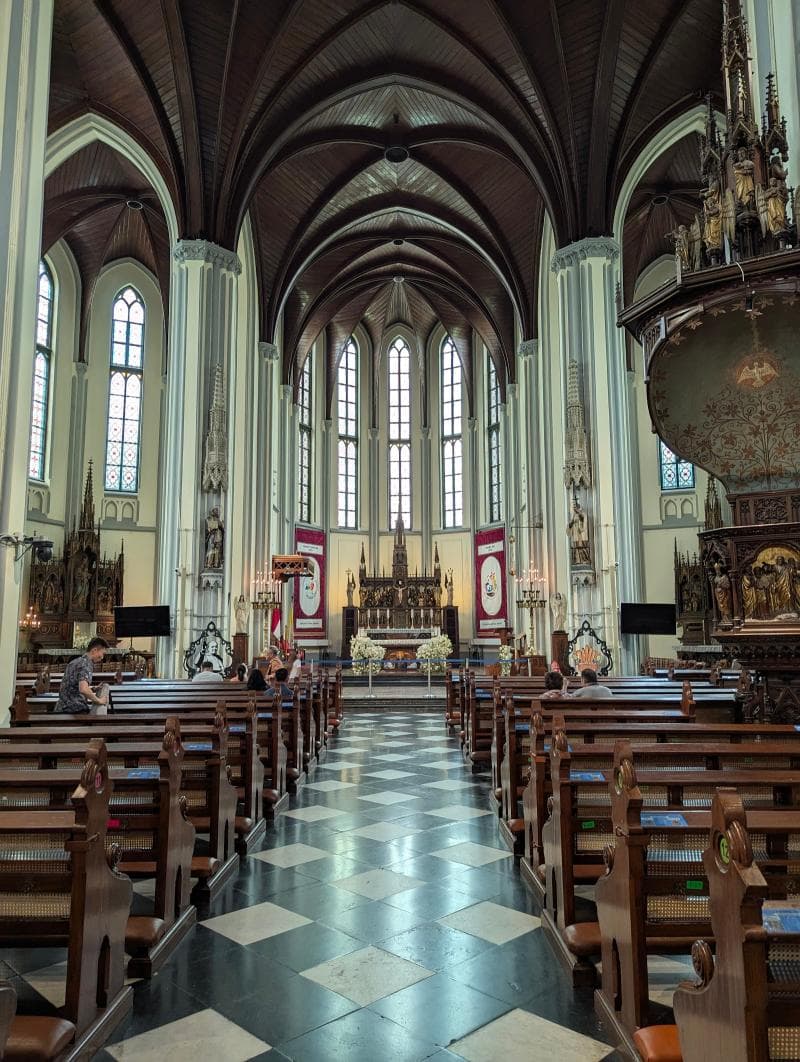
Explore Jakarta Cathedral in Jakarta, Indonesia—a stunning Neo-Gothic architectural marvel and a powerful symbol of interfaith harmony.
Overview
The Jakarta Cathedral, officially known as The Cathedral Church of the Assumption of the Blessed Virgin Mary, stands as a magnificent Neo-Gothic masterpiece in the heart of Jakarta, Indonesia. Located strategically on Jl. Katedral No. 7B, Central Jakarta, it is notably situated directly opposite the grand Istiqlal Mosque, symbolizing Indonesia's profound commitment to interfaith harmony and tolerance. This iconic landmark is not merely a place of worship for the Roman Catholic Archdiocese of Jakarta; it is also a significant cultural and historical site, recognized as a national cultural heritage asset. Its towering spires and intricate facade offer a glimpse into a rich past, inviting visitors to explore its architectural splendor and deep cultural roots.
History & Cultural Background
The history of the Jakarta Cathedral traces back to the early 19th century. The first Catholic church at this location was established around 1810. Later, a church was consecrated as 'De Kerk van Onze Lieve Vrouwe ten Hemelopneming' (The Church of Our Lady of the Assumption) in 1829, which served as the precursor to the current structure. However, this original building suffered structural damage and dramatically collapsed in 1890, just three days after Easter. The present cathedral's construction began in 1891, with the initial design by Pastor Antonius Dijkmans, SJ. Financial challenges temporarily halted the project, but with renewed efforts and funding, architect Marius Hulswit took over to complete the design, and the cathedral was finally consecrated on April 21, 1901. Since 1993, the Jakarta Cathedral has been designated as a cultural heritage building, protected by the Indonesian government, safeguarding its historical and architectural integrity for future generations.
What Makes It Special
The Jakarta Cathedral's Neo-Gothic architectural style is its defining feature, reminiscent of medieval European cathedrals. Its sturdy facade boasts two prominent front towers, each approximately 60 meters high, known as Turris Davidica (Tower of David), symbolizing strength, and The Ivory Tower, representing purity. A third spire, the Angelus Dei Tower, rises 45 meters above the main altar at the rear. Due to Indonesia's seismic activity, the cathedral was ingeniously constructed using local red bricks covered with plaster, designed to mimic natural stone, and features a robust teak wood roof structure and iron spires, deviating from traditional stone masonry. Inside, visitors are greeted by soaring arched windows adorned with beautiful, colorful stained glass, carved wooden doors, and gargoyles that add to its visual splendor. The interior is equally impressive with high ceilings, large columns, and a main altar imported from the Netherlands, dating back to the 19th century, flanked by altars dedicated to Saint Mary and Saint Joseph. A large pipe organ, installed in 1988, and a replica of Michelangelo's Pietà further enrich its sacred ambiance.
Stories, Fun Facts & Local Details
Perhaps the most compelling aspect of the Jakarta Cathedral is its remarkable proximity to the Istiqlal Mosque, the largest mosque in Southeast Asia. This adjacency is not accidental; it was deliberately chosen by Indonesia's first President, Sukarno, to symbolize religious harmony and peaceful coexistence in the nation. This spirit of tolerance is vividly demonstrated during major religious holidays, when the two houses of worship often share parking facilities: the mosque's parking is utilized by cathedral congregants during Christmas, and vice-versa during Eid al-Fitr. The cathedral's unique construction materials, such as bricks, plaster, teak wood, and iron, were a practical decision to make the building more resilient to earthquakes, a testament to thoughtful engineering in a geologically active region. Inside, the cathedral also houses a museum on its second floor, offering a fascinating collection of religious artifacts and a deep dive into the history of Catholicism in Indonesia. It includes unique items like a 'kebaya-wearing Mother Mary' statue, reflecting local cultural integration.
Visitor Perspective
For any curious traveler, a visit to the Jakarta Cathedral offers a serene and reflective experience, providing a peaceful escape from the city's bustling energy. The cathedral is open to the public, and admission is free, welcoming individuals of all backgrounds to admire its architectural grandeur and historical significance. Visitors can immerse themselves in the tranquil atmosphere, marvel at the intricate details of its Neo-Gothic design, from the stained-glass windows to the ornate altars. Attending a Mass service offers a unique opportunity to witness the cathedral in its primary role as a living center of Catholic worship, experiencing the local religious practices and the resonant sounds of its impressive pipe organ. Exploring the Jakarta Cathedral Museum on the second floor is highly recommended, as it provides invaluable insights into the history of faith and the Catholic community in Indonesia through its curated collection of artifacts. Whether you are interested in history, architecture, or simply seeking a moment of peace, the Jakarta Cathedral offers a profound glimpse into Indonesia's spiritual and cultural heritage.
Coordinates: 106.8265, -6.1682
View on Google Maps💬 How Travelers Describe This Place
Based on community votes
Must See
836Beautiful
797Photogenic
695Interesting
396Unique
286
Traveler Stories
Discover memorable experiences shared by travelers who have visited this place.
No traveler stories yet.
Be the first traveler to share what made this place memorable.
Things to see at Jakarta Cathedral



Tour
By
Spot
Discover amazing places around the world. Your journey starts here.
Explore
© 2026 TourBySpot. All rights reserved.